
RHJ: The Italianate Home that Refused to Disappear
THE ROME YOU CAN’T SEE ANYMORE
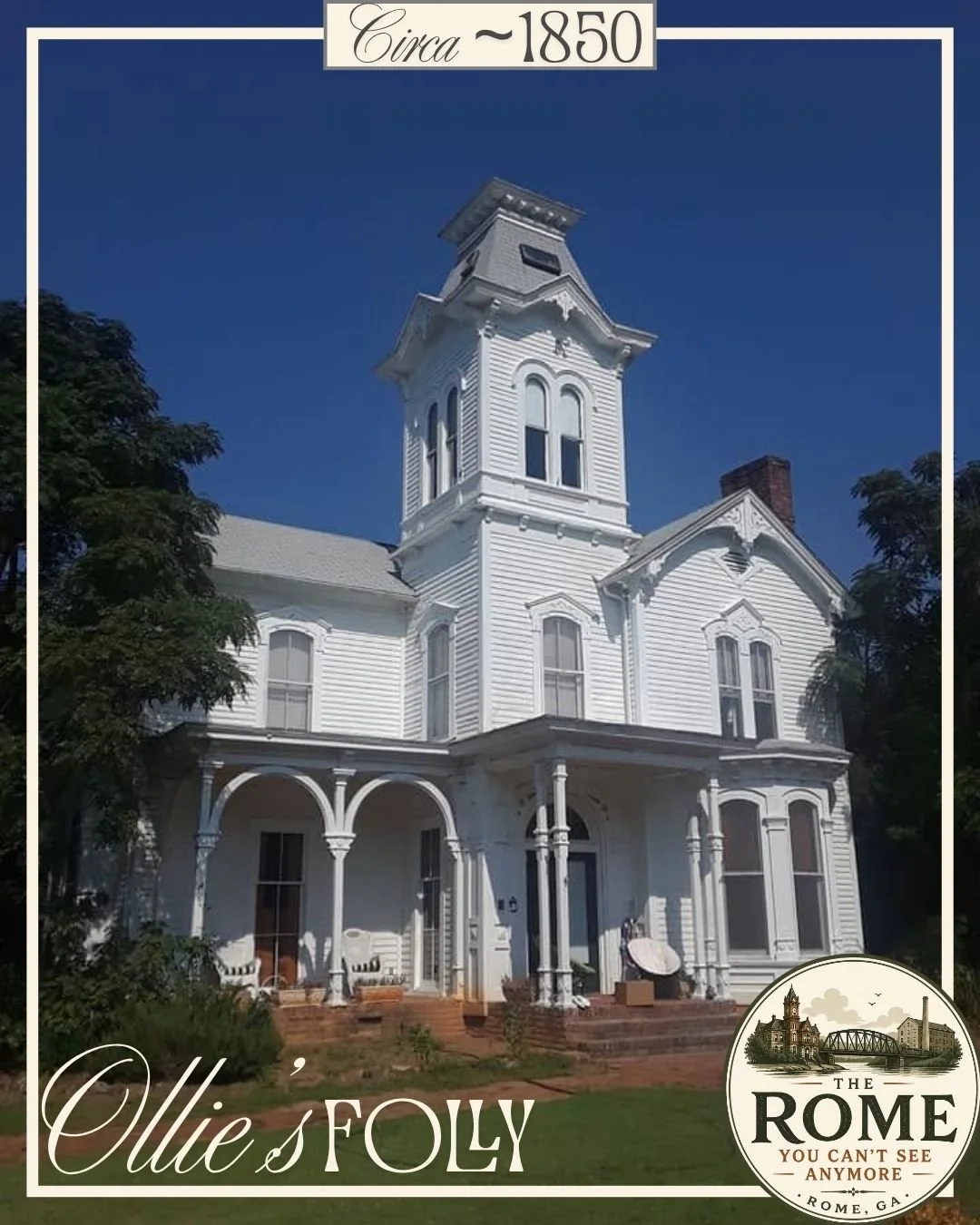
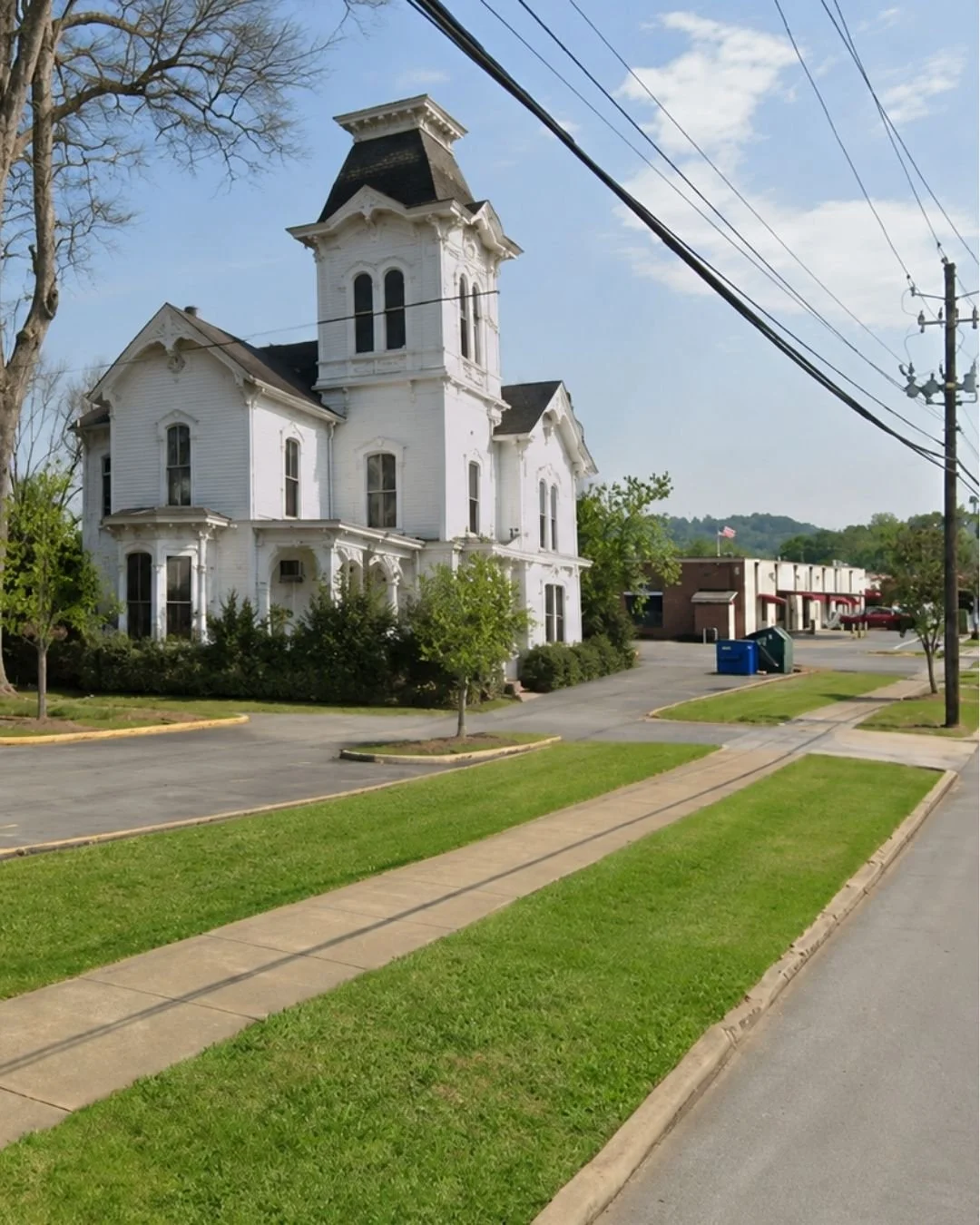
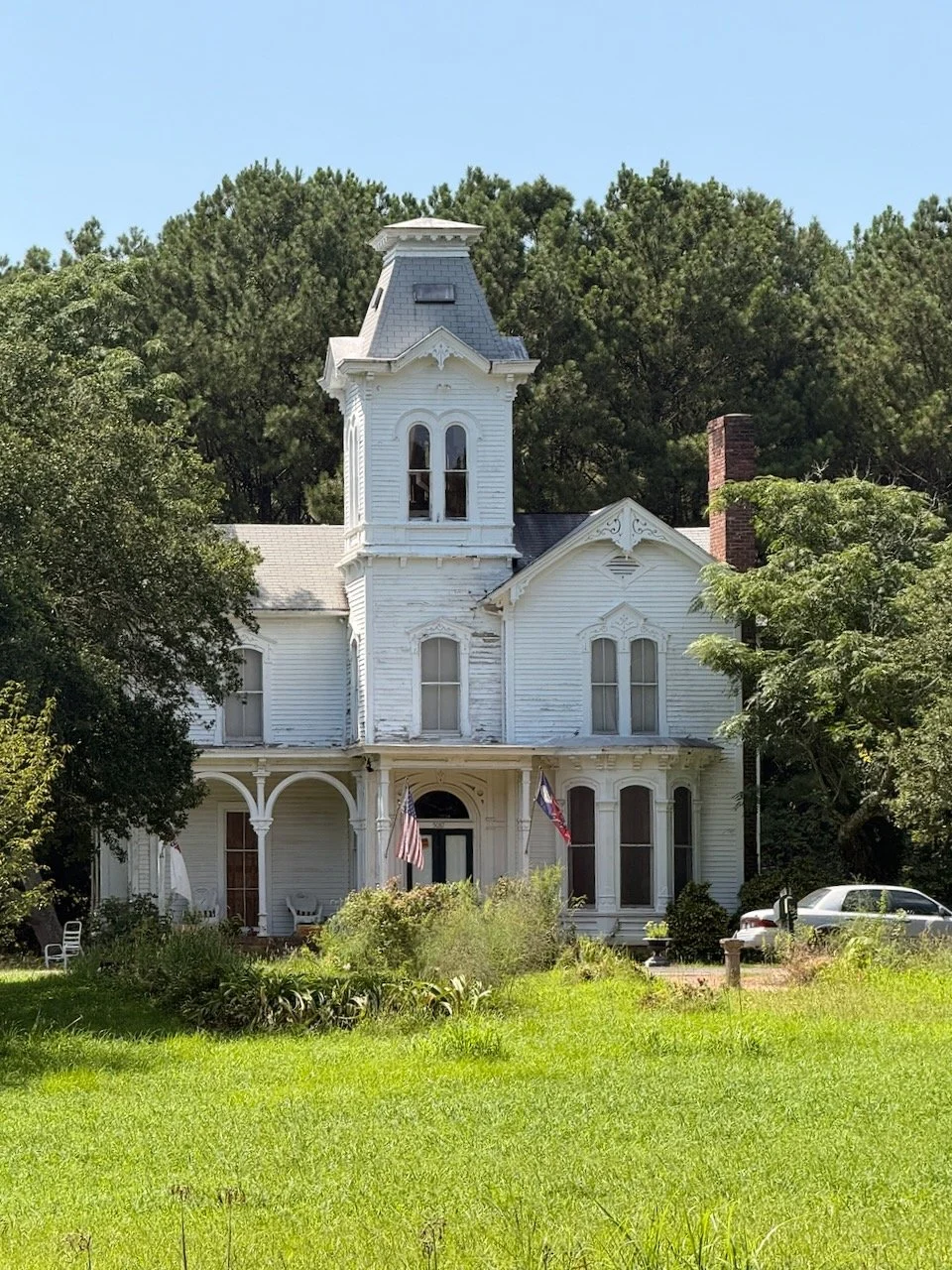
Drive down Gore-Subligna Road and you’ll see a beautiful Italianate house. Its tall tower reaches toward the sky. Decorative brackets frame the eaves. Original windows catch the afternoon light just as they did more than a century ago.
It looks perfectly at home.
But it wasn't built here.
This house once stood at 401 East First Avenue in Rome, overlooking the city it had called home for generations. By the late 1970s, its future looked bleak. Most people assumed it would soon become another forgotten casualty of progress.
Instead, it became one of the most remarkable preservation stories in Northwest Georgia.
Years before I became a Realtor—or started writing about architecture—I was a freshman at Berry College. Whenever I drove home to Rocky Face, my route took me through the tiny community of Subligna.
Every trip, I'd slow down to admire one particular house. There was something about it: the tower, the proportions, the way it seemed to belong somewhere much larger than a quiet country road.
Eventually, my curiosity got the better of me.
One afternoon, I pulled into the driveway and knocked on the front door. When I introduced myself and mentioned that I was a Berry student who passed the house on the way home, Mrs. Ollie Scoggins' face lit up. She had taught at Berry for many years, and before long she was inviting me inside.
She didn't just show me a beautiful house. She told me its story.
She pointed out the original woodwork, talked about the painstaking move from Rome, and explained why saving the house mattered enough to attempt what so many people had said couldn't be done.
Looking back, I doubt she realized what she was doing. To her, she was simply sharing her home with a curious college student.
To me, she was teaching me to see architecture differently.
Teaching is an odd profession because you don't always get to see the fruits of your labor. Teachers plant seeds and hope that someday they grow. Preservation is much the same. We don't really “own” an old house so much as become its stewards for a while, hoping to leave it in good enough hands that someone else will carry it a little farther than we could.
I doubt Ollie intended to plant a seed that afternoon, but she did. I'd always enjoyed houses, but this was the first time I'd seen preservation firsthand.
And it changed me.
More Than Just an Old House
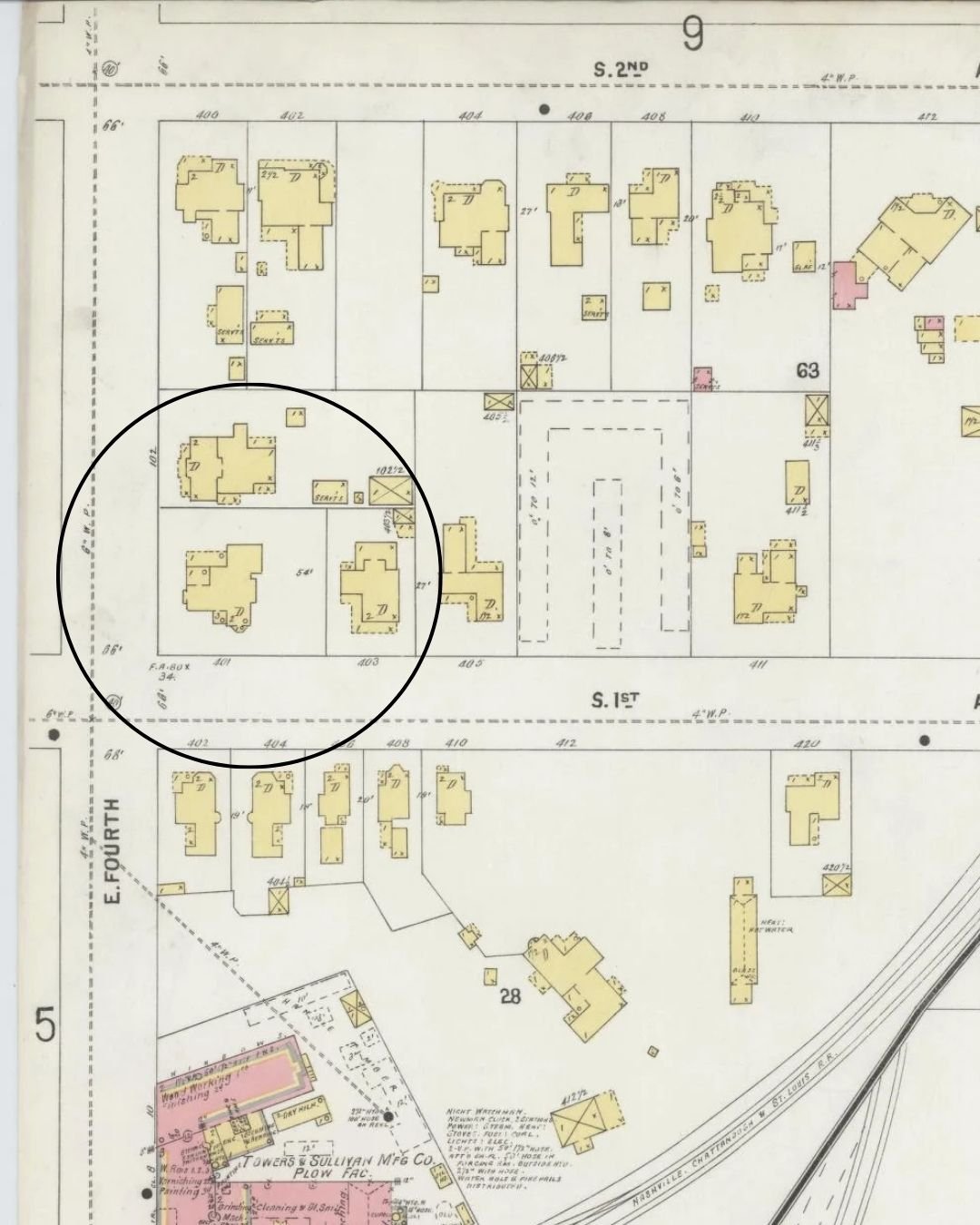
The house has been described as dating to the 1850s, although I'm not convinced that date is correct. We know it was standing by 1898, when it appears on a Sanborn map, but earlier maps don't cover this particular corner of Rome. Architecturally, the house belongs squarely to the Italianate tradition that became fashionable in America in the decades before the Civil War and remained popular into the late 19th century. Until something more definitive turns up, I'd simply call it a 19th-century Italianate house.
And it is a particularly good one.
Its soaring square tower anchors an asymmetrical façade filled with tall, narrow windows, elaborate window surrounds, decorative woodwork and deep porches. Look closely at the tower and you'll find some of the best clues to the house's identity: a low-pitched roof with broad overhanging eaves supported by decorative brackets and tall paired windows with rounded arches.
Those aren't simply “Victorian” decorations. They're the vocabulary of the Italianate style.
The tower itself recalls the campanile of an Italian villa, an architectural idea Americans enthusiastically reinterpreted in wood during the 19th century. Combined with the house's vertical proportions and elaborate millwork, it gives the building the picturesque quality that made Italianate architecture so popular.
But beneath the beauty was remarkable craftsmanship.
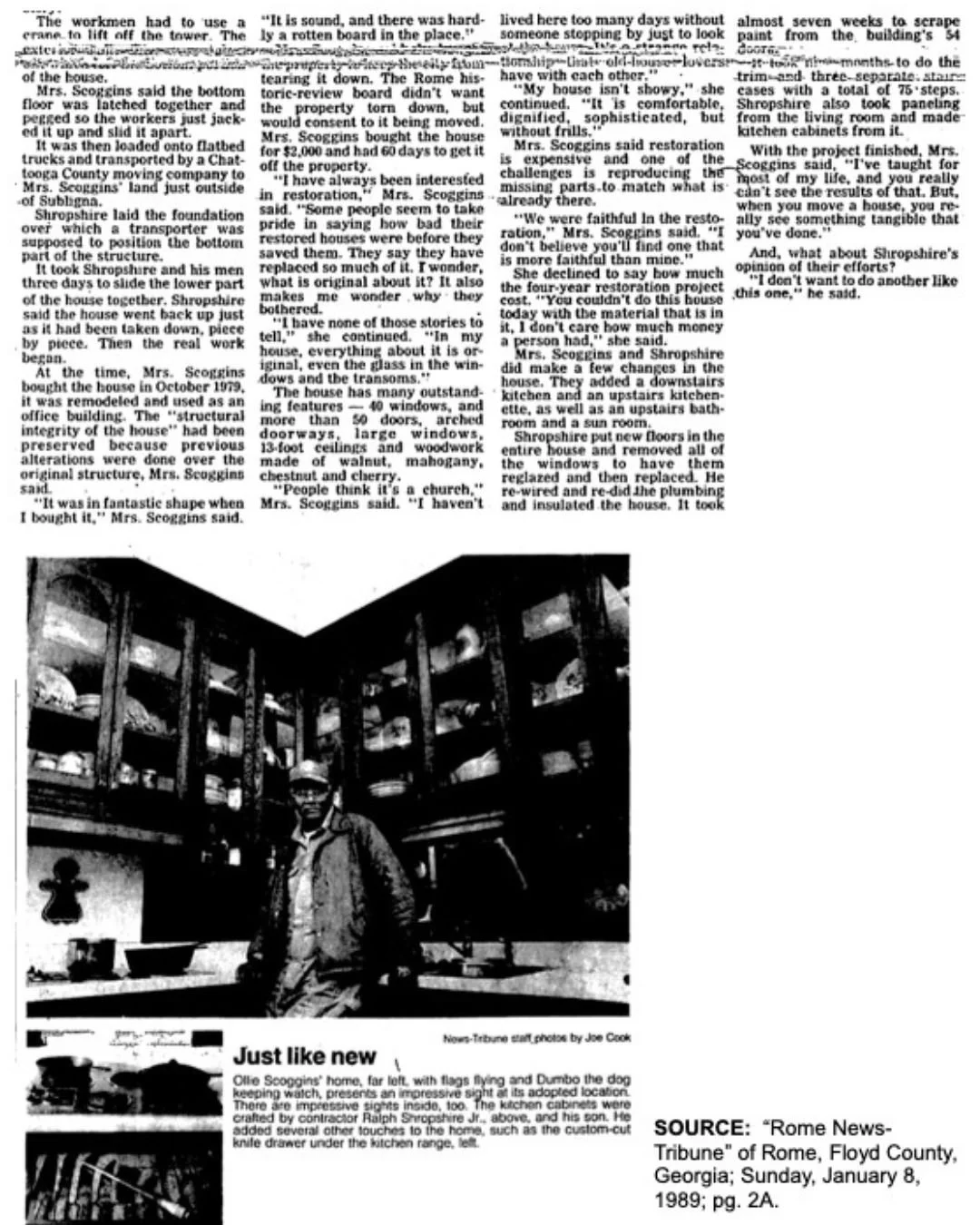
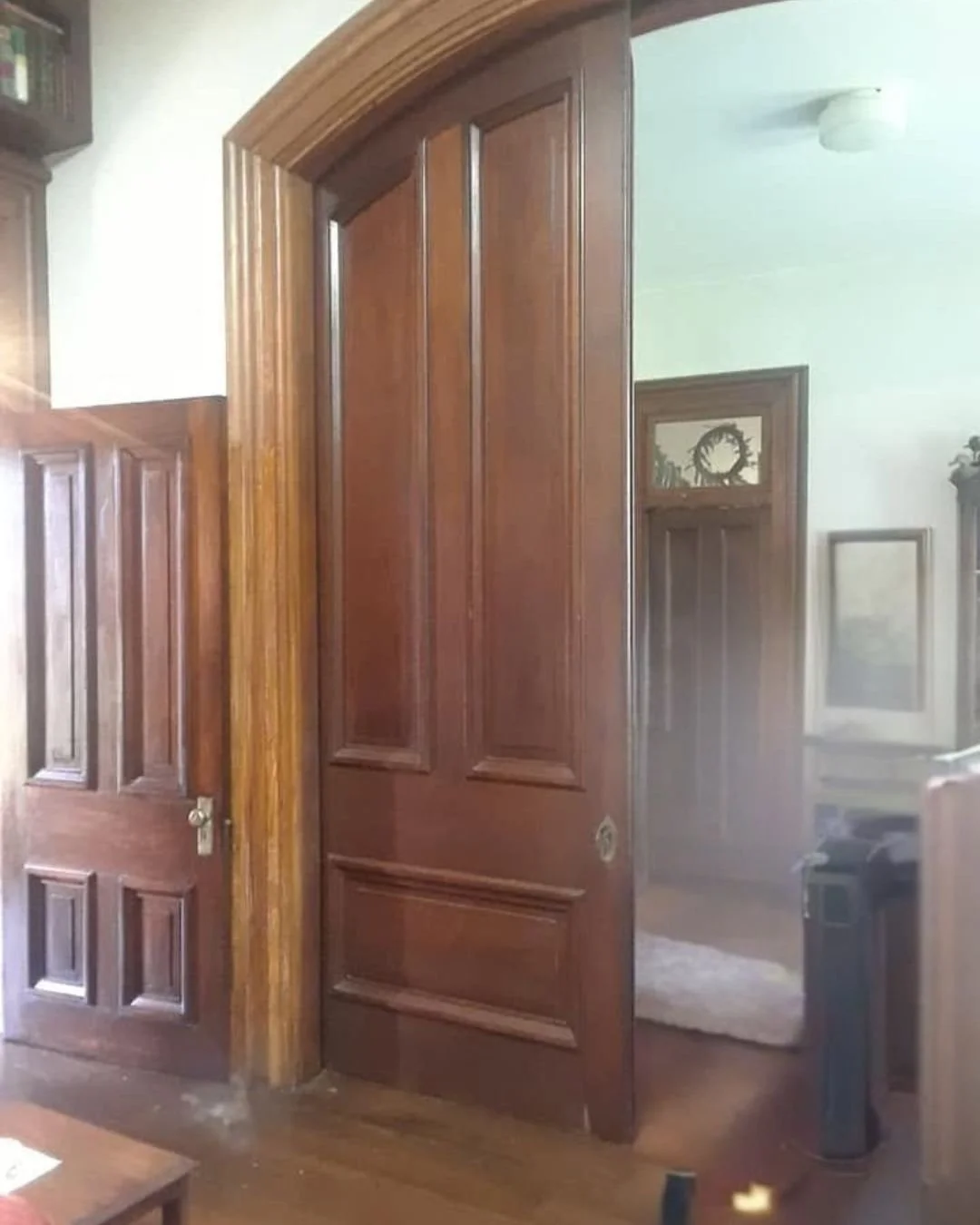
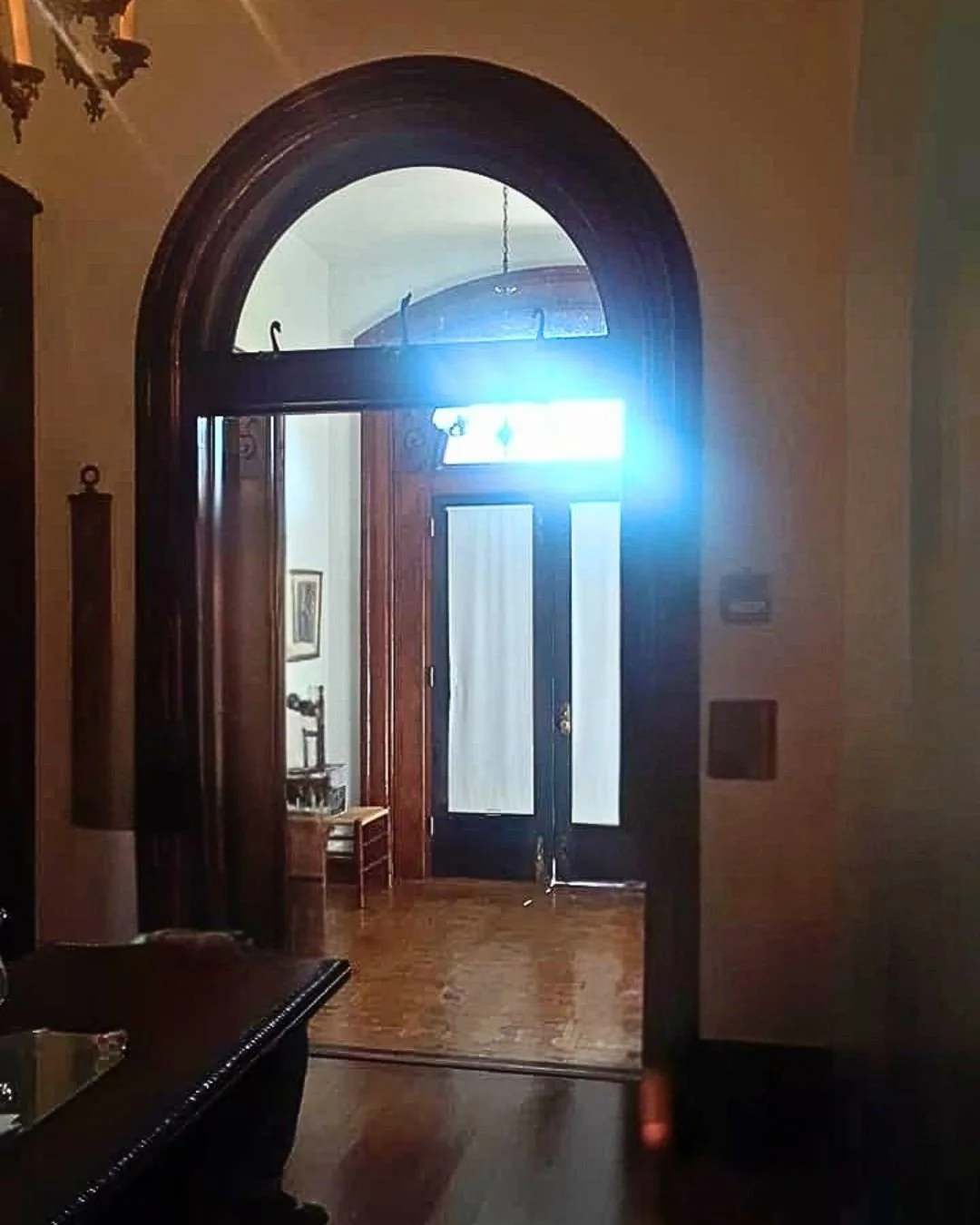
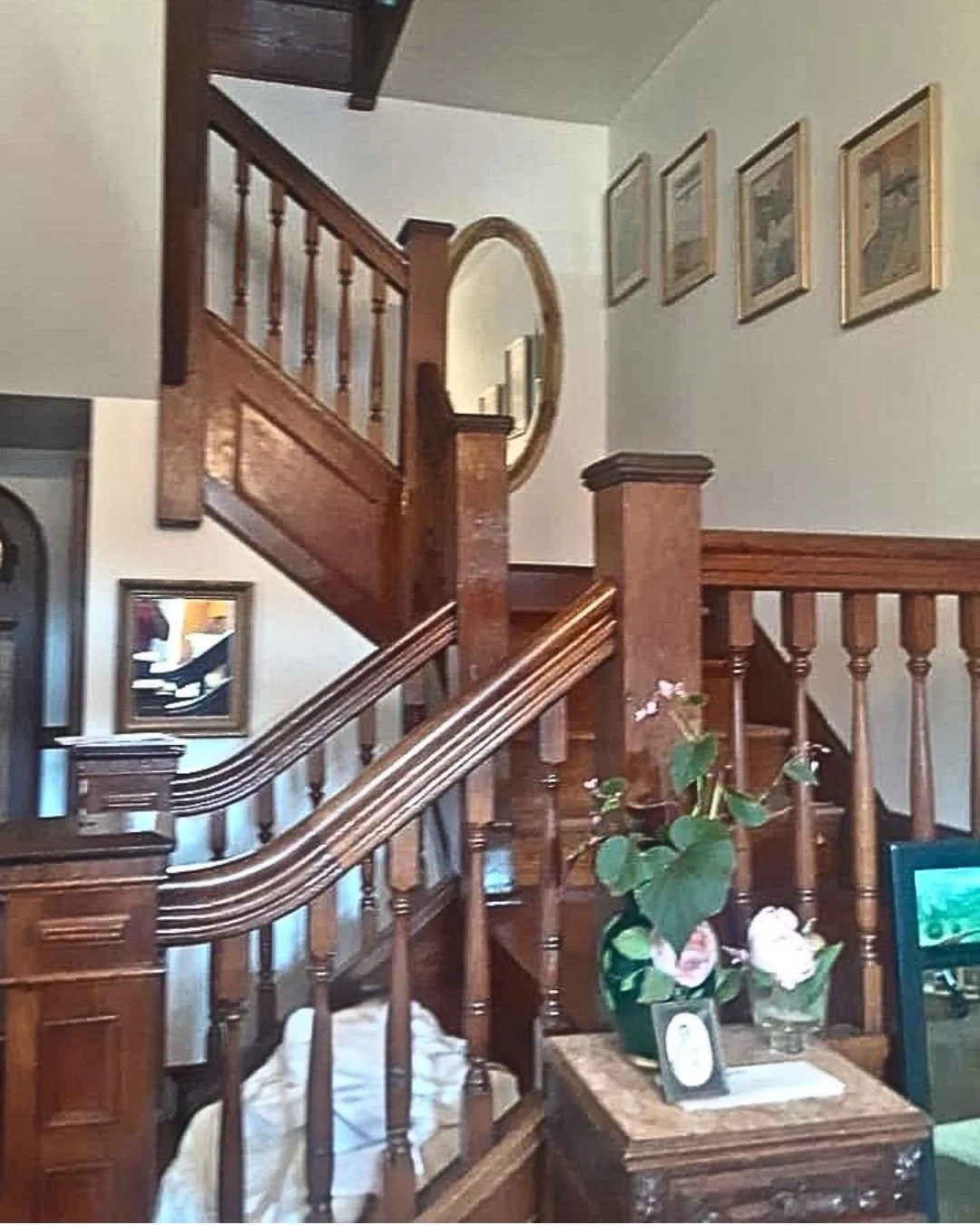
The house still contained nearly 40 original windows, more than 50 original doors, towering 13-foot ceilings, large arched openings, and rich walnut, mahogany, chestnut, and cherry woodwork. Even much of the original glass remained in the windows.
It wasn't simply old.
It was increasingly rare.
"It Can't Be Done"
When Ollie Scoggins decided she wanted to save the house in 1979, she encountered the response preservationists hear all too often:
“It can't be done.”
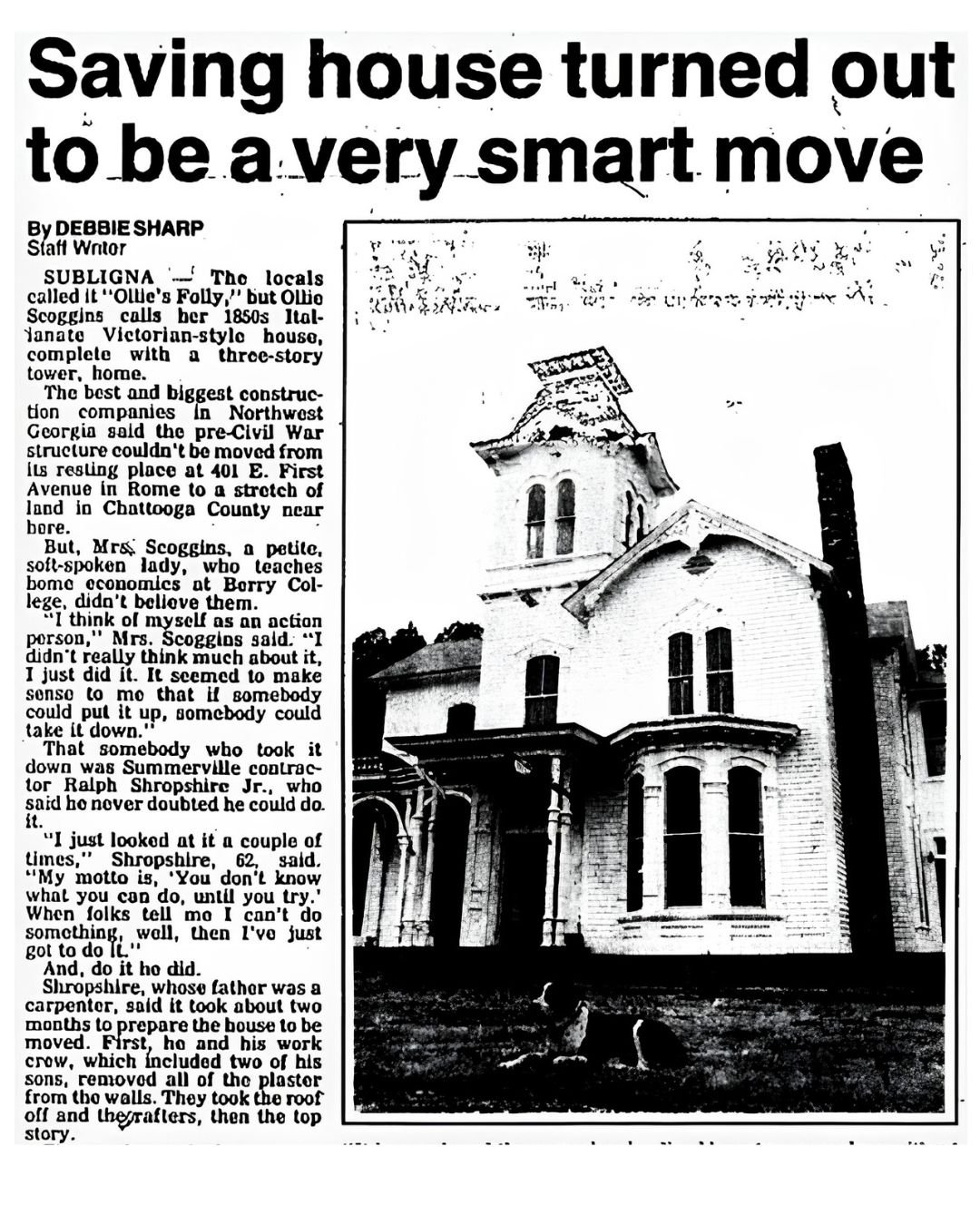
According to the Rome News-Tribune, several of the region's largest construction companies believed the house simply couldn't be moved.
Fortunately, Ollie wasn't particularly interested in being told what was impossible. She later recalled her approach with characteristic simplicity: “I didn't think much about it. I just did it.”
Sometimes preserving history requires less hesitation and more determination.
Taking Apart a Masterpiece
Moving a Victorian-era house isn't like moving furniture. It required months of planning.
Workers carefully removed plaster walls. The tower was lifted away by crane. Sections of the roof were dismantled. The massive structure was jacked up, separated into sections, and loaded onto flatbed trailers before beginning its journey to Chattooga County.
Only after a new foundation had been prepared in Subligna did the painstaking work of putting everything back together begin.
In many ways, this wasn't simply a move.
It was an architectural reconstruction.
Preservation Done Right
One quote from Ollie Scoggins tells you almost everything you need to know about why the project succeeded. Reflecting on other restored homes, she observed: “Some people seem to take pride in saying how bad their restored houses were before they restored them... I wonder what is original about it? It also makes me wonder why they bothered.”
That philosophy guided the entire project.
Rather than replacing historic materials with modern reproductions, the goal was to preserve as much original fabric as possible. The result is a house that still feels authentic—not because it's perfect, but because it remains largely the same house craftsmen built more than a century ago.
There's an important distinction there. Preservation isn't about making an old house look new again. Sometimes the imperfections, old glass, worn wood and evidence of generations of use are precisely the things worth saving.
A New Life
Today, the house sits peacefully in the countryside outside Summerville. To most passersby, it's simply a beautiful old home.
Few realize they're looking at one of Rome's architectural survivors—a house that escaped demolition, survived an extraordinary move, and refused to disappear.
Stand Here
📍 401 East First Avenue
Stand here today and try to imagine this house in front of you.
Picture the tower rising above the street. The deep porches. The tall windows. The intricate woodwork.
Then imagine crews arriving in 1989 to begin carefully taking it apart.
The tower comes down. Sections of roof disappear. Walls are separated. Eventually, the entire house leaves Rome on flatbed trailers.
There is almost nothing about standing here today that tells you such an extraordinary building once occupied this spot.
Sometimes preservation succeeds because someone refuses to accept the easiest answer.
Jeb's Take
Historic preservation is often measured by the buildings we save. I think it should also be measured by the people willing to save them.
This house wasn't rescued because saving it was the easiest option. It survived because someone looked at extraordinary craftsmanship, saw something worth keeping, and decided it deserved another century.
I've toured dozens of houses across the country since meeting Ollie Scoggins. I've stood inside Fallingwater, visited modern masterpieces in California, and wandered through historic estates in Europe. But when I think about the moment I first understood that a house could have a story worth saving, my mind always goes back to a quiet afternoon in Subligna.
Sometimes the buildings we remember most aren't the grandest ones.
They're the ones where someone took the time to open the front door.