
RHJ: The Big Reveal
The Expensive Decisions...and the Ones We Refused to Make (Part 2 of Designing a Kitchen for a 1938 Tudor)
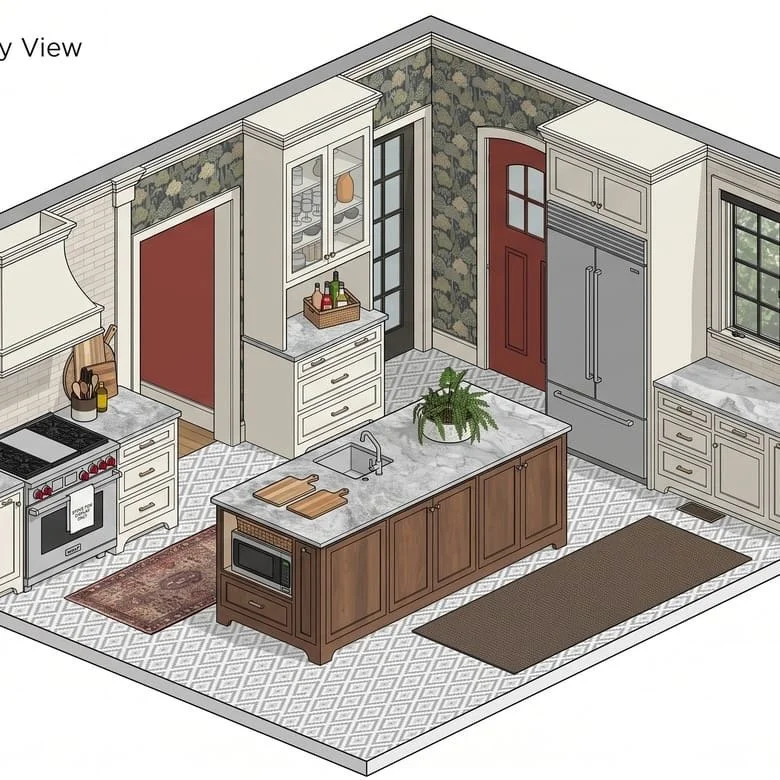
Kitchens can cost a fortune. But they don’t necessarily have to.
After renovating more than a dozen kitchens, I’ve learned a few things about spending intentionally. That doesn’t mean I was willing to compromise on everything. I certainly had a wish list: a professional 48-inch range, built-in refrigeration, dishwasher drawers, and enough storage that every cabinet had a purpose. What I didn’t want was to buy the most expensive version of everything simply because a magazine, TikTok video, or showroom told me I should.
Spending and Saving
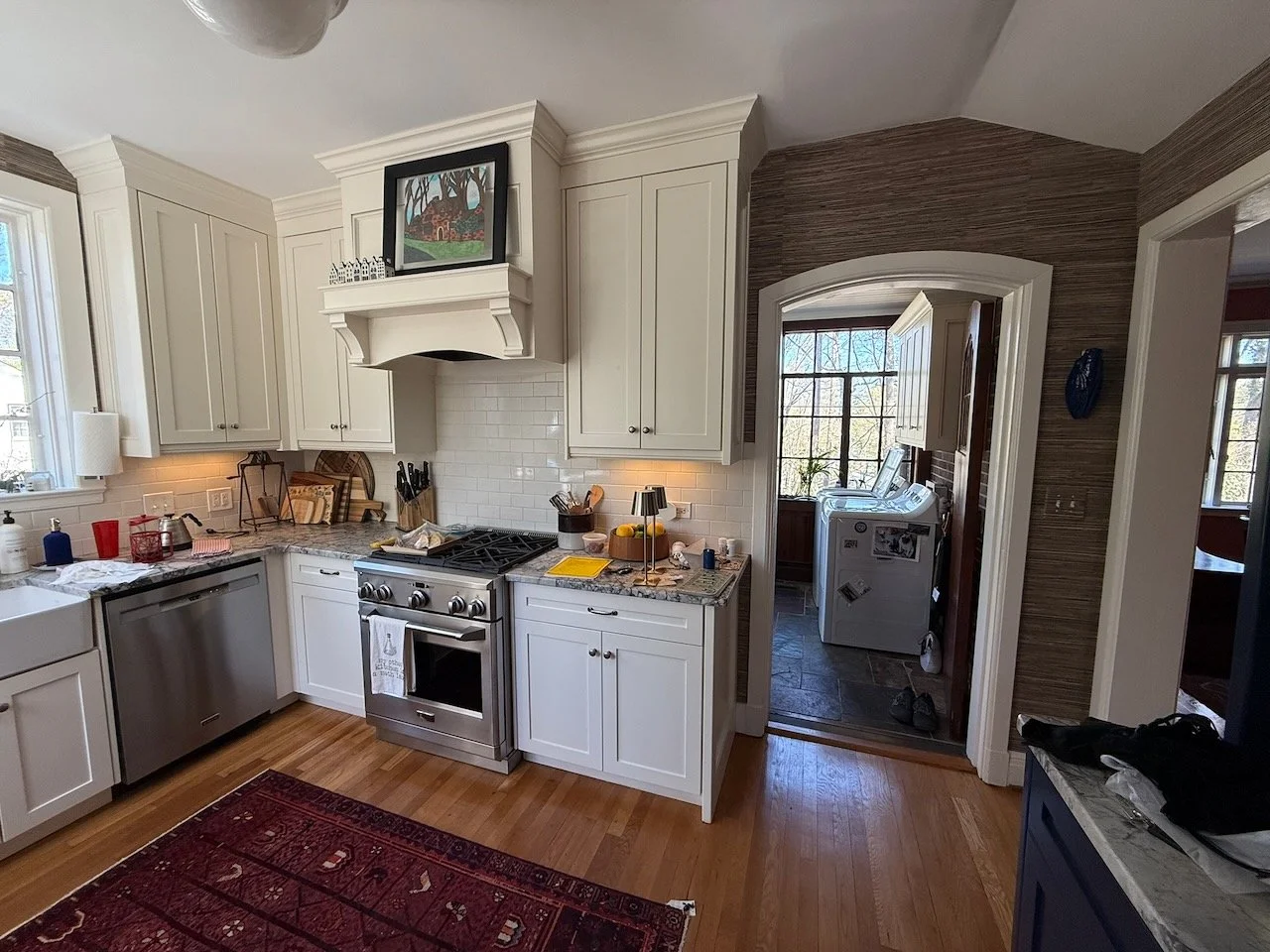
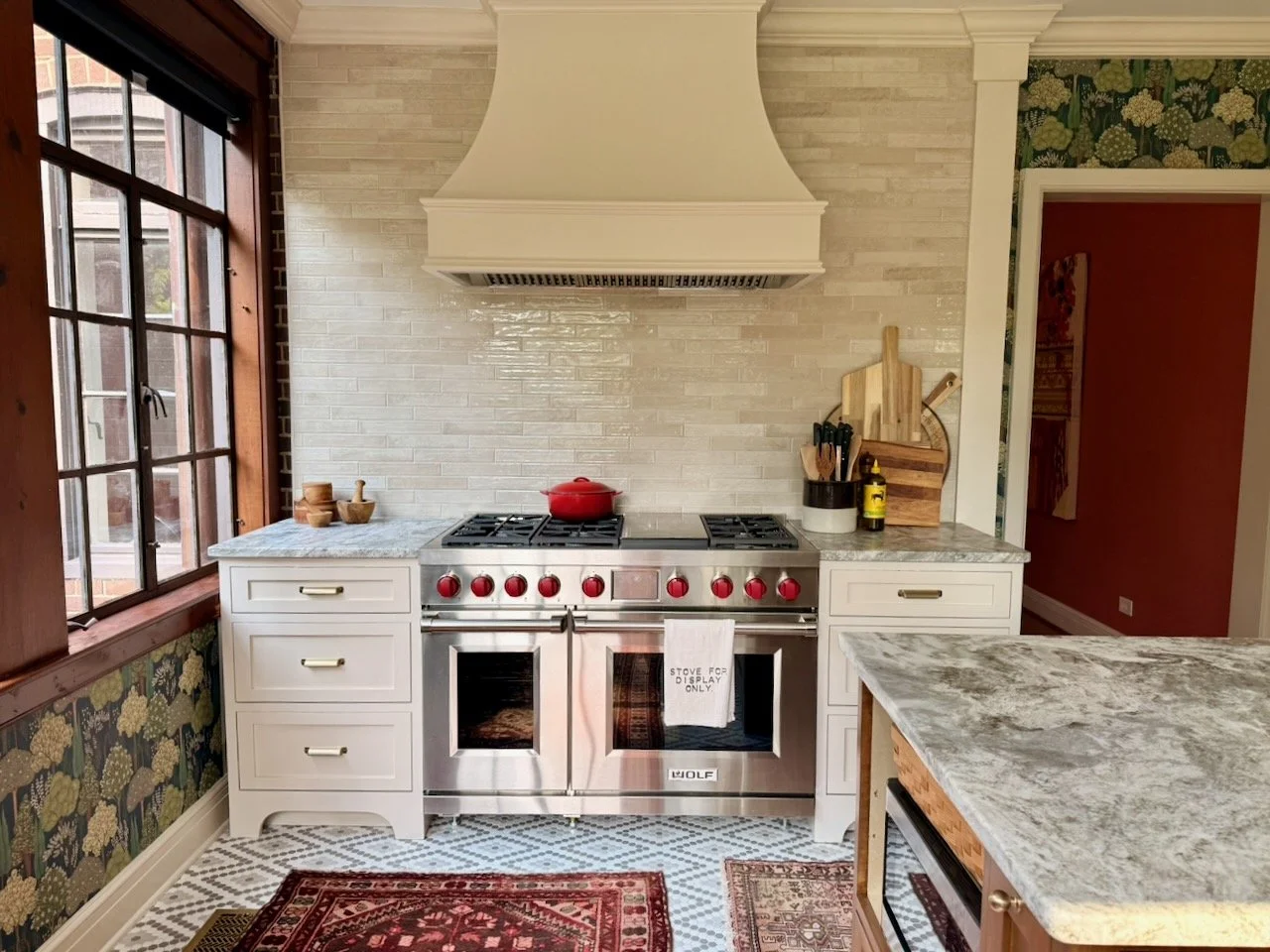
One of my favorite purchases wasn’t new at all. Instead of ordering every appliance directly from a showroom floor, we considered floor models, open-box appliances, discontinued inventory, and gently used professional equipment.
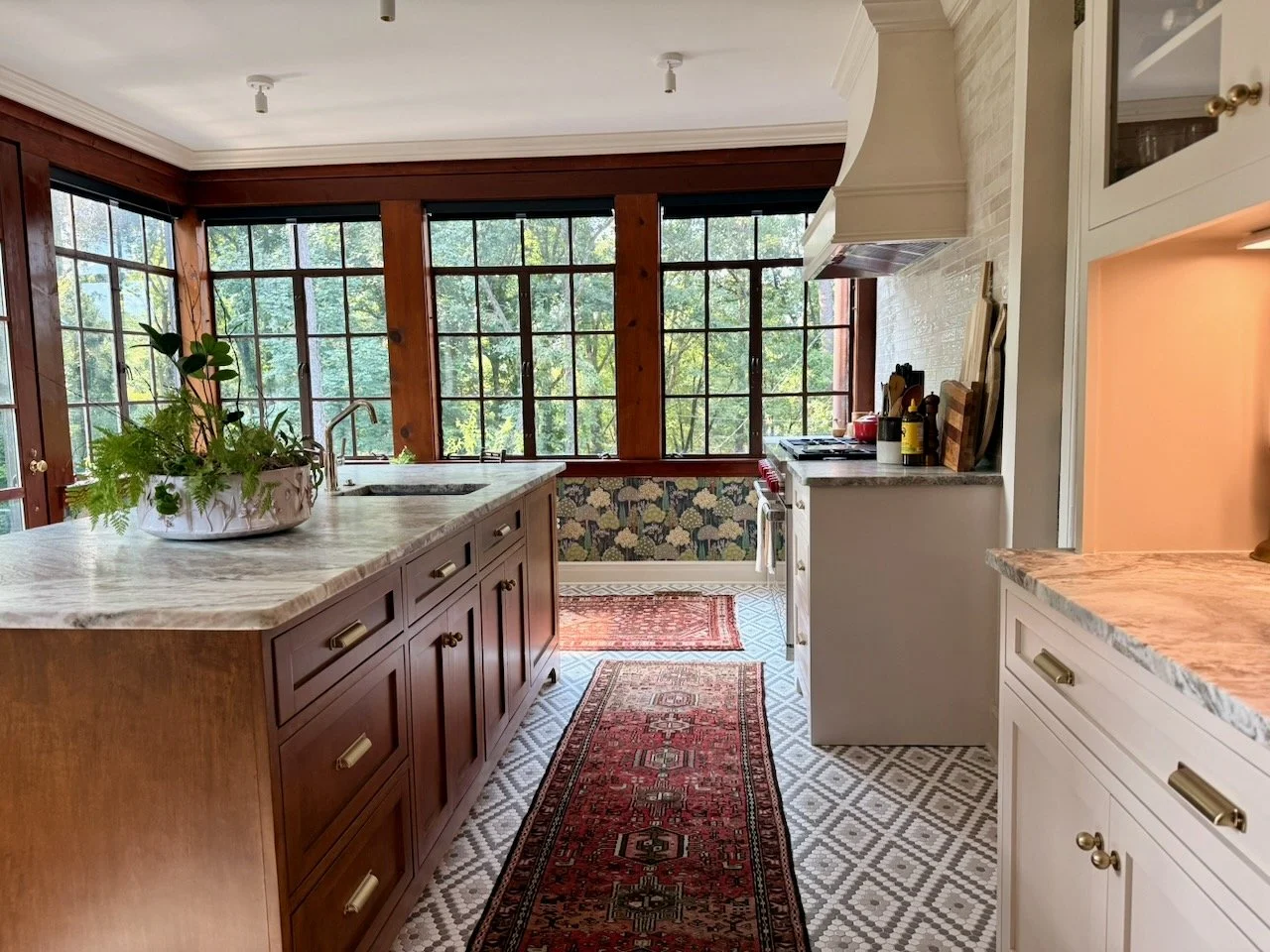
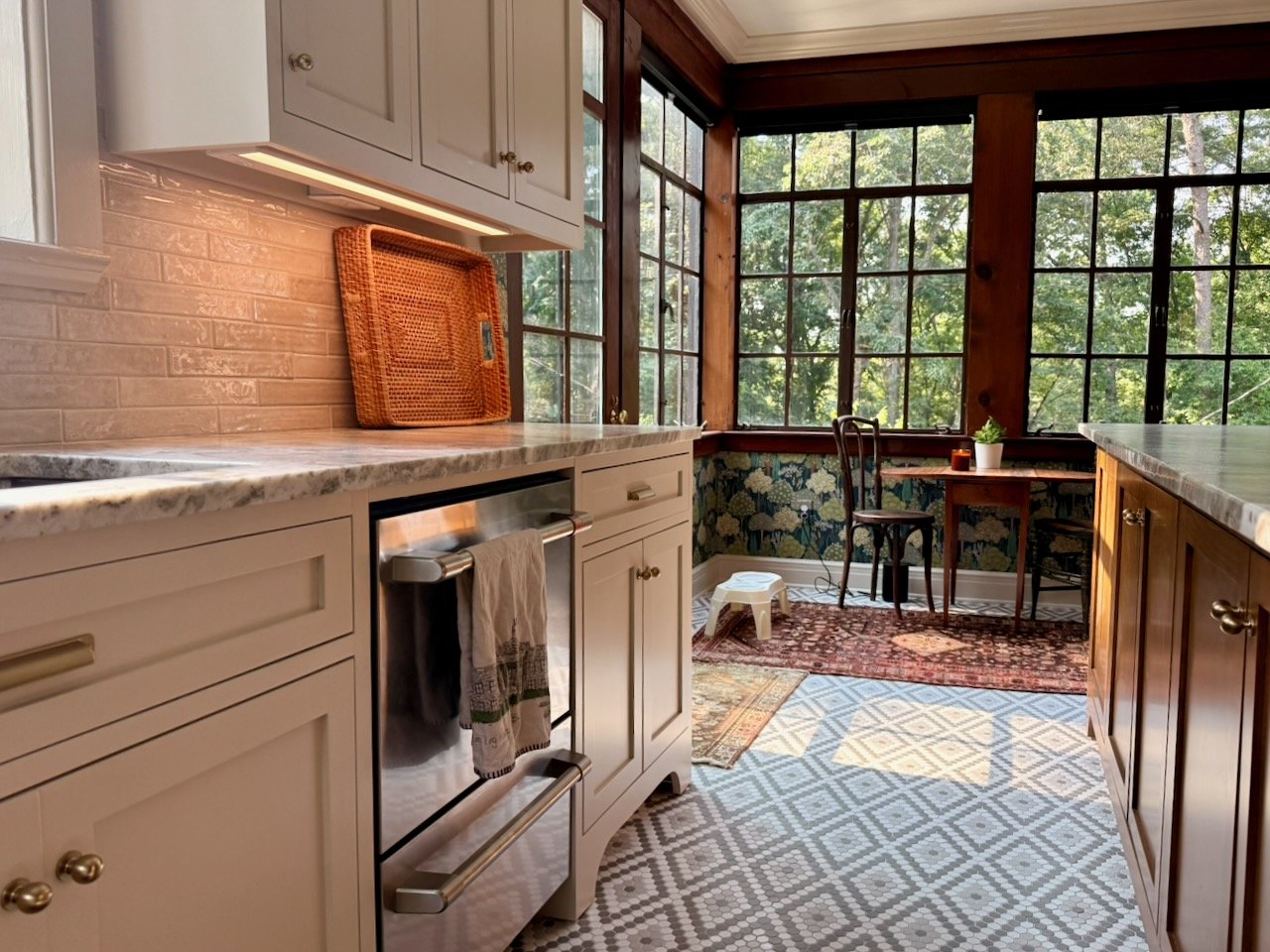
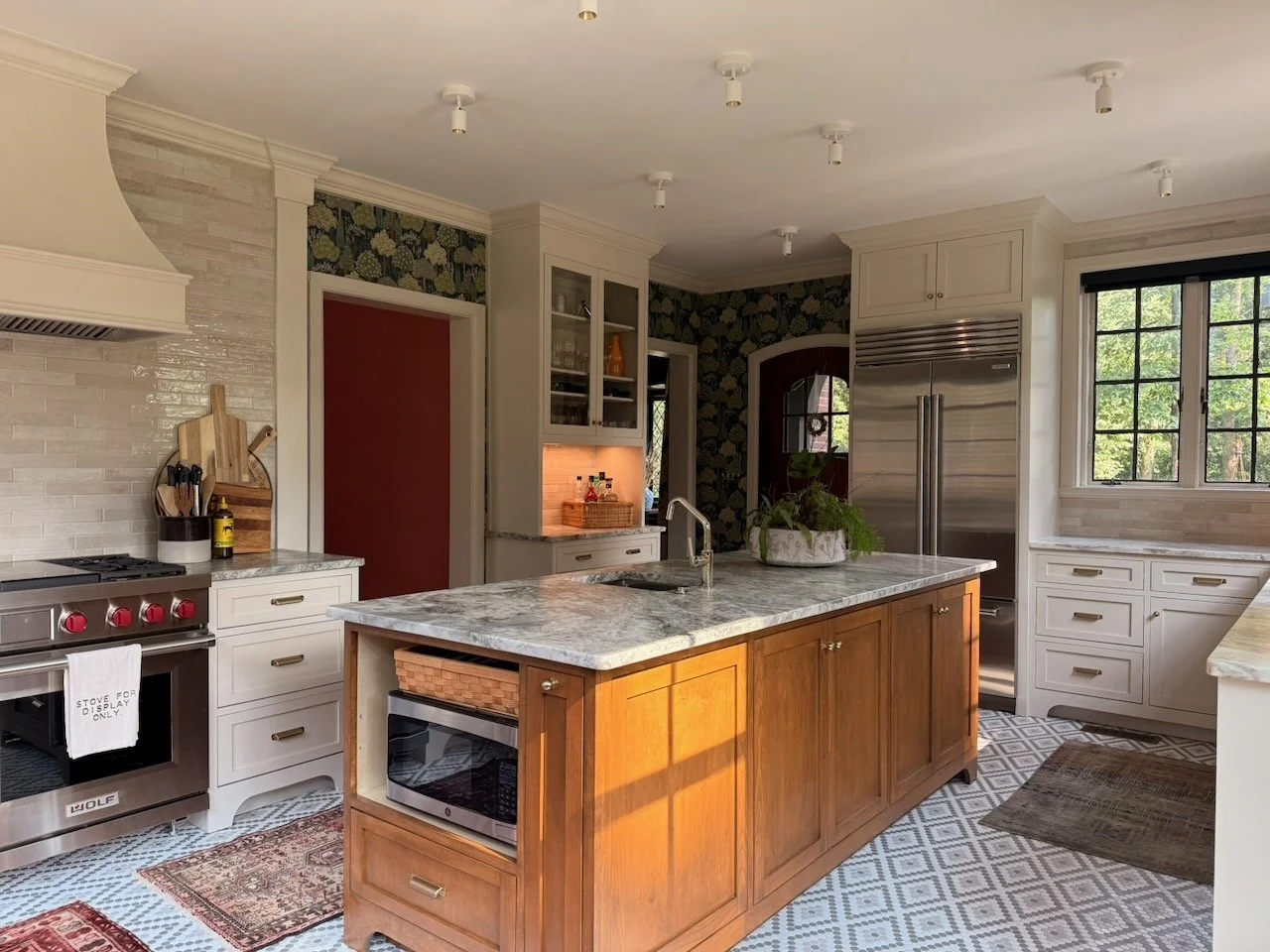
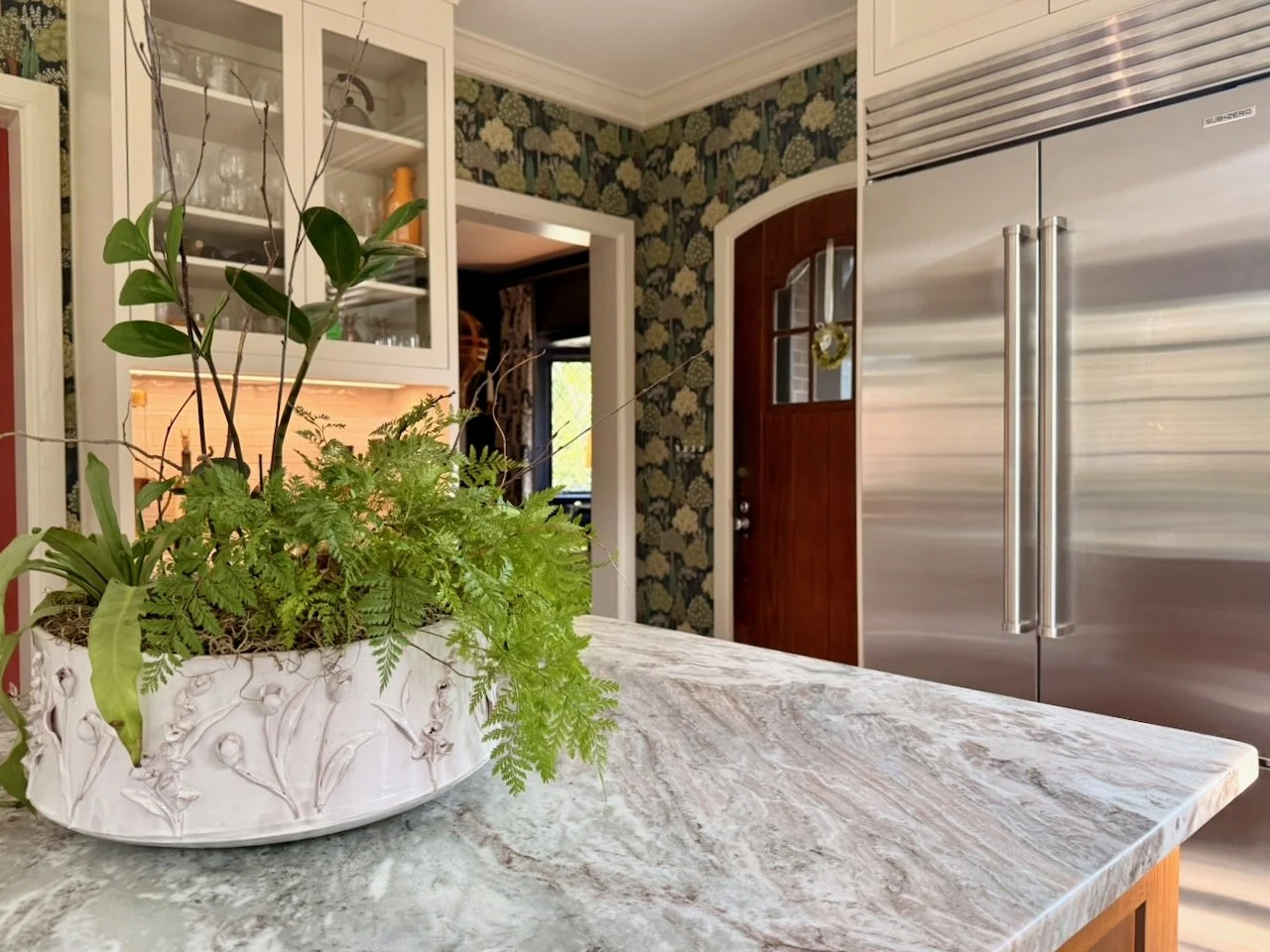
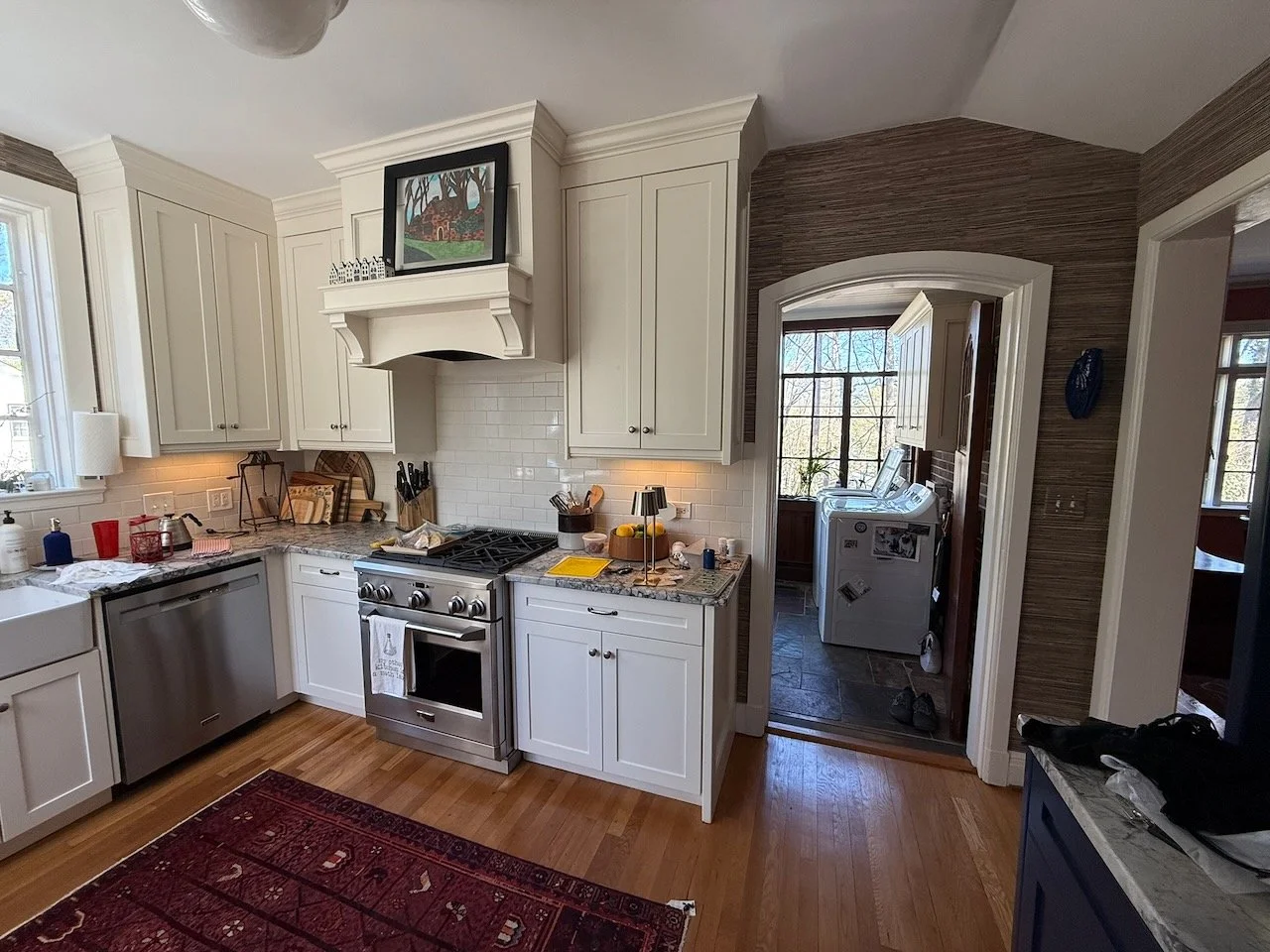
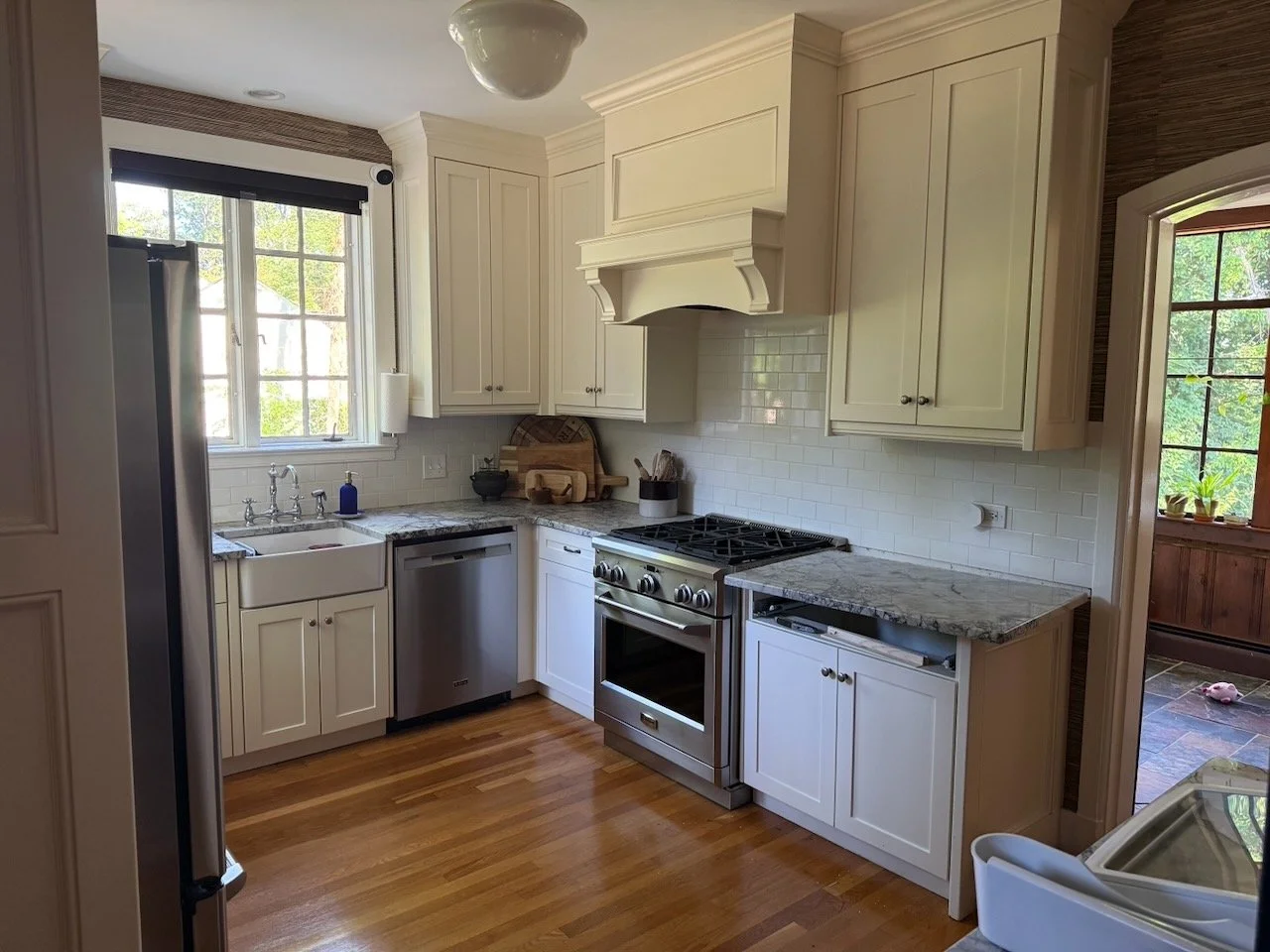
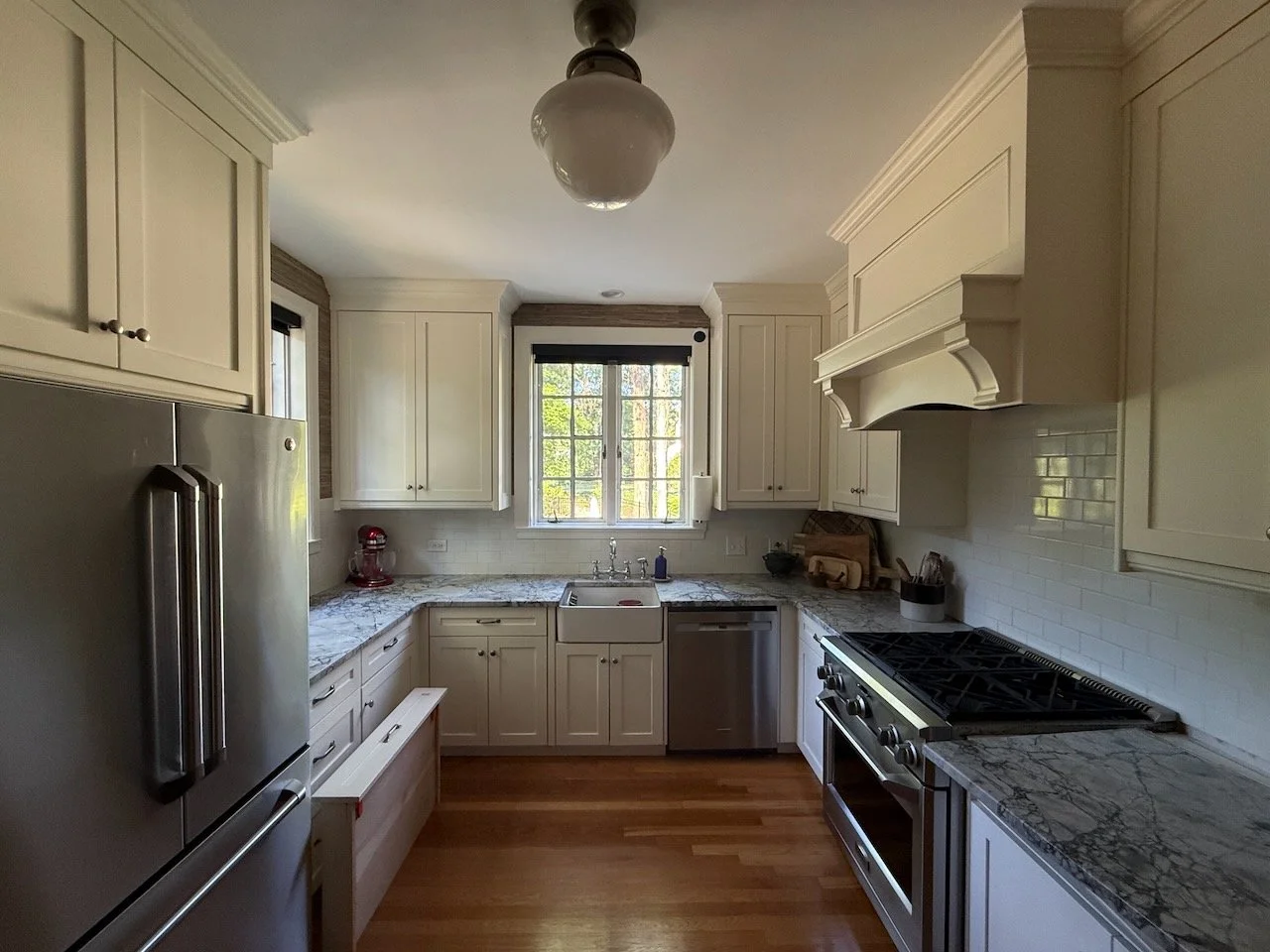
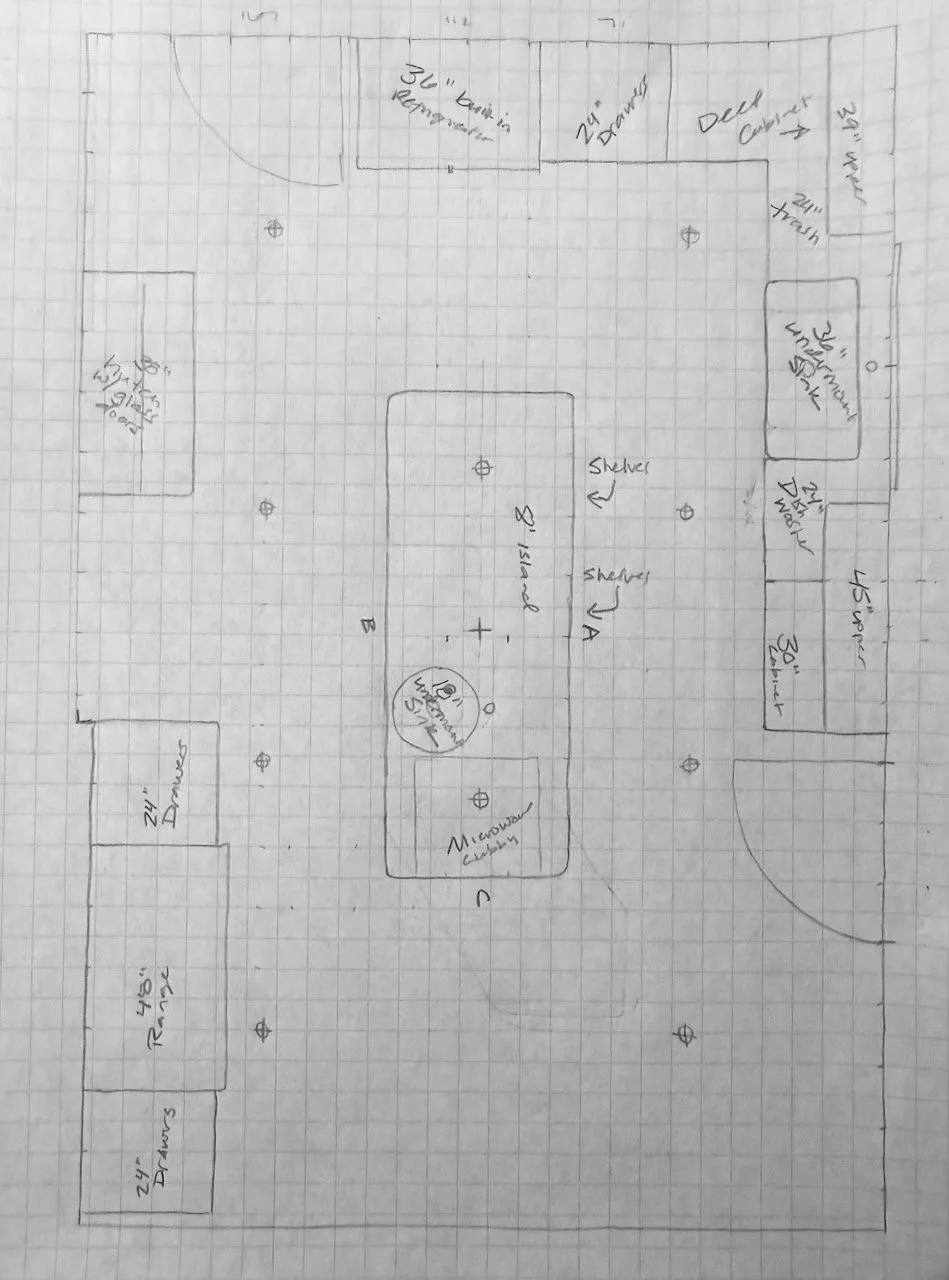
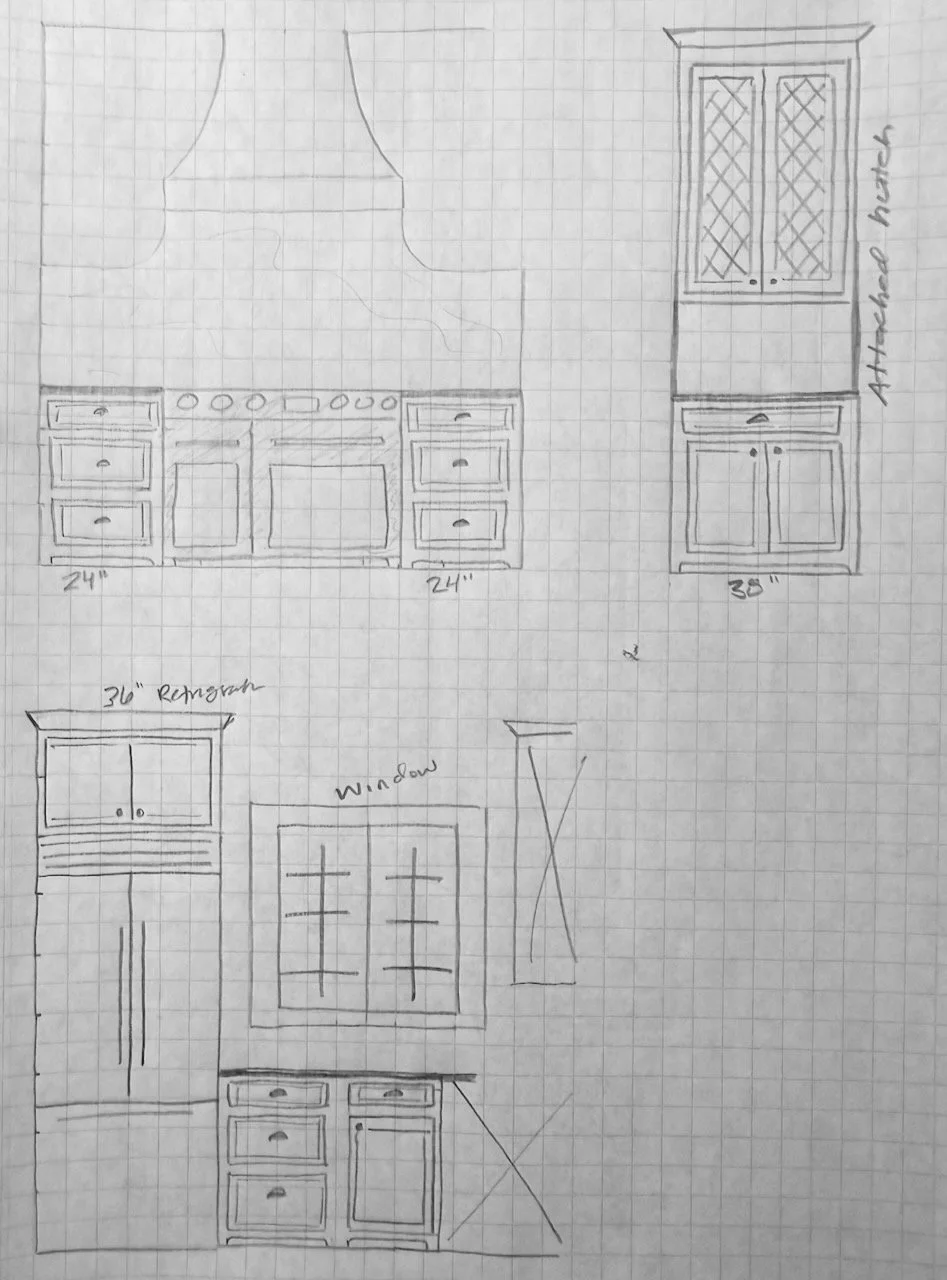
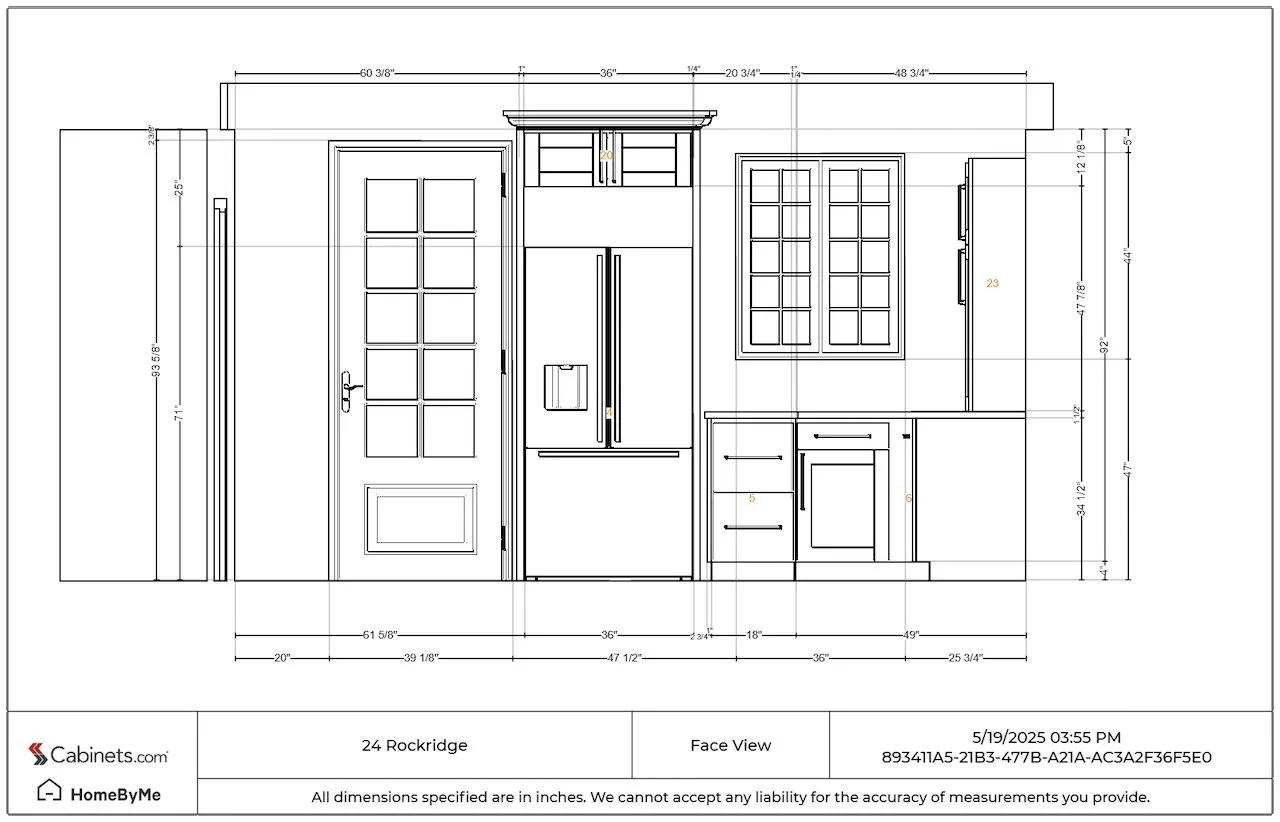
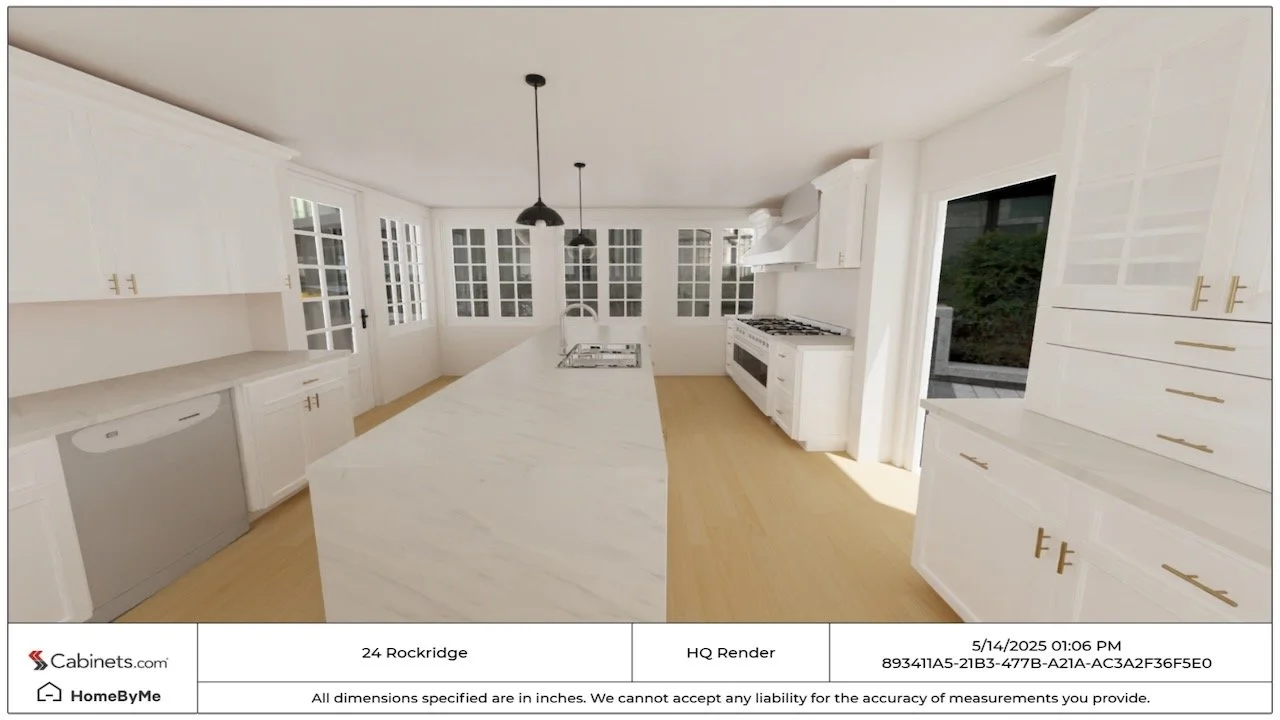
After looking at several options, we chose a 48-inch Wolf range that had been used as a 2025 showroom demonstration model, a new 36-inch Sub-Zero refrigerator from the previous model year, and a Café double-drawer dishwasher with a small dent on one side. The dishwasher still carried its full factory warranty, and the dent disappeared entirely once it was installed between the cabinets.
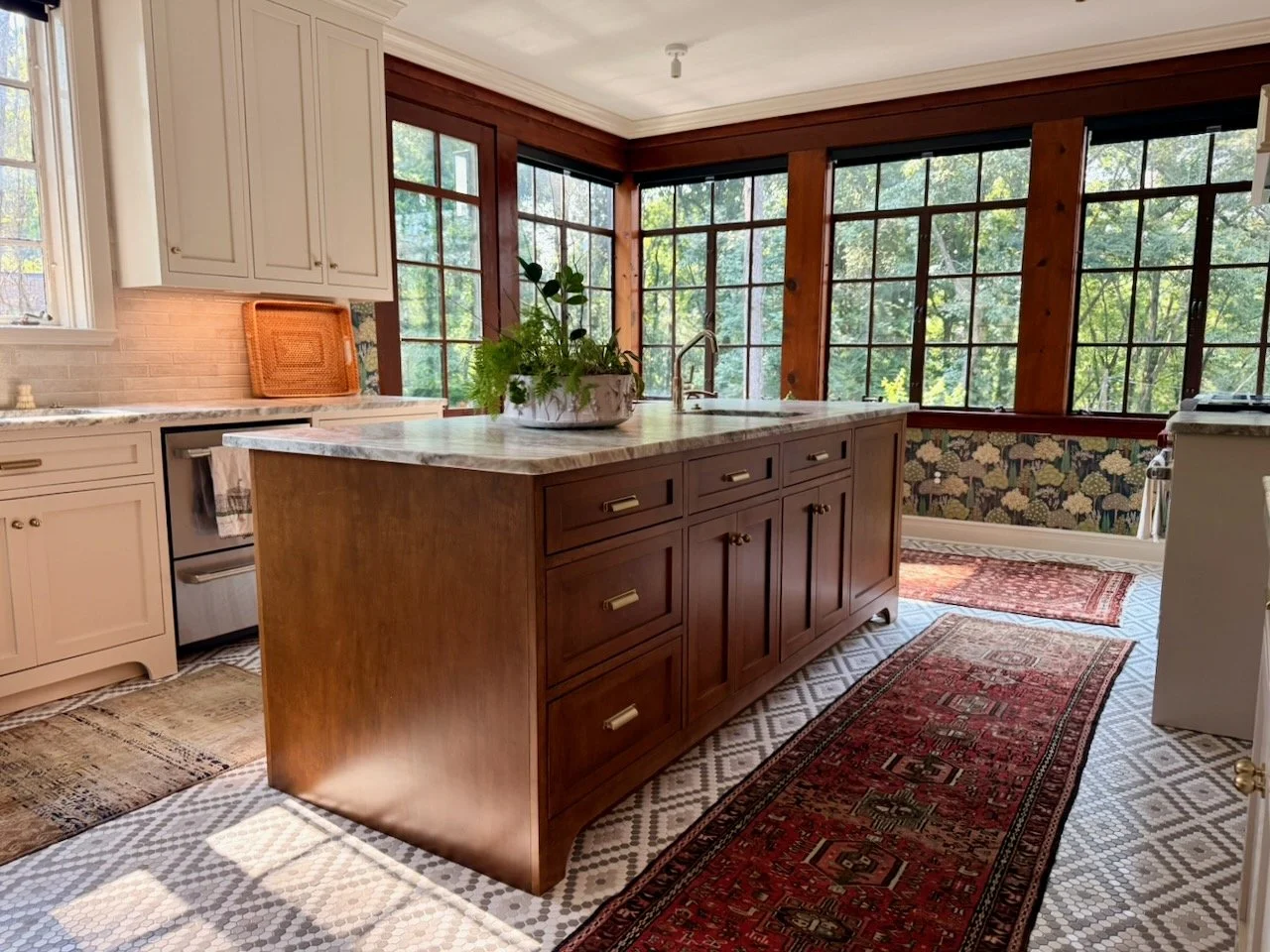
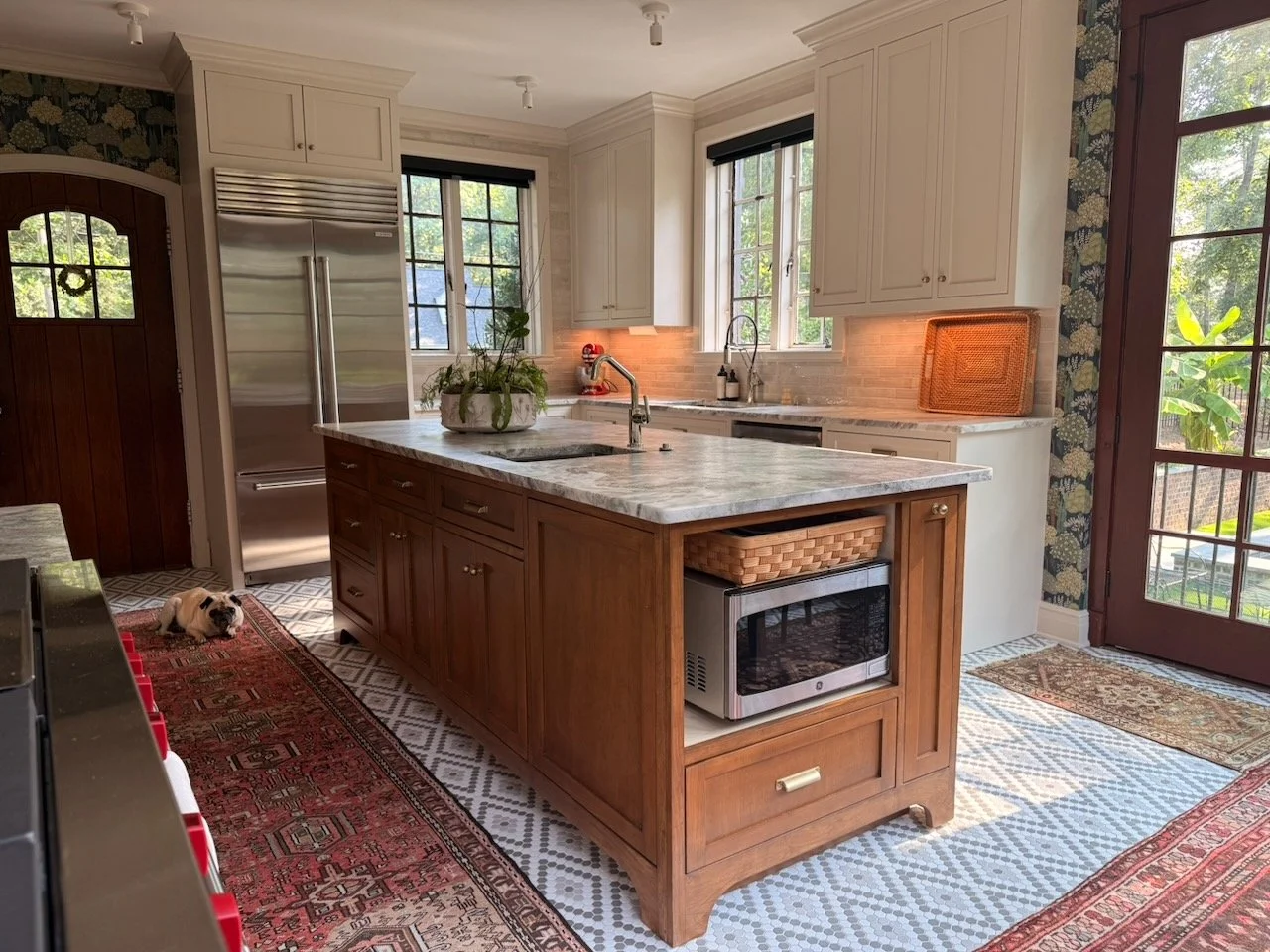
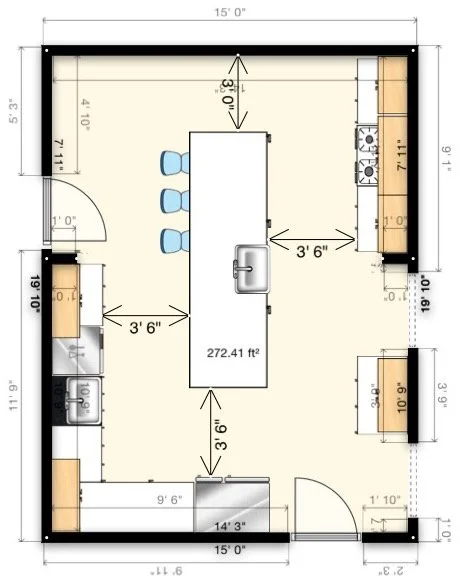
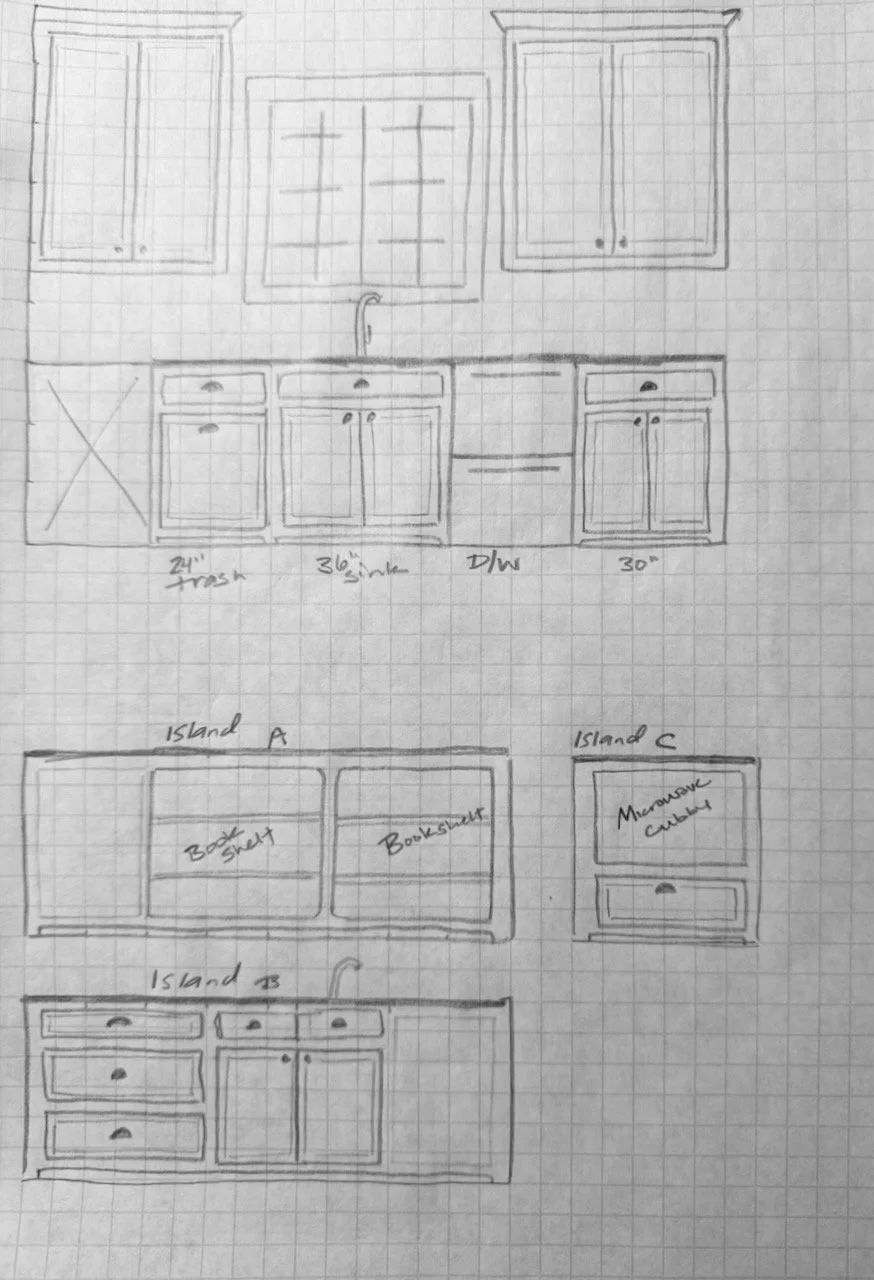
We also refused to spend money on a built-in microwave simply because the cabinet plan included a space for one. We sized the opening so that a microwave drawer could be added later, but for now, our existing countertop microwave sits inside the cabinet. Because it is located at the far end of the island, it is barely visible.
That approach saved thousands of dollars without sacrificing quality—or anything we would actually notice in daily use.
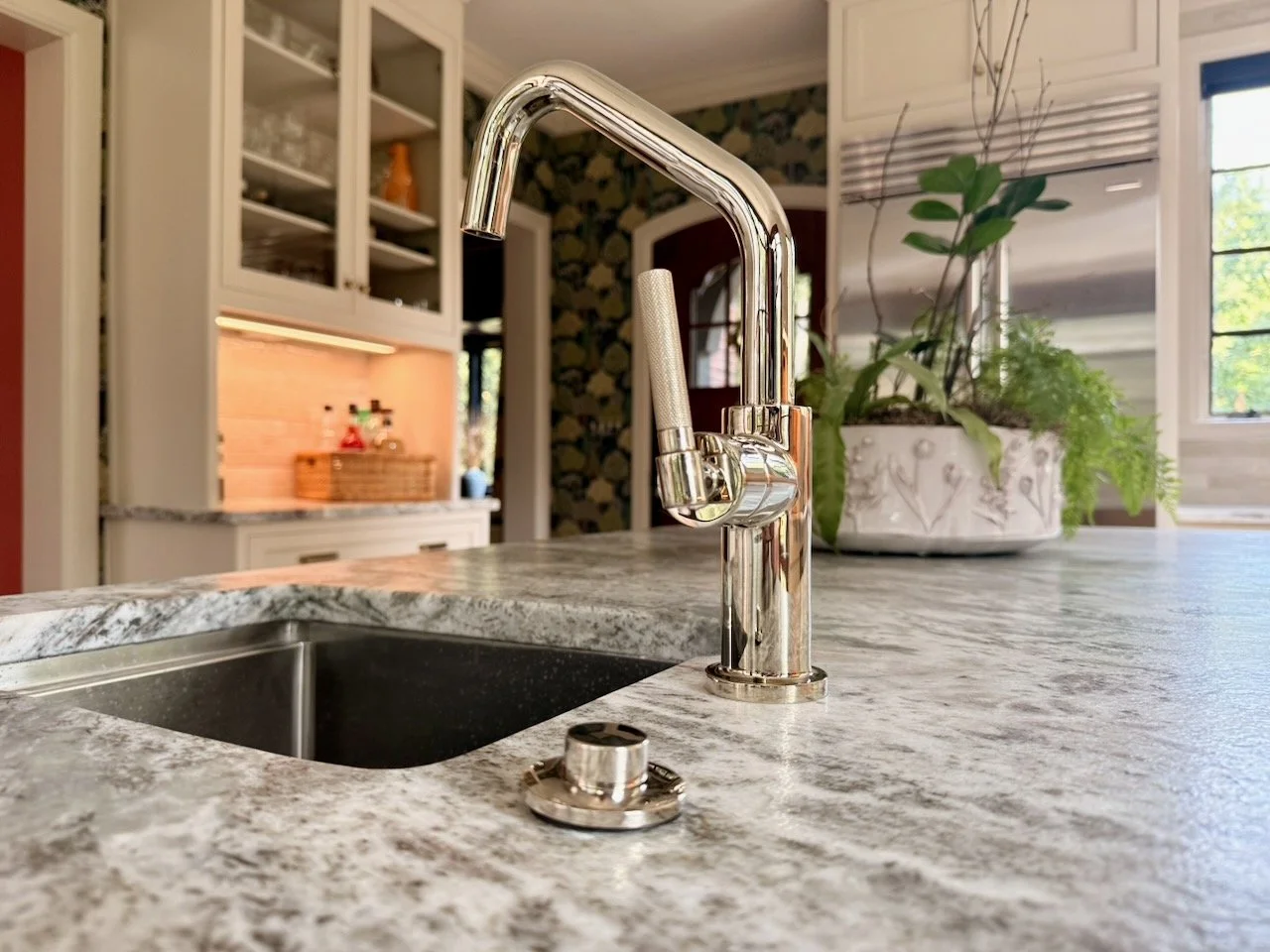
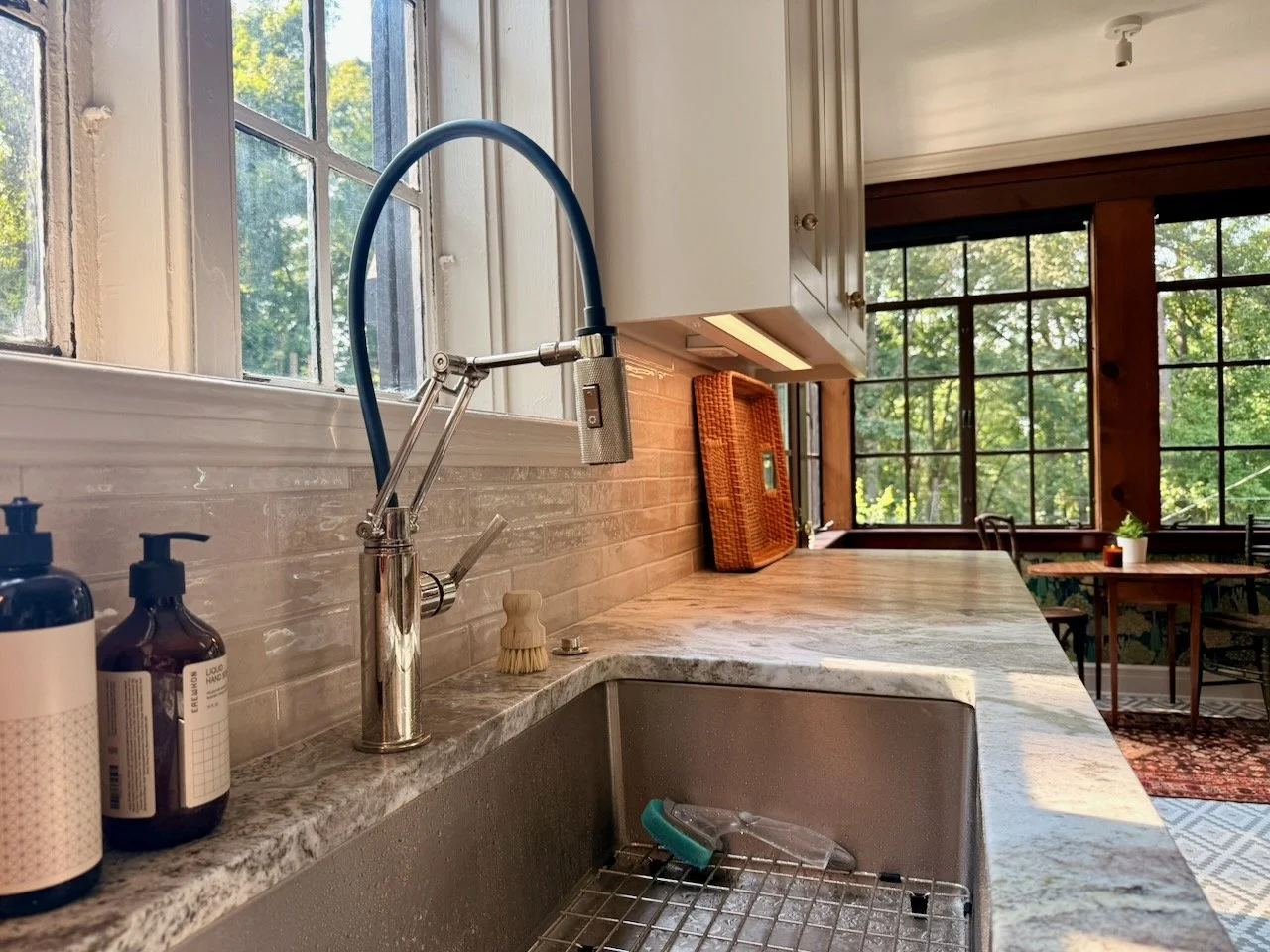
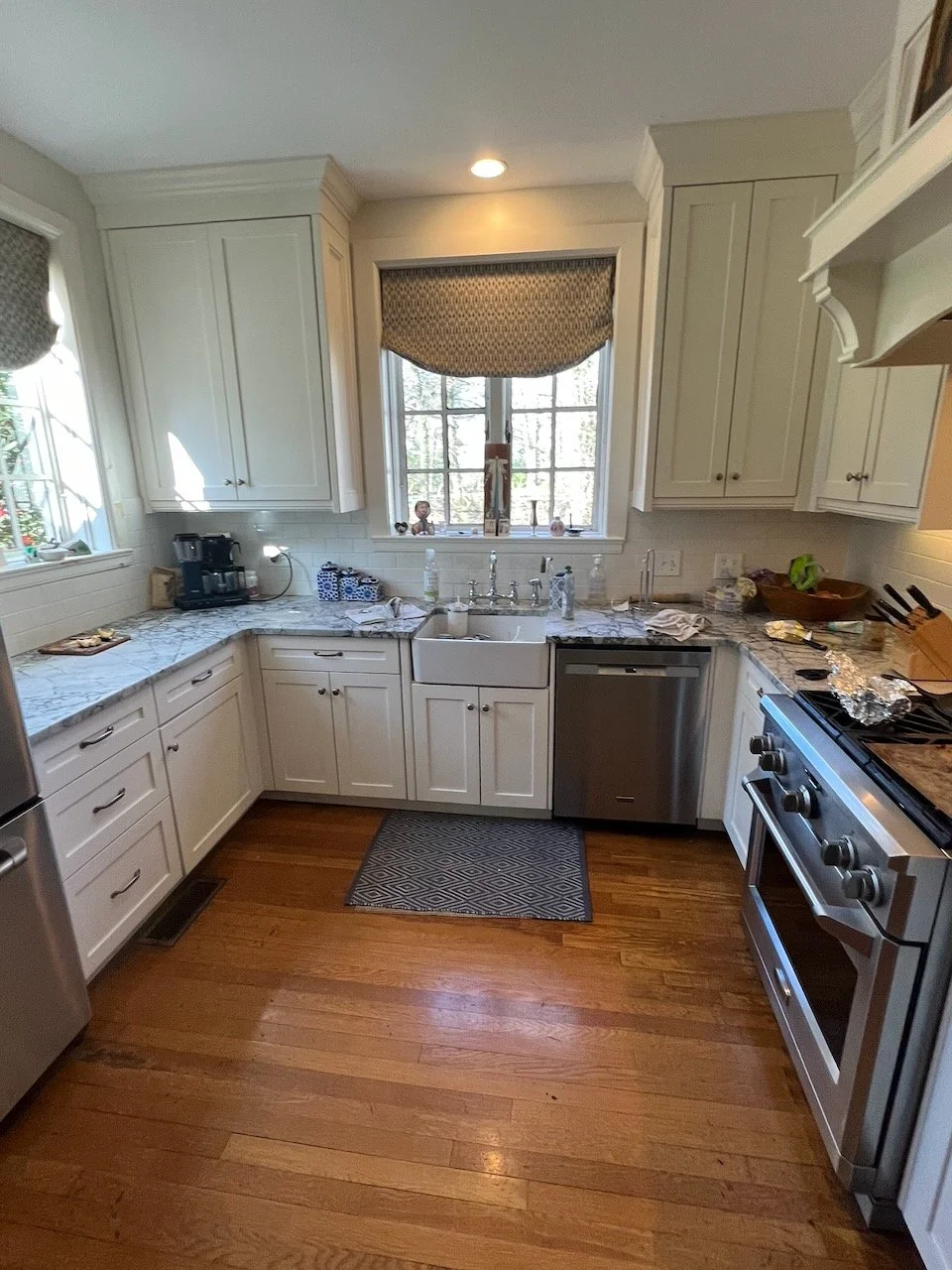
Faucets were another surprise. Faucets are expensive. Yikes. I fell in love with a line from Brizo, but the retail prices were beyond what I wanted to spend. Eventually, I found the exact faucets, brand-new, on eBay for more than half off the retail price.
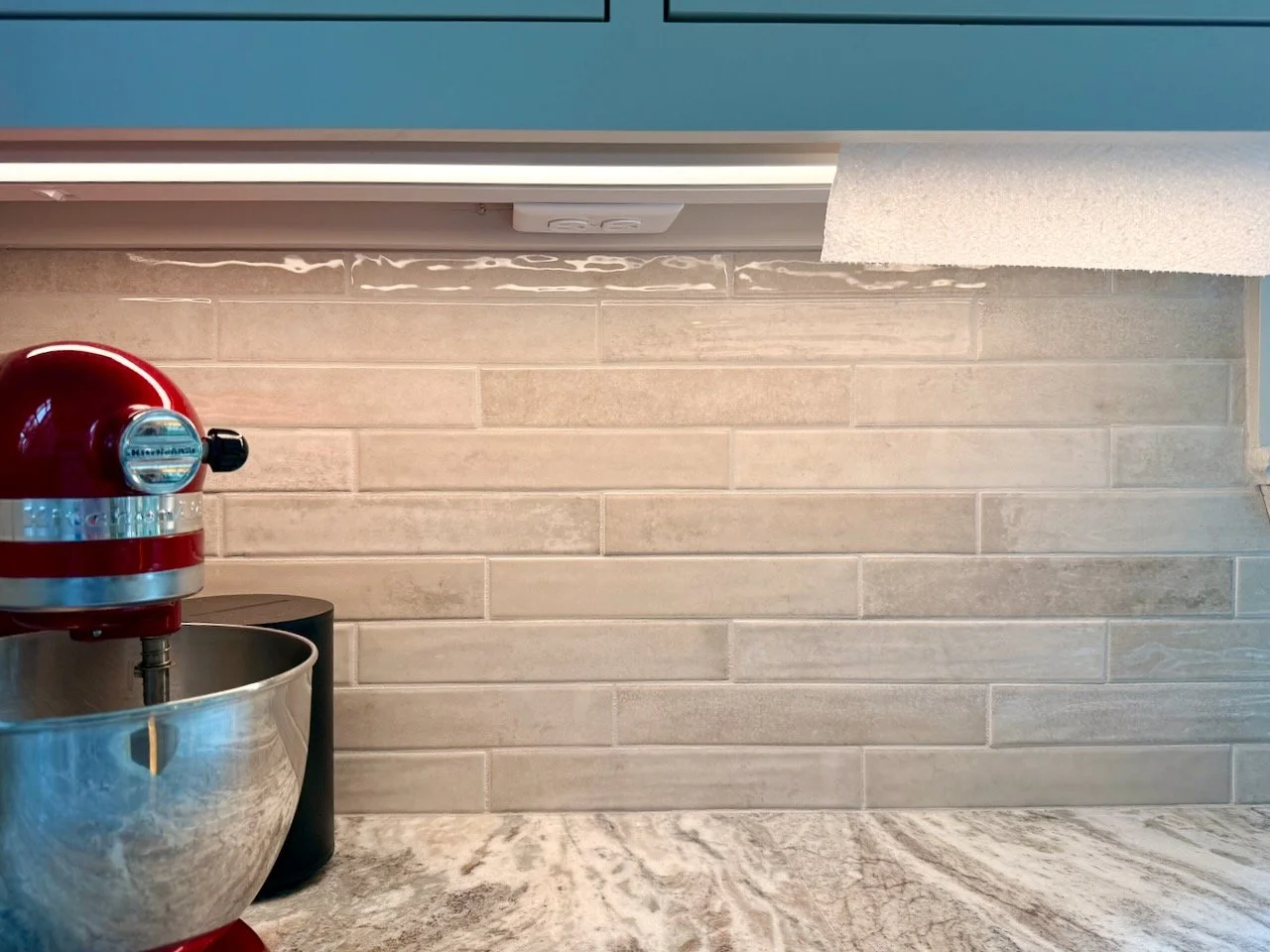
We purchased the backsplash tile from the Adairsville Tile Outlet rather than choosing a higher-end designer brand. It achieved exactly the look we wanted and became one of the best values in the entire kitchen.
Choosing the Stone
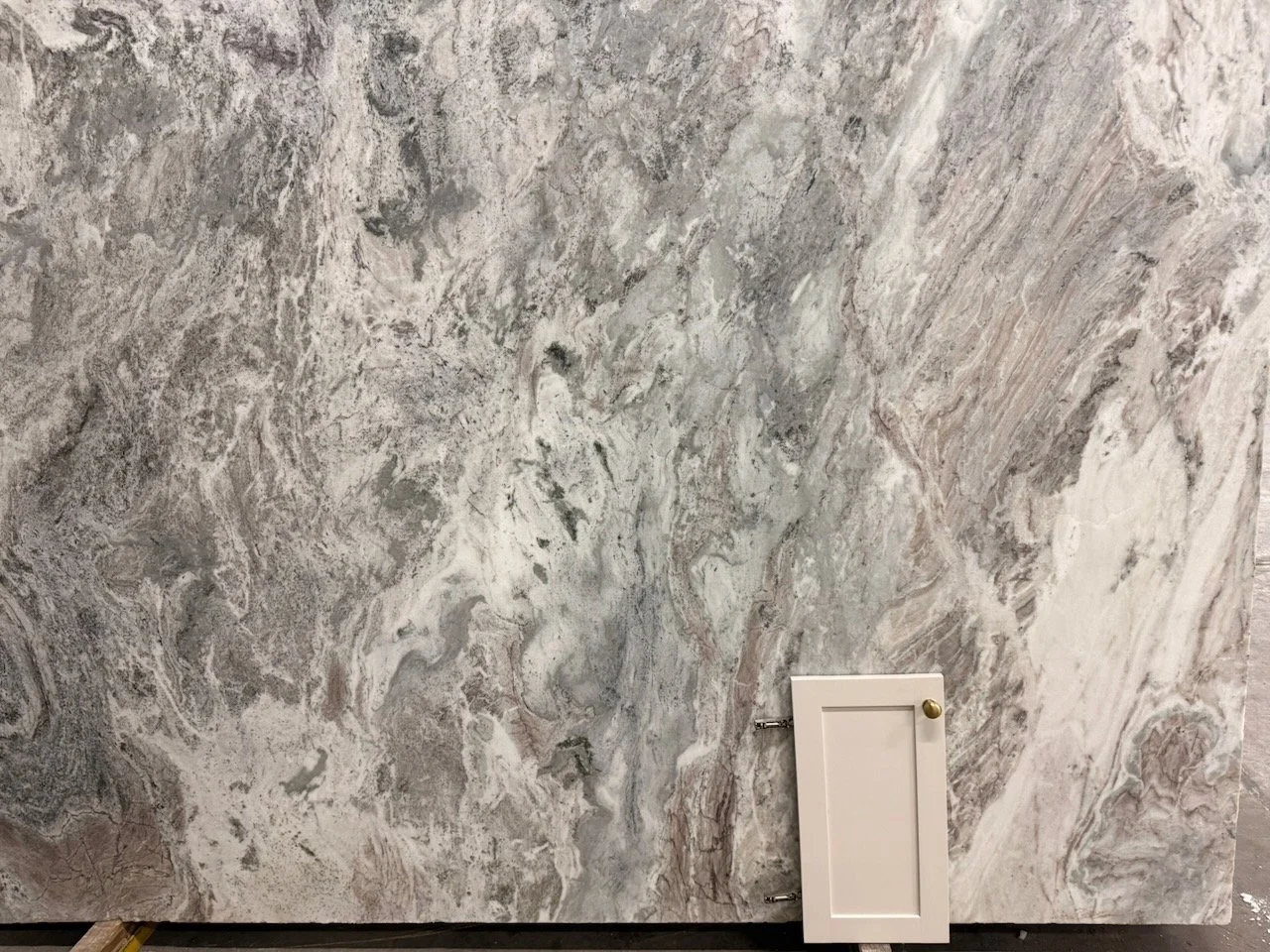
I spent more time selecting the right countertop stone than chasing a particular trend. Initially, I thought I wanted one of the dramatic Calacatta Viola or Calacatta Verde marbles I kept seeing on TikTok. They were beautiful—but they were also hundreds of dollars per square foot and required more maintenance than I wanted.
After looking at what felt like countless slabs, I chose a stone marketed as Stratus Leathered Premium. I still don’t know its precise geological classification. Depending on whom I asked, it was described as dolomite, marble, or quartzite—which may tell you more about the stone industry than it does about the slab.
But I knew exactly why I loved it.
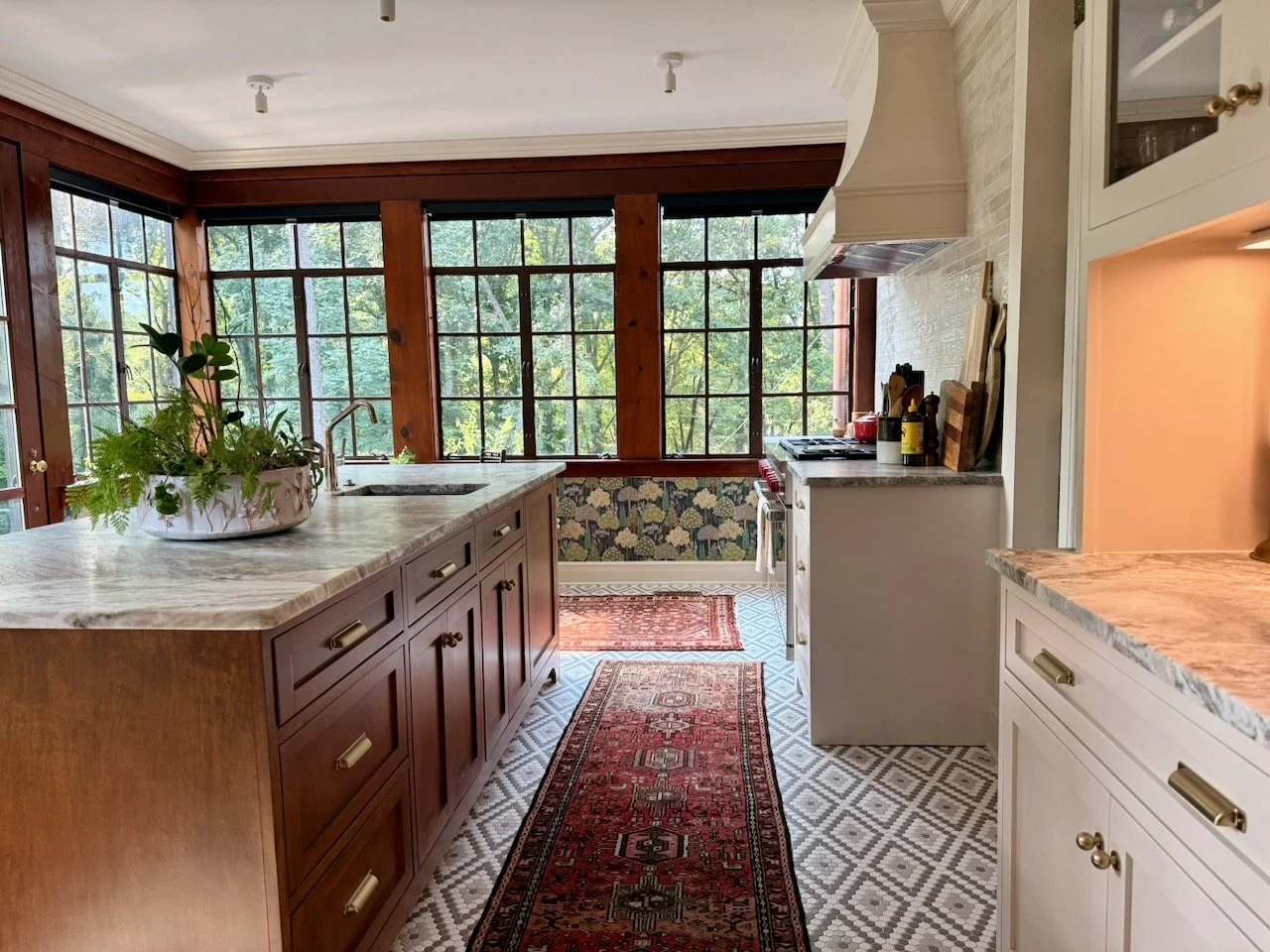
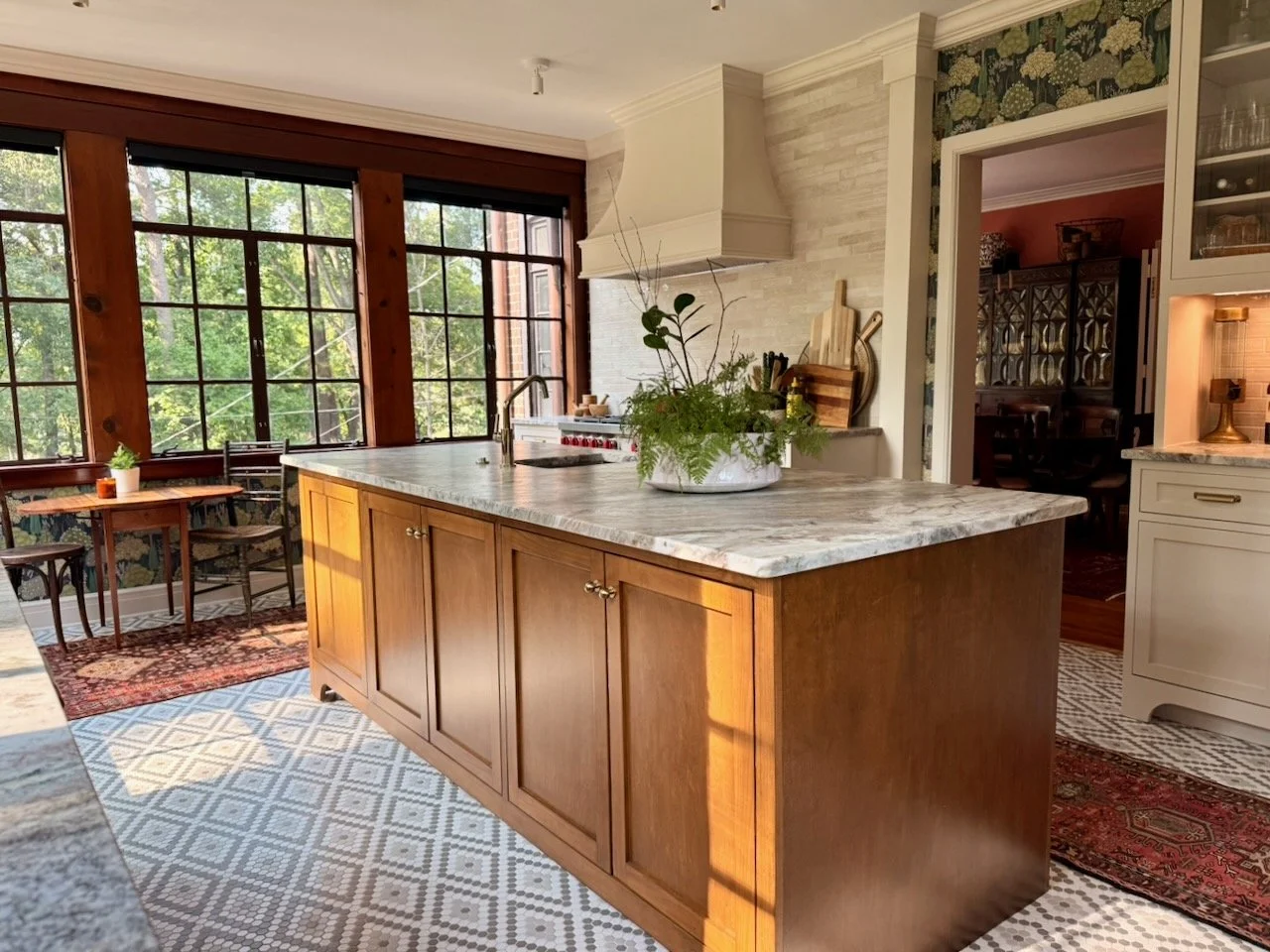
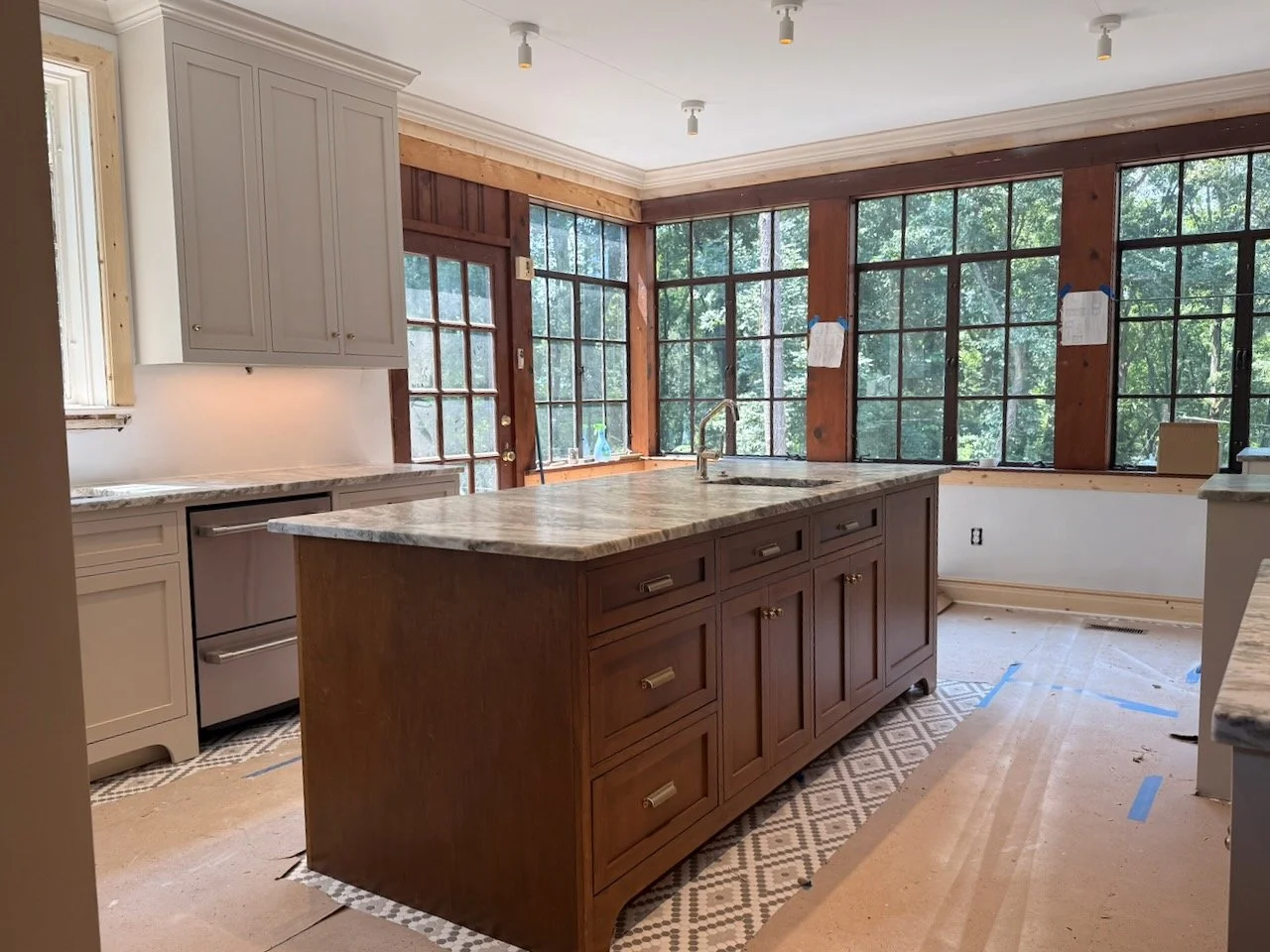
It looked like an abstract landscape painting. The greens echoed the trees outside the steel windows. Soft rust-colored veining added warmth. The leathered finish invited people to reach out and touch it. And it cost approximately $60 per square foot. It wasn’t the stone I had originally imagined. It was better for the house.
The Debate Over Hardware
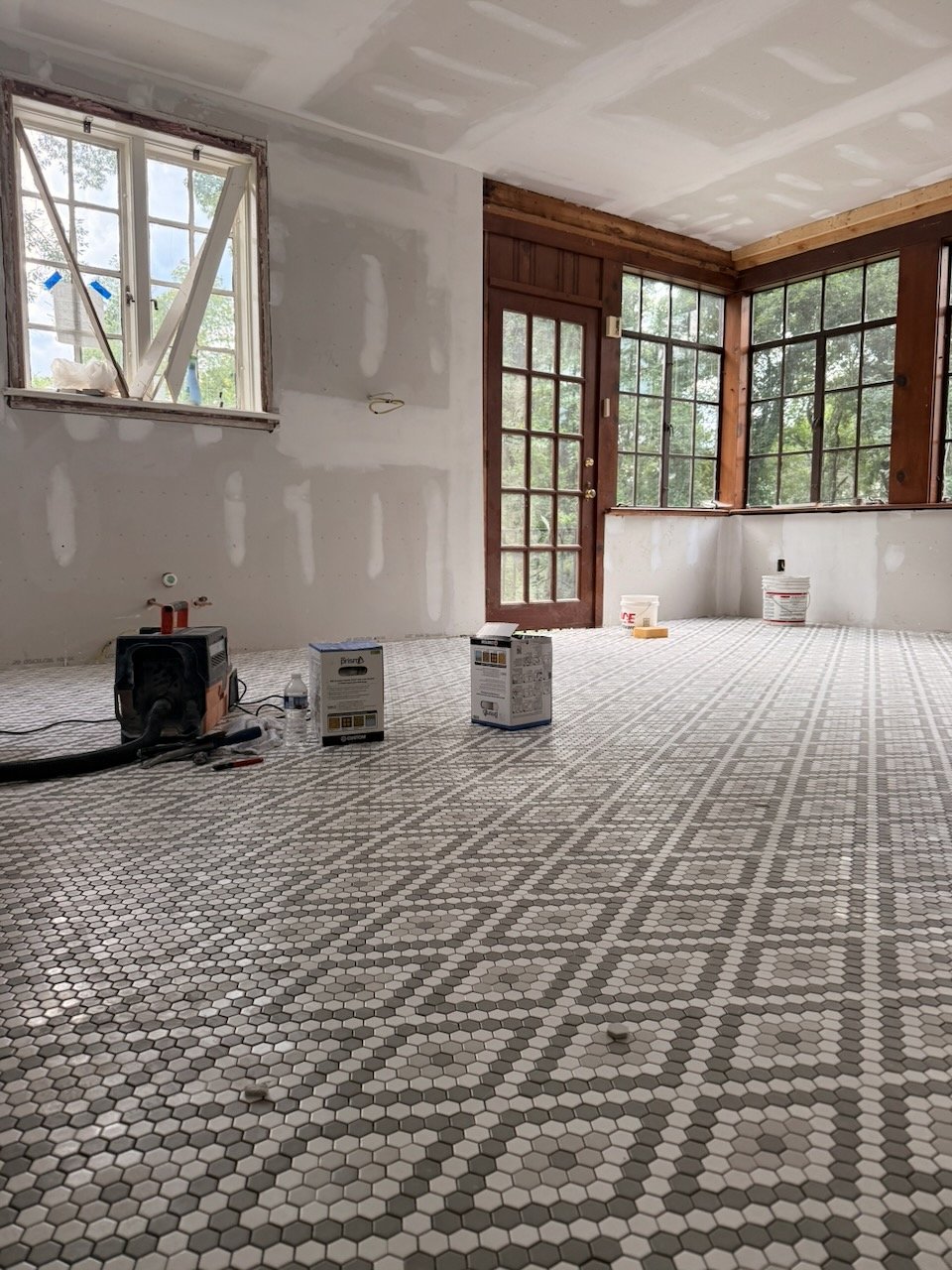
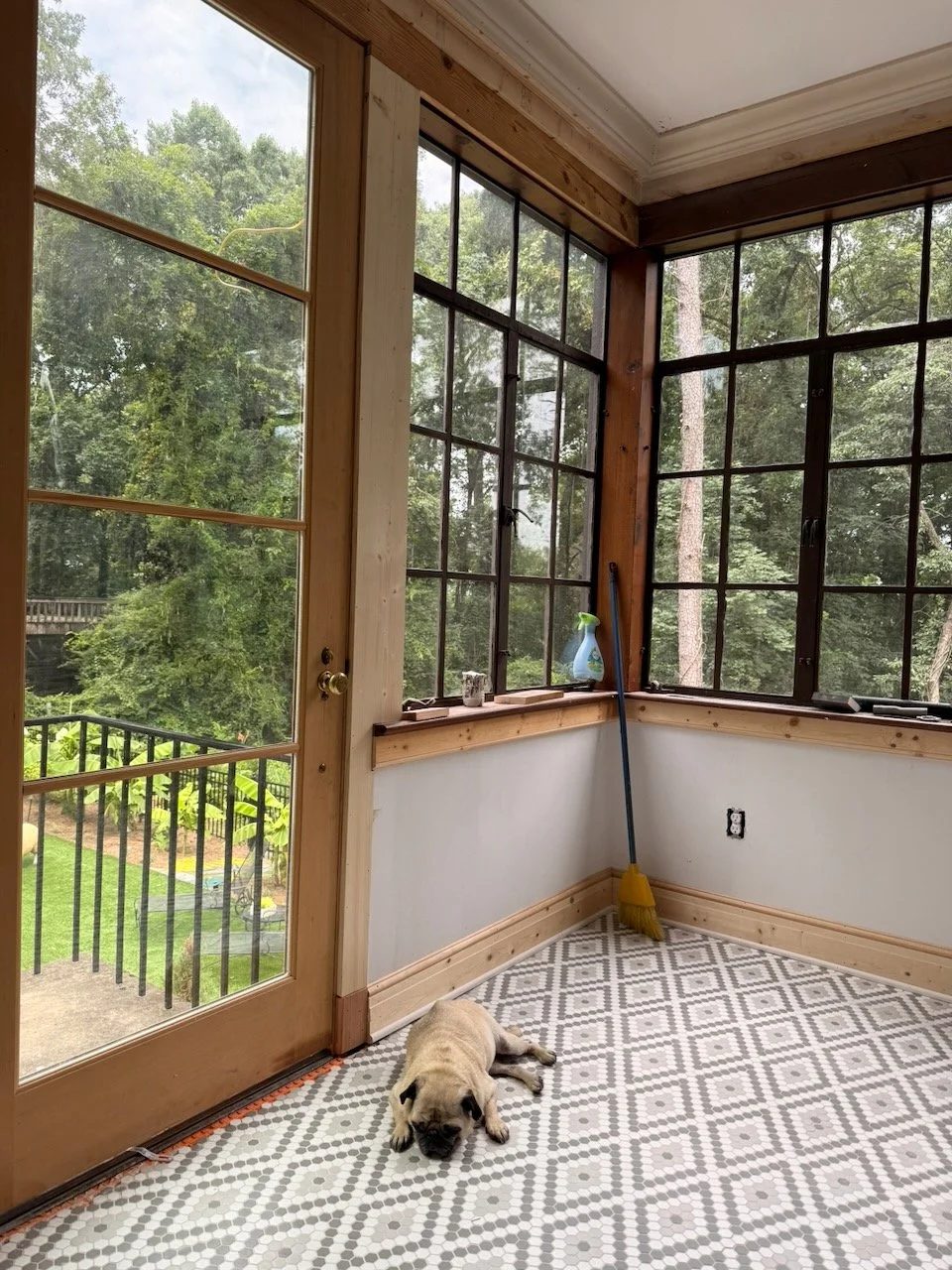
This may have been the smallest decision that consumed the most thought. Originally, I planned to use polished nickel hardware throughout the kitchen. But after the floors were installed, the tile read slightly grayer than I had expected. I worried that the finished room might feel cold, particularly alongside the stainless-steel appliances and pale cabinetry.
I wanted warmth. So I ordered the same returnable cabinet hardware in two finishes: polished nickel and brushed brass. We installed samples of both and lived with them for a while. Once the brass was in place, I knew. It brought exactly the warmth the room needed.
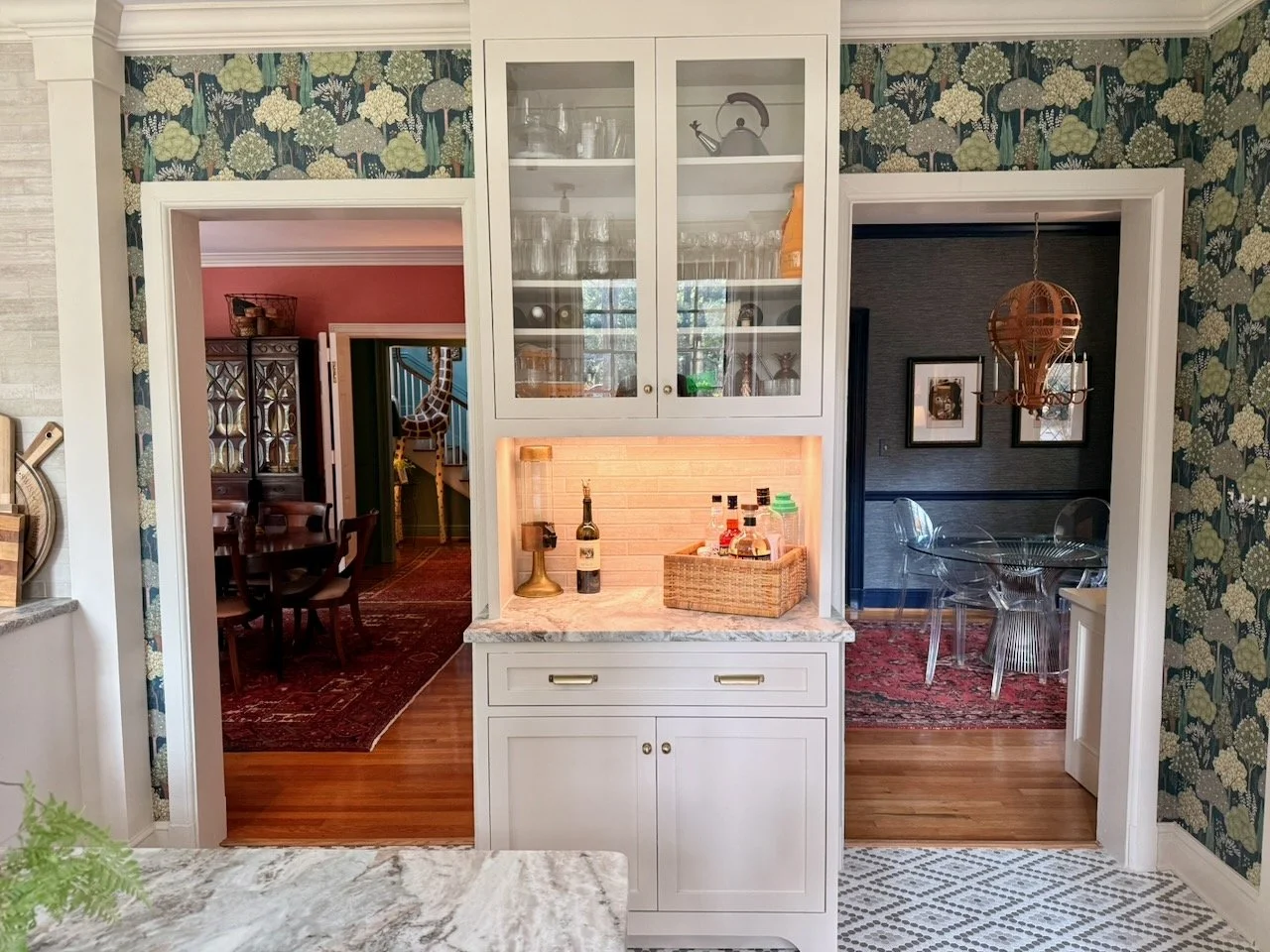
We also chose to retain and stain the existing wood trim rather than painting everything. That decision felt appropriate for a Tudor house and gave the kitchen another layer of depth. Paired with the Edgecomb Gray cabinetry, the brushed brass hardware, and the movement in the stone, the room began to feel warm, collected, and connected to the rest of the house.
The Lesson
Luxury isn’t about purchasing the most expensive option.
It is about understanding where quality matters, where branding does not, and which decisions will genuinely improve the way a room looks and functions.
We still went over budget.
Of course we did.
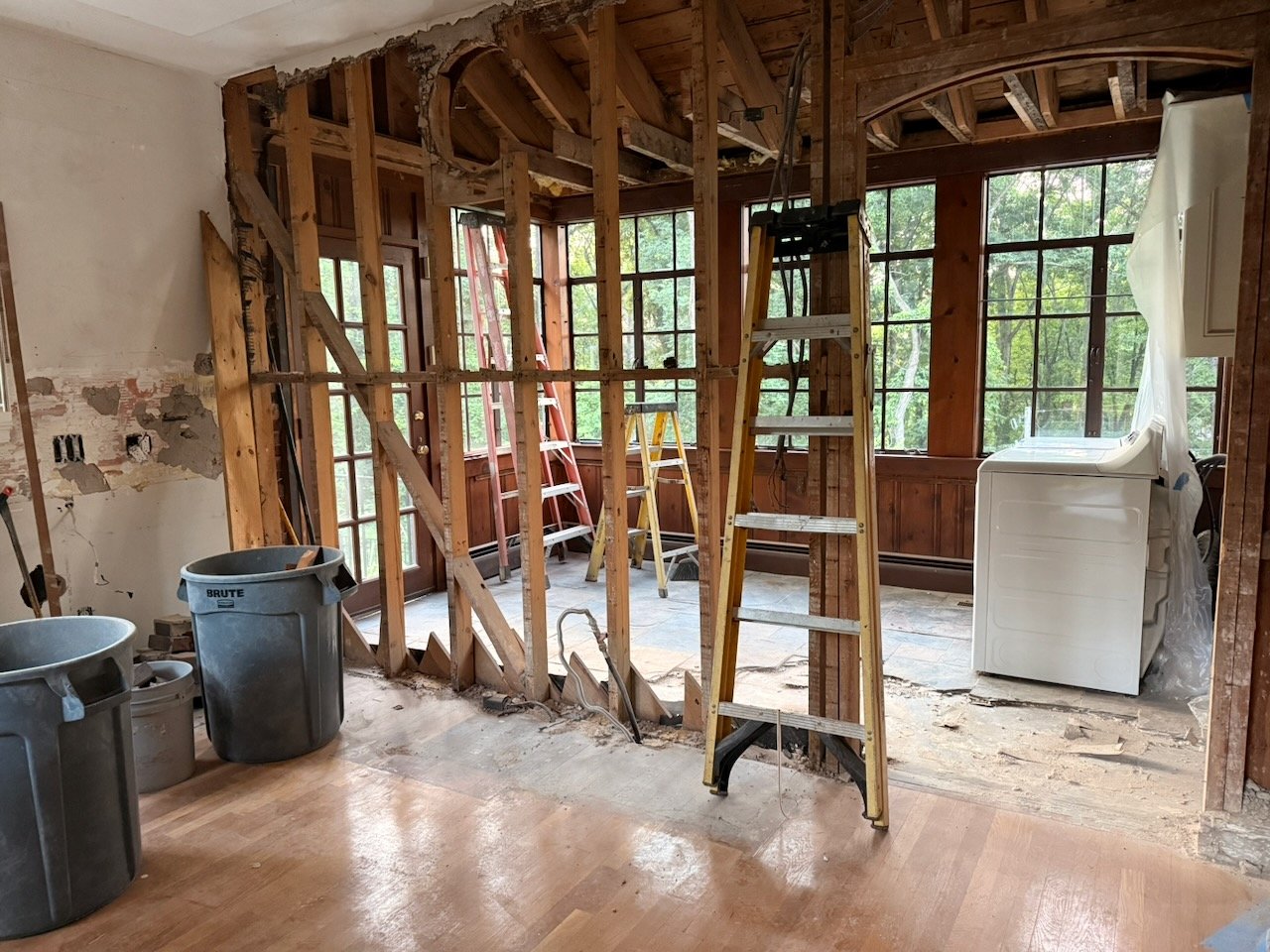
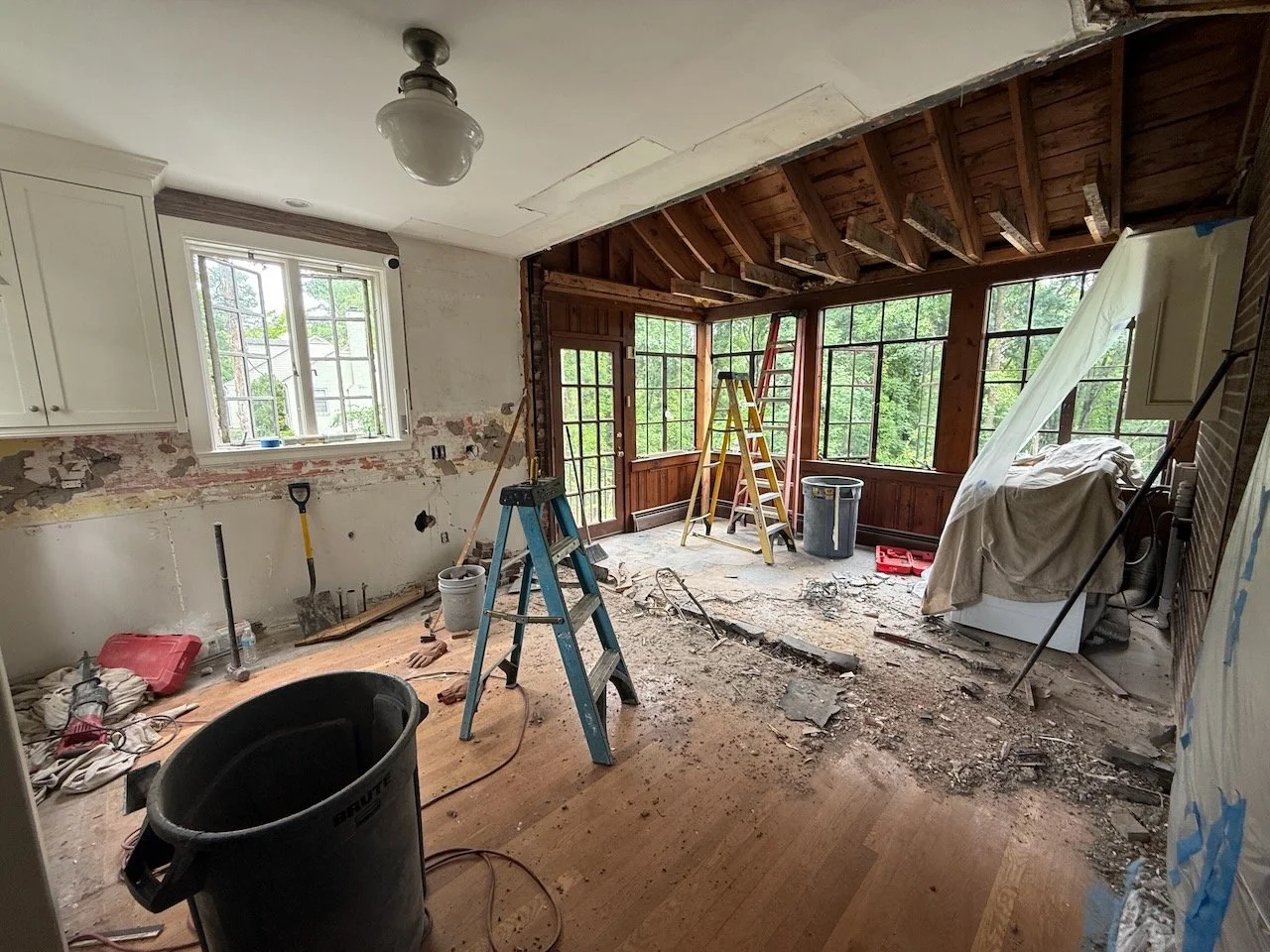
But we didn’t go over budget because we bought the most expensive version of everything. We went over because old houses reveal surprises, plans evolve, and once you begin opening walls, the phrase “while we’re already doing this” becomes financially dangerous.
That may be the most inevitable part of any renovation.
Jeb’s Takeaways
1. Spend where you’ll touch something every day. Custom cabinetry, quality drawer slides, substantial hardware, and a well-built range are things you will appreciate constantly.
2. Don’t confuse luxury with price. Some of the best purchases in this kitchen were floor models, previous-year inventory, and carefully sourced fixtures—not the most expensive items in the showroom.
3. Buy materials, not marketing. The countertop became one of the defining features of the room because it suited the house, not because it carried the most recognizable name.
4. It’s okay to mix brands. A well-designed kitchen does not require every appliance to come from the same manufacturer. Choose the best appliance for each job.
5. Save money where no one notices. A hidden countertop microwave, strategic appliance purchases, outlet tile, and thoughtful sourcing freed the budget for the elements that truly define the room.
6. Assume you will go over budget. Build in a contingency before construction begins. Old houses and renovation plans both have a habit of changing once the walls are open.