
RHJ: The Unexpected Member of Our Design Team (Part 3 of Designing a Kitchen for a 1938 Tudor)
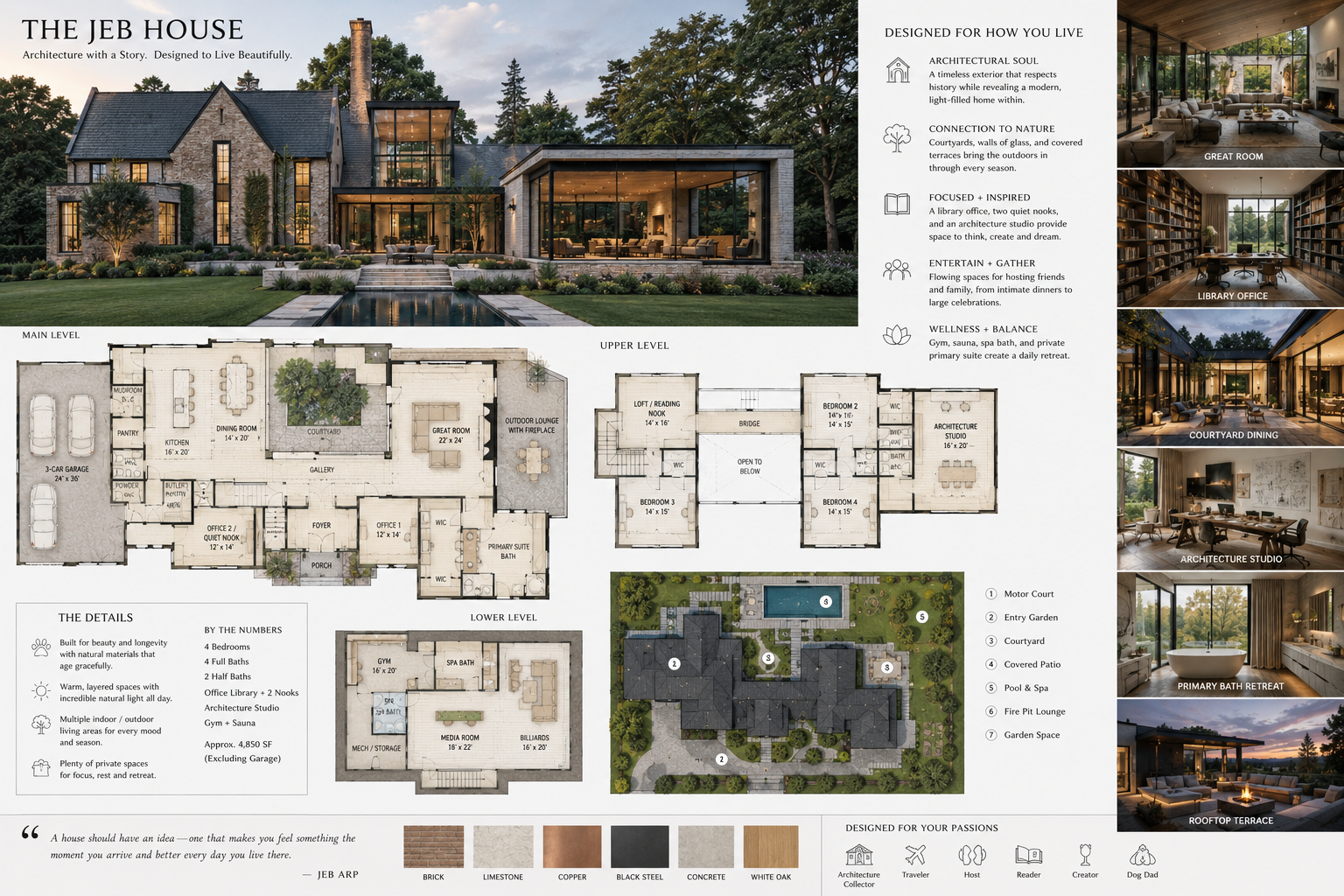
This is the second draft of my AI Dream House…does it make sense? Absolutely not. Would I build it. No way. But it was a fun exercise.
The Unexpected Member of Our Design Team How AI Helped Me Renovate a Kitchen for a 1938 Tudor
This was somewhere around my eleventh kitchen renovation. By now, I know my habits. I’ll spend weeks researching appliances. I’ll compare paint colors until they all start looking the same. I’ll change my mind at least three times. And at some point, I’ll wonder if I’m completely overthinking everything.
Normally, that’s where Google comes in.
This time, Google took a back seat. Instead, I spent months having conversations with artificial intelligence. Not because I wanted AI to design my kitchen. I didn’t. I wanted it to help me think through the design.
And somewhere between comparing 48-inch ranges, debating polished nickel versus brushed gold, identifying mystery countertop slabs, and discussing whether a microwave really needed to be visible at all, AI became the unexpected member of our design team.
Not the designer. More like the extremely patient assistant who was always available, had read every appliance brochure ever written, and never once told me I had talked about refrigerators enough.
It Started With Appliances
Like many renovations, ours began with an overwhelming number of choices.
Should I buy a used Wolf range? A new Thermador? Could I justify a Sub-Zero refrigerator? Was a floor model a smart financial decision or a very expensive mistake waiting to happen?
The internet could answer those questions, technically. The problem was that it answered them with thousands of search results, manufacturer websites, Reddit threads, reviews, advertisements, YouTube videos, and people who were absolutely certain that whatever appliance they owned was either the greatest machine ever built or a piece of garbage.
AI did something different. It organized the information.
I could ask:
Compare the 48-inch dual-fuel ranges from Wolf, Thermador, Miele, Café, Monogram, Bertazzoni, Thor, and ZLINE.
Suddenly I had the differences laid out in front of me: burner configurations, oven capacities, features, warranties, approximate prices and, most importantly, what actually distinguished one from another.
Then I could keep going.
Now compare only the built-in refrigerators.
Which companies make dishwasher drawers?
Who makes microwave drawers?
Can I get an under-counter refrigerator with an ice maker?
Instead of starting a new Google search every time another question occurred to me, I could continue the same conversation.
And my questions gradually became more interesting.
The Best Questions Weren’t About Products
At first, I used AI like a much more efficient search engine. Eventually, I realized that wasn't its most useful role. The questions changed.
Instead of asking:
Which refrigerator is best?
I started asking:
Should I spend big money on a refrigerator just so I can cover it with cabinet panels?
Instead of:
Should all my appliances match?
It became:
Do good high-end kitchens actually need matching appliance suites?
And instead of:
Which microwave should I buy?
I found myself asking:
Should the microwave disappear completely so the architecture can be the focus?
Those aren't really appliance questions. They're design questions. And that became the most useful part of having AI involved in the renovation. It wasn't simply finding products. It was forcing me to articulate why I wanted them in the first place.
Then I Became Obsessed With a Rock
At one point, I became completely consumed by countertop materials. Originally, I thought I wanted Carrara marble. It seemed right for the house: natural, traditional, beautiful and imperfect. Then I started worrying about etching. So AI and I talked about marble. Then quartzite. Then dolomite. Then honed finishes. Then leathered finishes.
Eventually, I found a slab that simply spoke to me. It was labeled Stratus Leathered Premium, which sounded impressive but told me almost nothing about what it actually was.
I couldn't find much useful information about it online, so I did something that became increasingly common during the renovation. I took a picture and uploaded it. AI couldn't magically provide a geological pedigree for the slab, but it could study what was visible and help me think through the possibilities. We talked about the crystalline sparkle, the sage-green undertones, the rust-colored movement and the texture of the leathered finish.
Quartzite? Dolomite? Marble?
It became less about getting a definitive answer and more about learning what I was looking at. Even after the countertops were installed, I uploaded another photograph. The conversation continued.
That became one of the biggest surprises of using AI this way: it could respond not just to a hypothetical kitchen, but increasingly to my actual kitchen.
The Great Hardware Debate
If there was one decision I thought I had already made, it was the cabinet hardware. Polished nickel and AI agreed. Historic. Timeless. Appropriate for a 1938 Tudor. It would relate beautifully to the plumbing fixtures and keep the kitchen from leaning too heavily into a current trend.
We had practically written a dissertation defending polished nickel.
Then I installed brushed gold. Mostly because I liked it. I uploaded a photograph expecting the digital equivalent of I told you so. Instead, the opinion changed.
Once the hardware could be seen alongside the warm cabinetry, walnut island, countertops and natural light, brushed gold suddenly made sense. Not because the design principles had changed.
Because the context had.
That may have been my favorite conversation of the entire renovation. Good design isn't about following rules. It's about understanding the rules well enough to recognize when they aren't helping anymore. And ultimately, I still had to trust my own eye.
Sometimes It Told Me I Was Wrong
Or at least made a convincing case that I might be. That was important. If AI had simply agreed with everything I said, it wouldn't have been particularly useful.
Carrara marble is one example. I loved the idea, but the more I considered how we actually live—and how much I knew every etch mark would bother me—the less convinced I became.
The flooring became another debate. Hardwood would have been beautiful and would have connected naturally to the rest of the house. But our kitchen presented some practical issues with floor heights, and I kept returning to hexagonal tile. It solved a construction problem while also feeling plausible in a house built in 1938.
Sometimes AI reinforced my instincts. Sometimes it challenged them. Sometimes I ignored it completely.
Those may have been the most useful moments, because disagreeing forced me to explain to myself why I wanted something.
Old Houses Already Know What They Want
That brings me to something this renovation reinforced that has very little to do with artificial intelligence.
Older houses often tell you what they need.
Our kitchen didn't really need more square footage. It didn't need every current design trend. It certainly didn't need to pretend it had been built in 2026.
It needed its windows back. It needed better circulation. It needed more useful storage. It needed room for people to gather. And it needed modern conveniences introduced in a way that didn't overwhelm the architecture of the house.
That's where I think AI was particularly useful. It could help me explore hundreds of possibilities very quickly, but the house provided the filter. Does this belong here? That question mattered more than any product comparison.
What AI Couldn't Do
For all the ways I used it during this project, artificial intelligence never walked into my house. It never stood in the kitchen and saw how the afternoon light came through the original steel windows. It never crawled underneath the floor. It never met my contractor. It never discovered something unexpected behind a wall. It couldn't run its hand across a countertop slab or stand ten feet away from a paint sample and decide that something just felt wrong. And it didn't have to live with any of the decisions.
I did.
AI wasn't replacing experience. It wasn't replacing contractors. And it certainly wasn't replacing designers. What it did surprisingly well was become another voice at the table—one that could research endlessly, remember the larger conversation, examine photographs, compare options, challenge assumptions and ask questions at 11:30 at night when no reasonable human being wanted to discuss cabinet hardware with me. That is a genuinely useful tool.
What This Kitchen Taught Me
After eleven-ish kitchen renovations, I certainly didn't expect artificial intelligence to be one of the biggest differences this time around.
But the technology itself may not be the real lesson. The real lesson is that good renovation decisions come from asking better questions.
Not What's popular? But What's appropriate?
Not What's the best appliance? But What's worth spending money on for the way we actually live?
Not What would a buyer want someday? But What does this house need now?
That last question is especially important to me, both as someone who loves old houses and as a Realtor who spends a lot of time talking with people about what they should—and shouldn't—change.
Old houses don't need to become new houses.
The best renovations don't erase their history. They make thoughtful improvements while protecting whatever made the house worth loving in the first place. And the best design decisions often feel inevitable when they're finished. That's probably the greatest compliment someone can give this kitchen: It looks like it has always been here.
The Kitchen After the Algorithms
As I write this, the renovation is finished enough that we've stopped treating the kitchen like a project. The coffee maker has found its home. The refrigerator has fingerprints. The countertops already have stories.
There are things I'd do differently next time. There always are. Every renovation becomes part of your education, which is one reason I enjoy working with buyers and sellers of older homes. I've asked many of the same questions they're asking.
But this kitchen taught me something new.
Technology can give us more information than we've ever had before. AI can compare products, analyze photographs, suggest alternatives and challenge our thinking.
What it can't do is decide what makes a house feel like your house. That's still our job. And perhaps that's the biggest compliment I can give this renovation. It doesn't feel like a brand-new kitchen. It feels like the kitchen this 1938 Tudor had been waiting for all along.

I asked AI to design my perfect house. I don’t think we are ready for prime time on the architecture front!
Jeb's Takeaways
1. AI is an incredible researcher.
Instead of opening twenty browser tabs comparing appliances, I could have one conversation that evolved as my priorities changed.
2. Context changes everything.
The polished nickel versus brushed gold debate taught me something important.
Good design isn't about individual choices.
It's about how those choices work together.
3. Comparison is where AI shines.
The most valuable thing it did wasn't choosing products.
It was organizing information into tables that helped me understand the tradeoffs between competing options.
4. AI remembers the journey.
Months later, it still remembered why I loved Tudor architecture, why I wanted a visible stainless refrigerator, and why I had ruled out certain countertop materials.
That continuity made every conversation more productive than starting over with a new internet search.
5. Great design still belongs to people.
Artificial intelligence didn't design my kitchen.
It helped me become a better client.
It helped me ask better questions, notice details I might have missed, and feel more confident about the decisions that ultimately became my own.