RHJ: Car Dealerships & A Mystery Sign
THE ROME YOU CAN’T SEE ANYMORE
Where Rome Bought Its Cars
I have always been a car person.
Not necessarily in the horsepower-and-quarter-mile sense, although I can appreciate that too. I like cars as objects of design—the strange ones, the beautiful ones, and especially the ones that seem to tell you exactly where and when they were designed.
My favorite marque of all time is Saab. Maybe I’ve been to the Saab Museum in Trollhattan, Sweden. Maybe I’ve been twice.
Which probably tells you everything you need to know about my automotive taste. Give me an unnecessarily complicated Swedish ignition switch and I’m in heaven. So perhaps it was inevitable that while researching old buildings in Rome, I would eventually start wondering about the cars that once sat in front of them.
Rome used to have some fascinating automobile dealerships. And if you follow where those dealerships went, they tell a larger story about how Rome itself changed.
WHEN BROAD STREET SOLD CARS
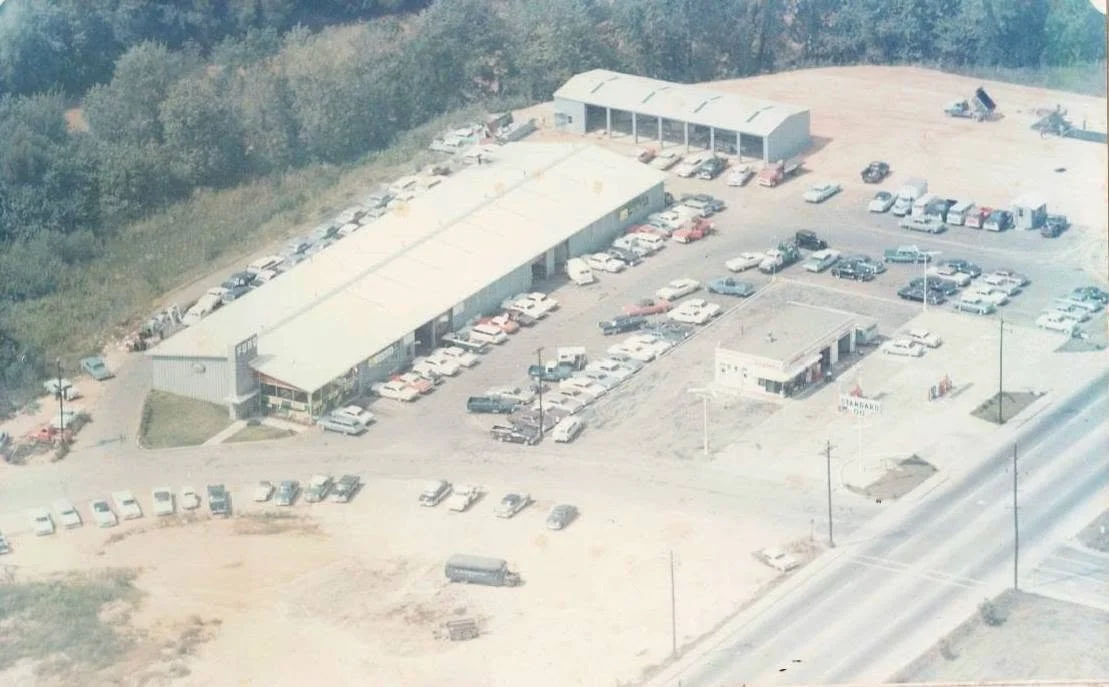
Today, we tend to picture a car dealership as acres of asphalt beside a highway, with a giant showroom surrounded by rows of inventory.
But that isn’t where Rome always bought its cars.
Rome bought them on Broad Street.
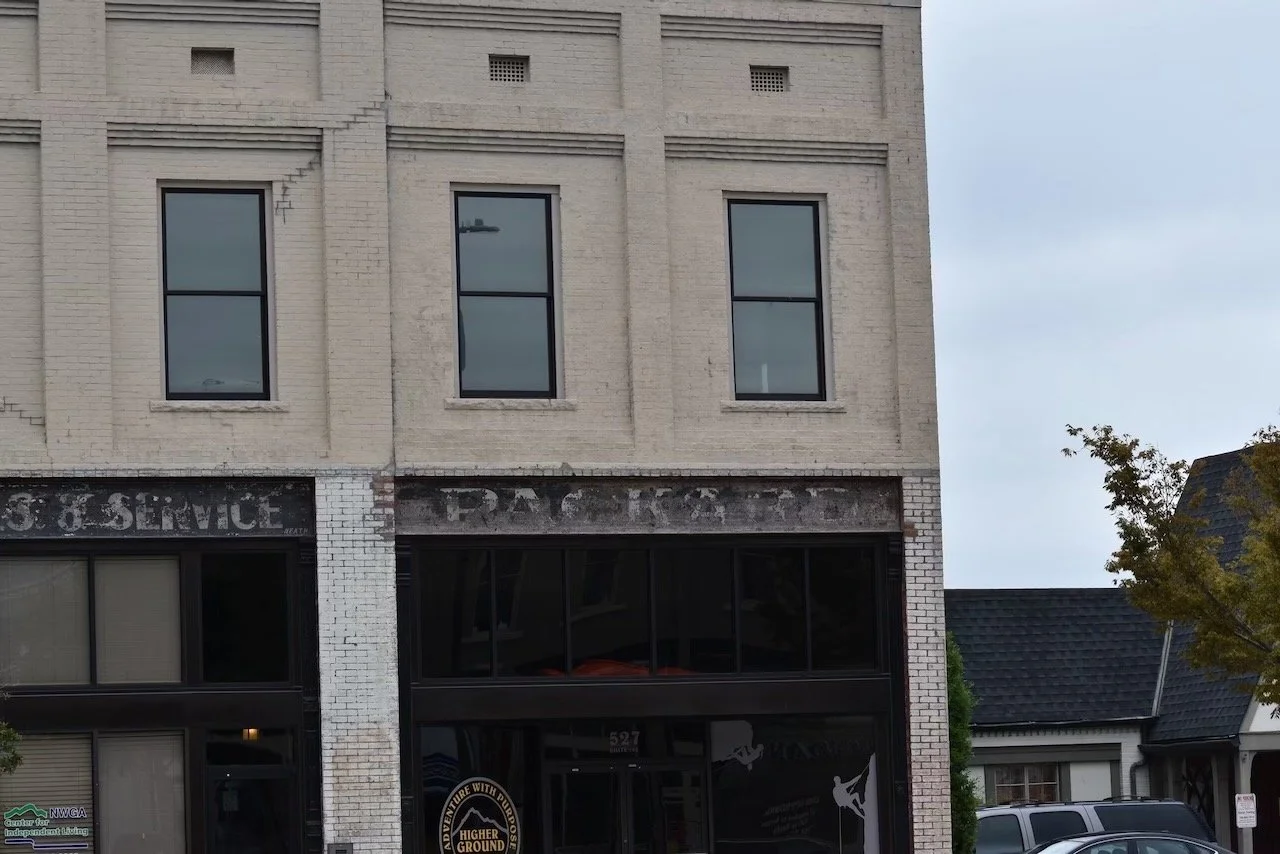
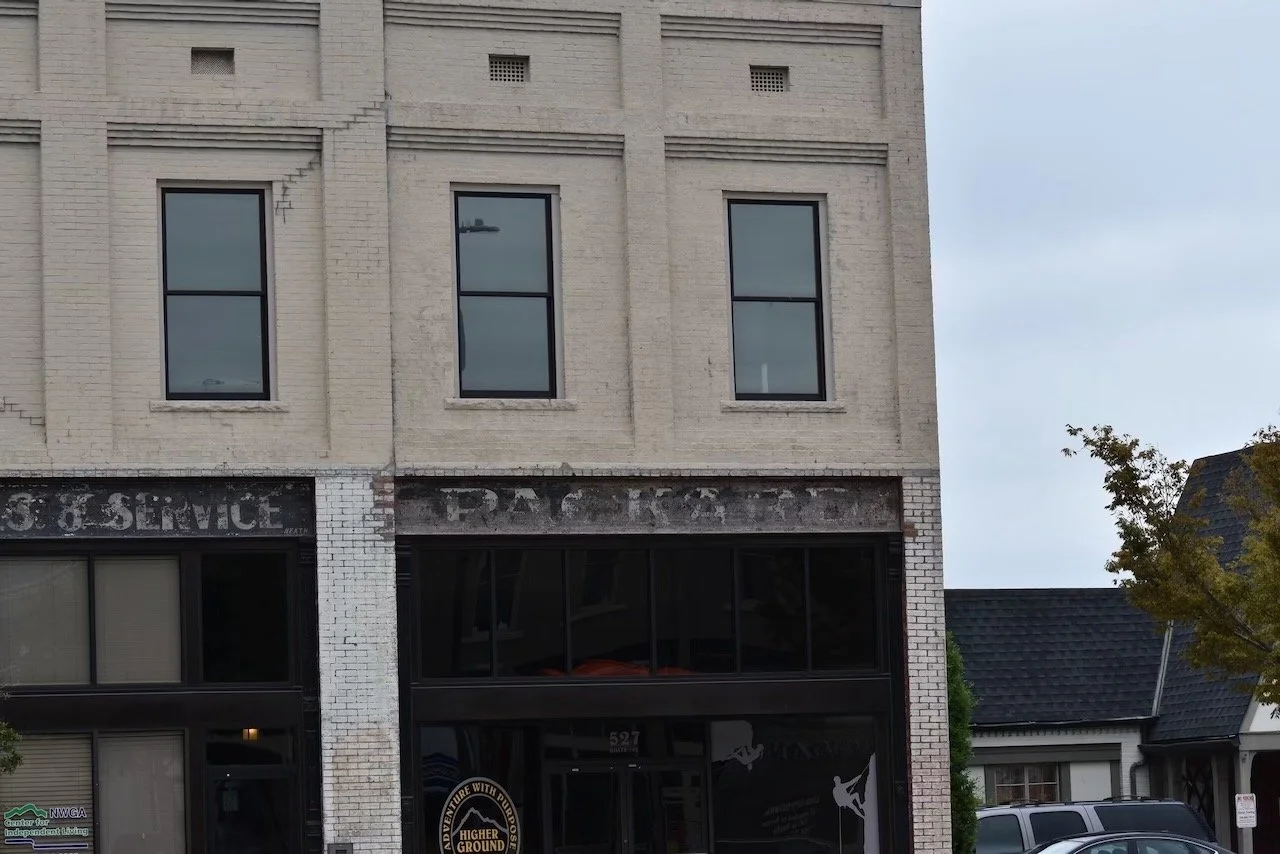
One of the best reminders appeared almost by accident a few years ago when work on buildings in the 500 block exposed old painted automobile signs that had been hidden beneath a later façade.
Among them was a name that seems almost impossibly glamorous today:
PACKARD.
And this wasn’t simply an old advertisement painted on the side of an unrelated building.
In 1949, Andrews Automobile Company was selling Packards at 529 Broad Street. A contemporary advertisement identifies it plainly: “Packard Sales and Service.”
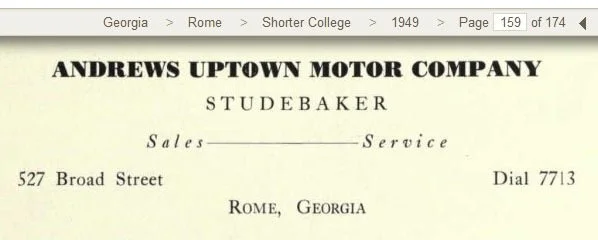
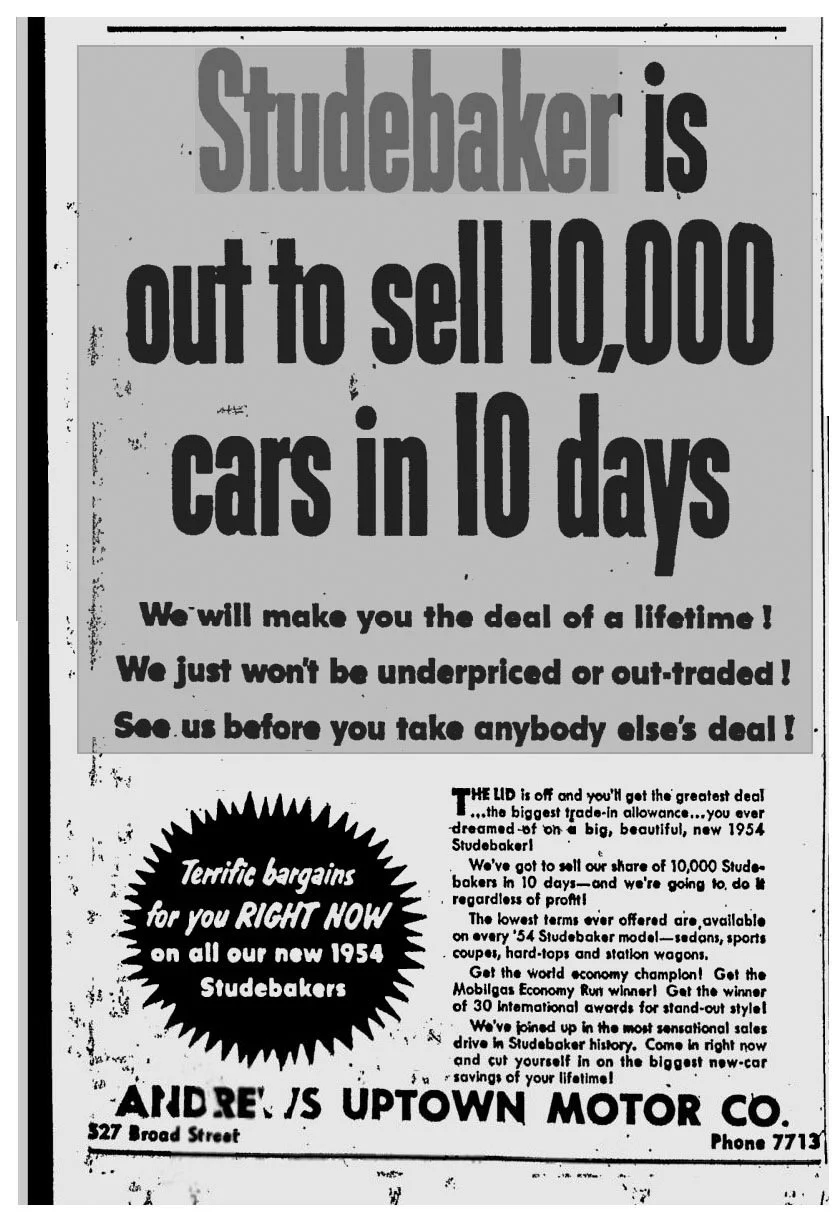
Next door, Andrews Uptown Motor Company at 527 Broad Street was a Studebaker dealer. Historical Studebaker records place the dealership there from at least the late 1940s into the 1950s.
Think about that the next time you walk down the 500 block. A brand-new Packard in one showroom. A brand-new Studebaker next door. These weren’t collector cars. They weren’t antiques. Nobody was gathering around them at a Cars & Coffee. They were just new cars.
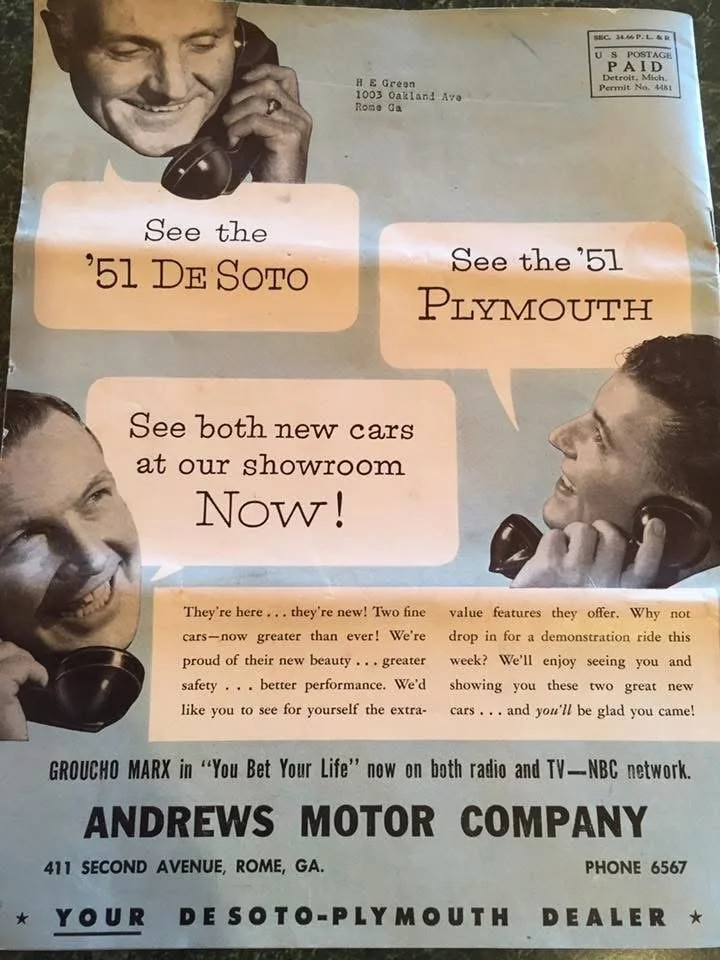
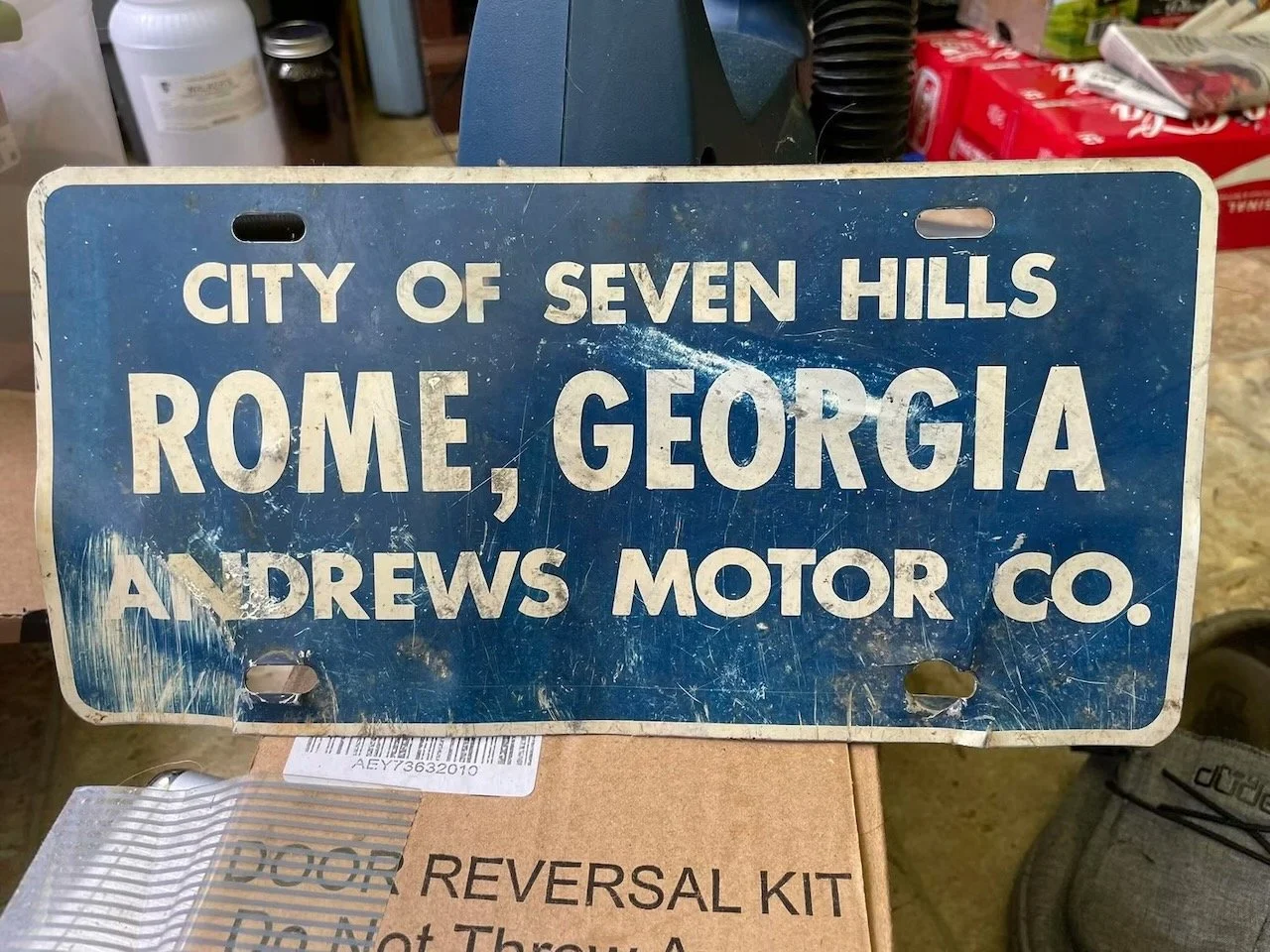
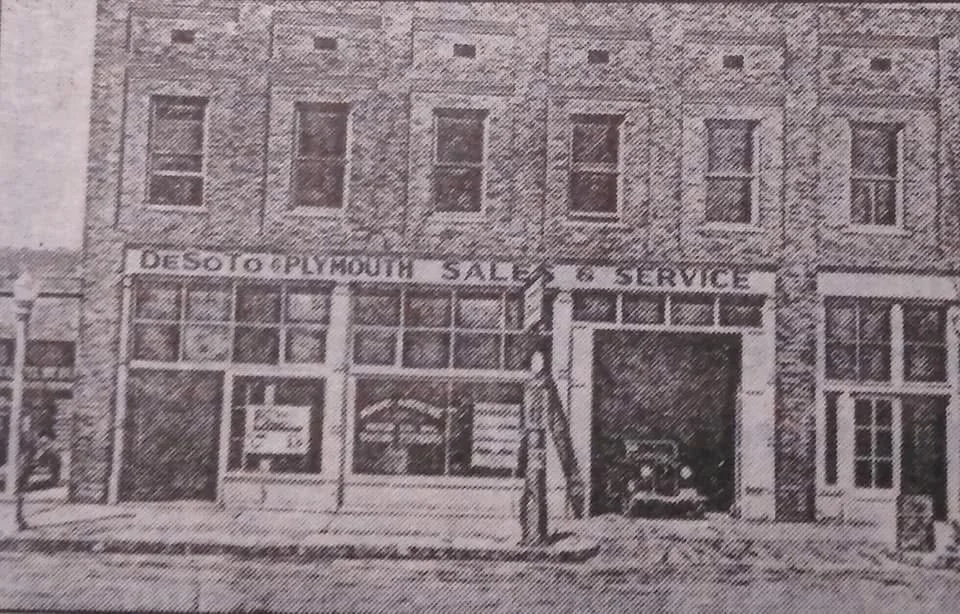
Someone walked down Broad Street, stopped at the glass, saw one they liked and wondered whether they could afford the payments. Andrews later appears at 411 Second Avenue selling DeSoto and Plymouth. A 1957 advertisement calls Andrews Motor Company a direct DeSoto-Plymouth dealer and names Walter Lee Andrews.
Packard. Studebaker. DeSoto. Plymouth.
All marques that have disappeared from the American automotive landscape.
All once available right here in Rome.
THE CAR BEGINS TO CHANGE THE CITY
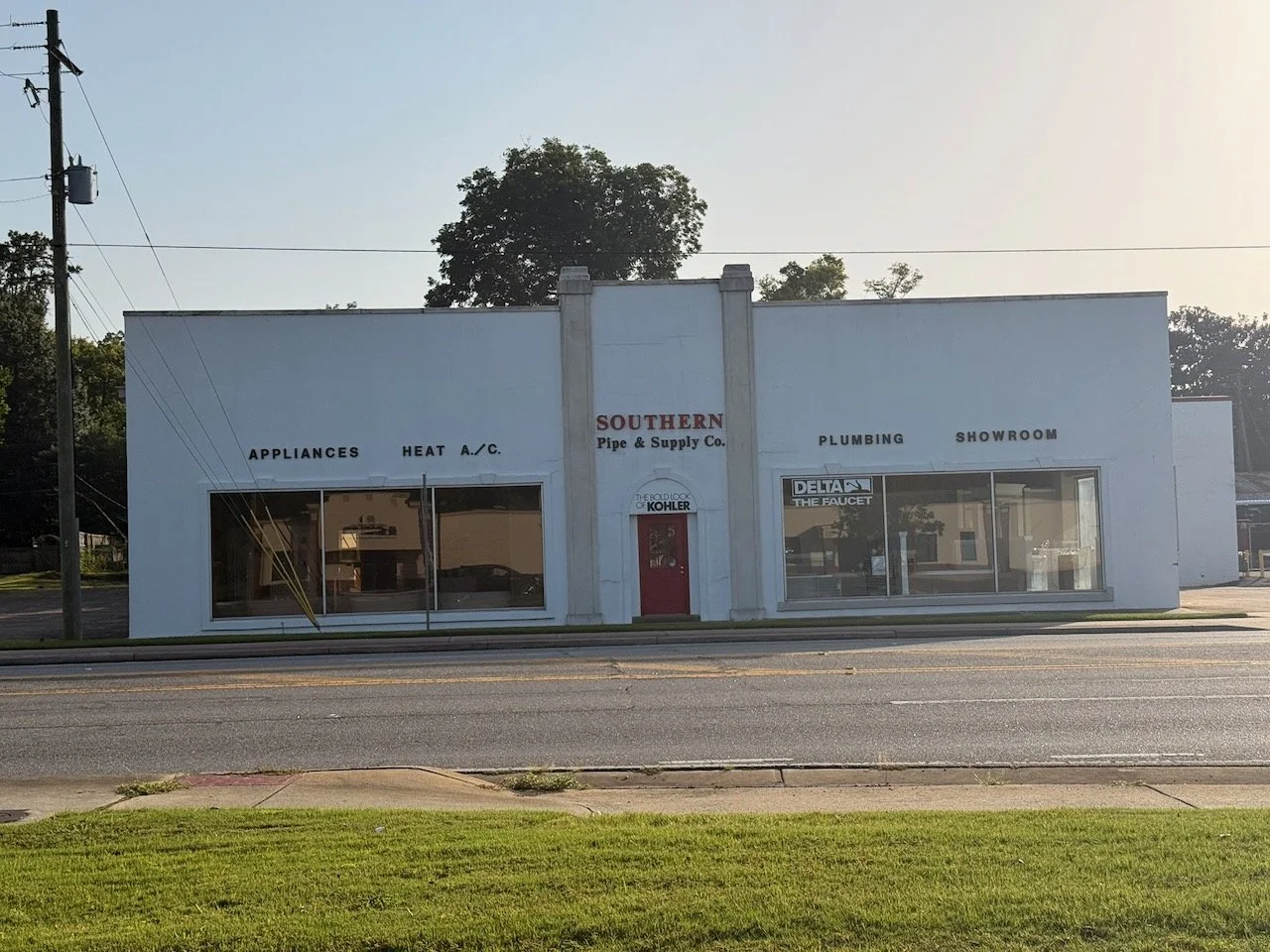
Those downtown dealerships belonged to an earlier relationship between cars and cities. The automobile had been inserted into a place that already existed. The dealership behaved much like any other downtown business: storefront, display windows, sidewalk, street.
But cars require space. Space for inventory. Space for used cars. Space for service departments. Space for parking. And, eventually, space to make the dealership itself visible to someone passing at 35 or 45 miles per hour.
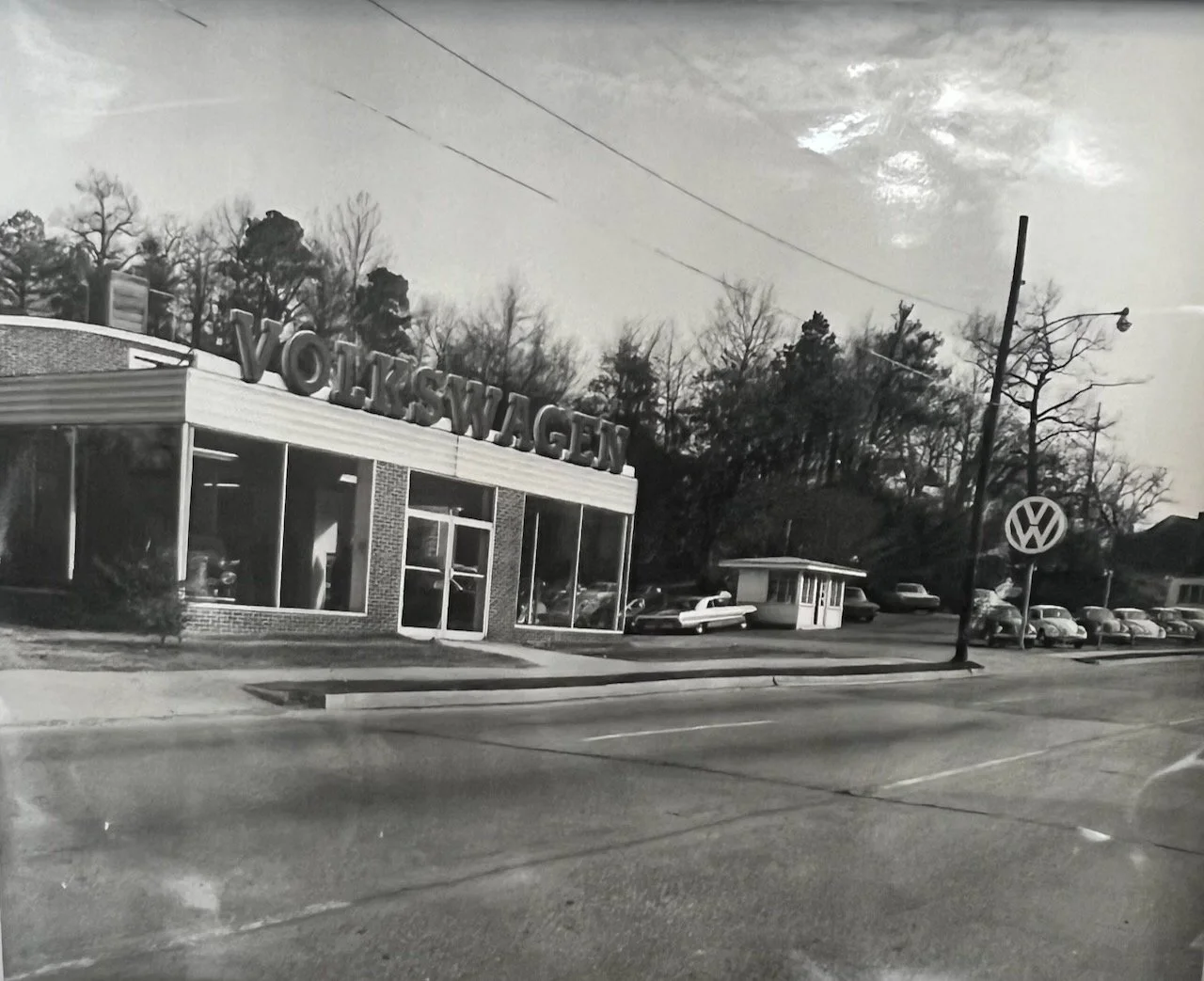
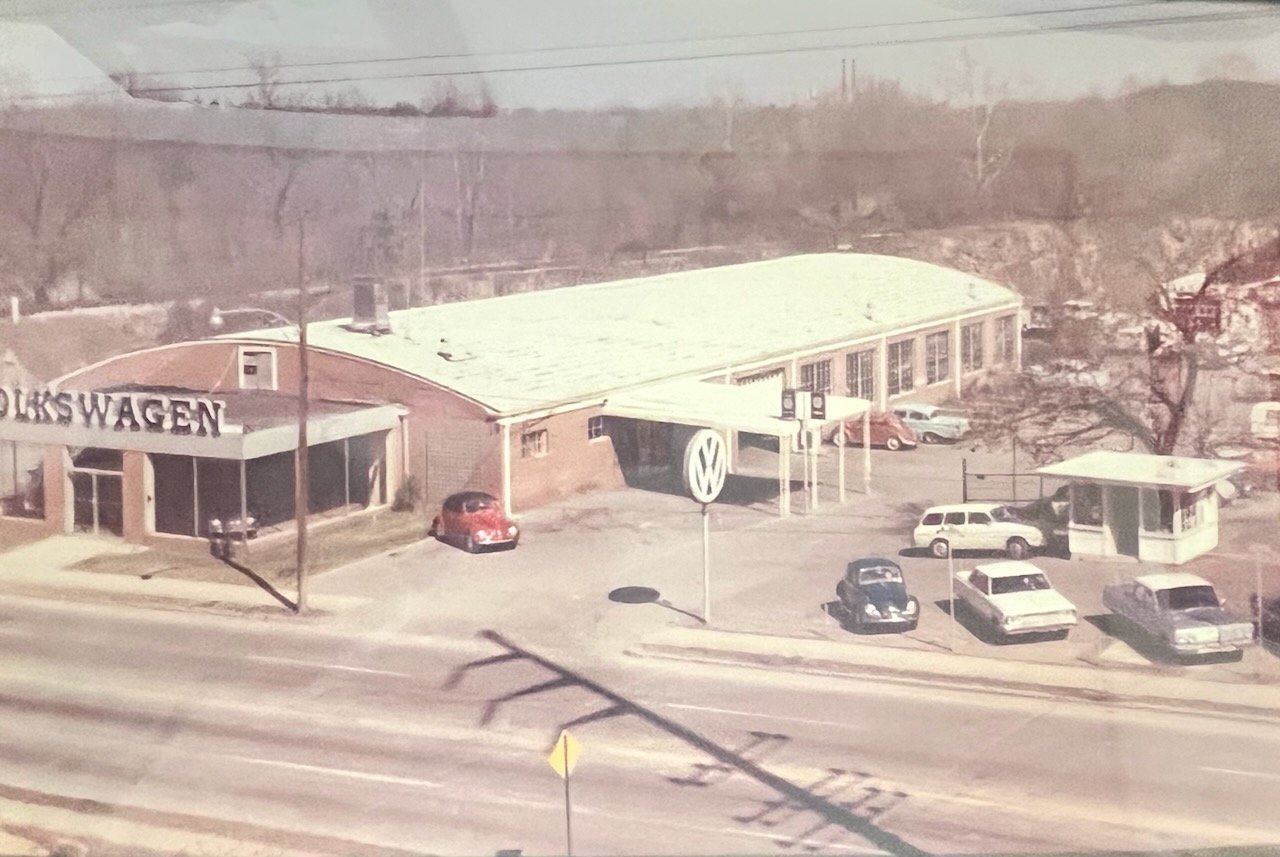
So Rome’s automobile business began moving away from the traditional downtown storefront. And the architecture changed with it. The midcentury dealership became almost a billboard itself: expanses of glass, dramatic canopies, brightly illuminated signs and showrooms positioned toward the road.
The dealership was no longer a building you discovered while walking down the sidewalk. It was a building designed to catch your eye from inside a car.
JULIAN HARRISON AND TURNER McCALL
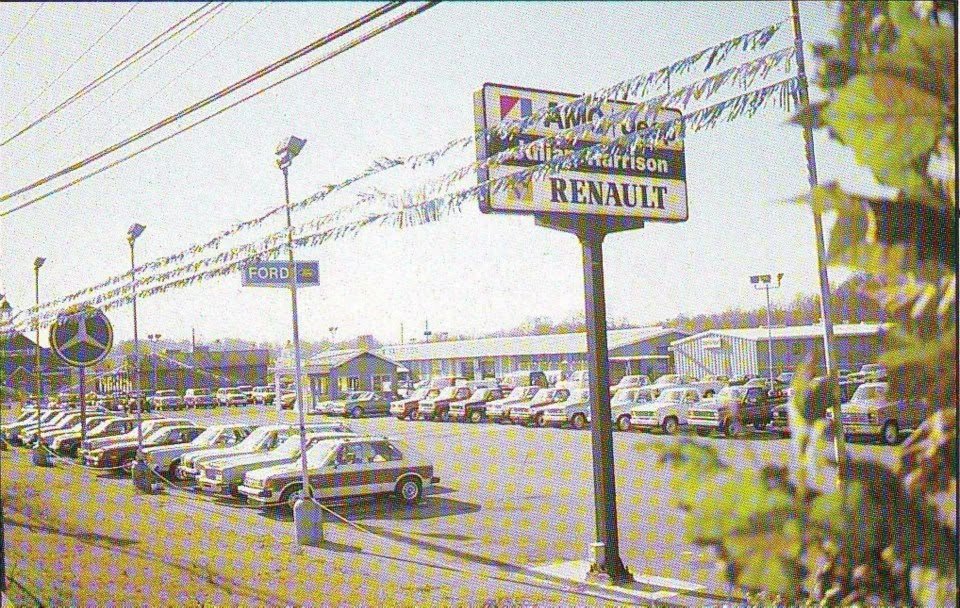
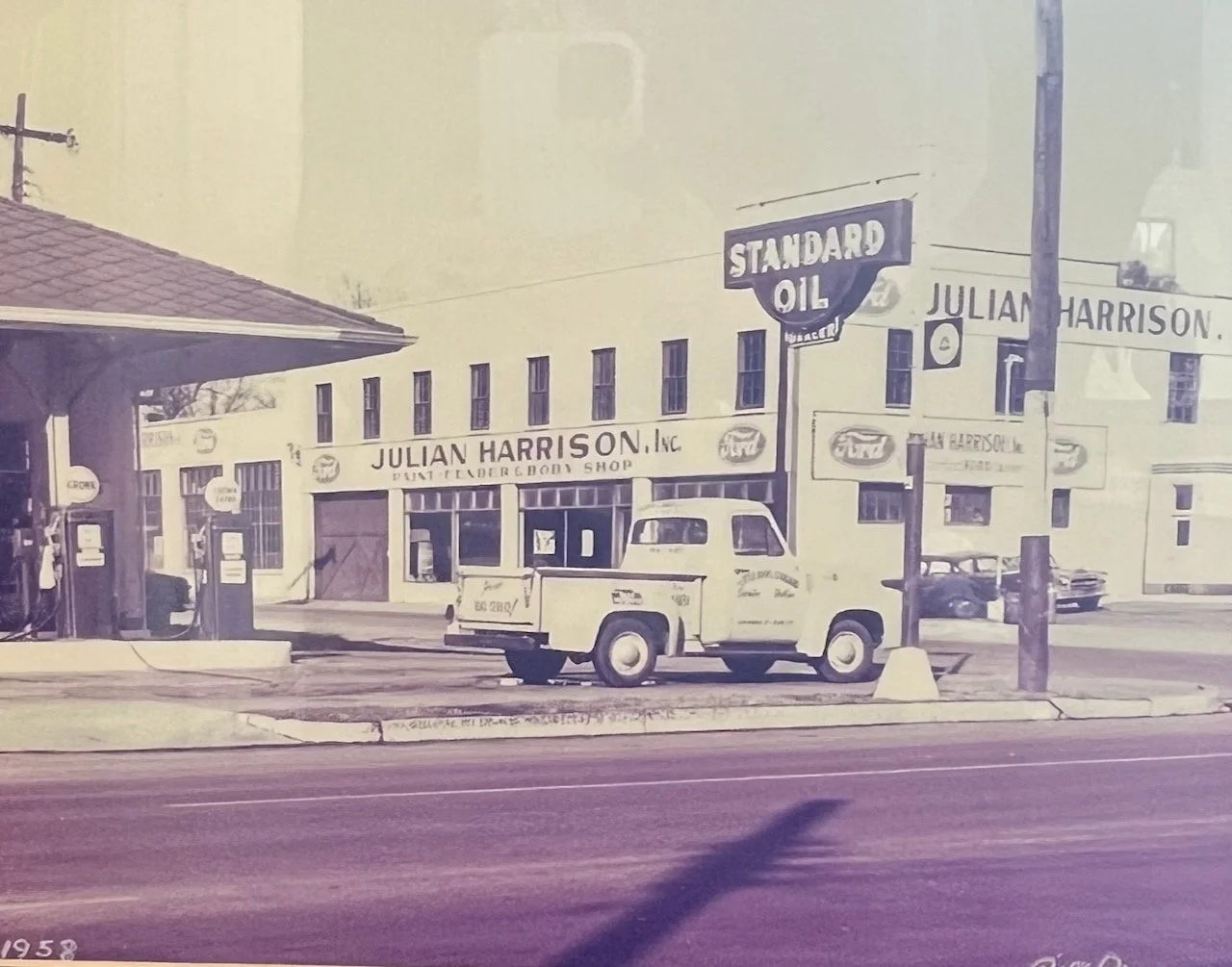
One of the biggest names in that next generation of Rome automobile dealers was Julian Harrison. Harrison came to Rome in 1958 and operated Julian Harrison Inc., a Ford and Mercedes-Benz dealership, until 1986.
Ford and Mercedes-Benz is already a wonderfully eclectic combination. But the Ford side alone produced some remarkable cars. By 1967, Julian Harrison Inc. was operating at 1513 Turner McCall Boulevard and appears on Shelby American dealer records.
That means you could have walked into a Ford dealership in Rome, Georgia, and ordered something considerably more exciting than a family sedan. We know a 1966 Fairlane GT/A was bought new at Julian Harrison Ford.
Even better, a 1970 Boss 429 Mustang—one of the most collectible American muscle cars ever produced—was delivered new to Julian Harrison Inc. and sold to its first owner in March 1970.
Imagine seeing that sitting on Turner McCall when it was simply a new Mustang. That may be my favorite part of researching old dealerships. Cars that now appear under velvet ropes at concours events once sat outside with a price written on the windshield.
BY THE 1980s, ROME HAD CHOICES
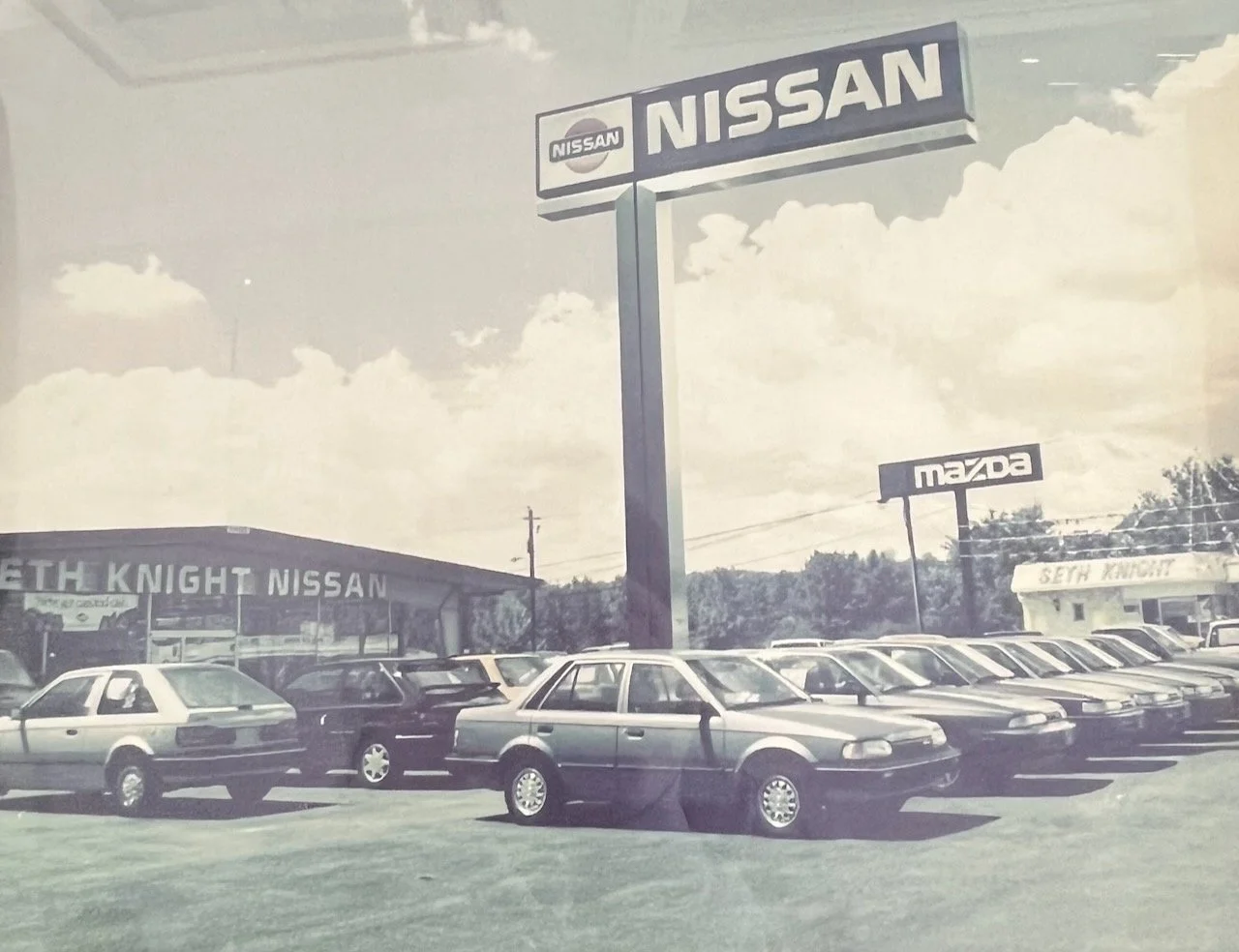
By the mid-1980s, Rome’s automotive landscape had become surprisingly diverse.
A 1986 Pepperell High School yearbook gives us a wonderful accidental snapshot. Its advertising pages name:
Seth Knight Nissan-Mazda
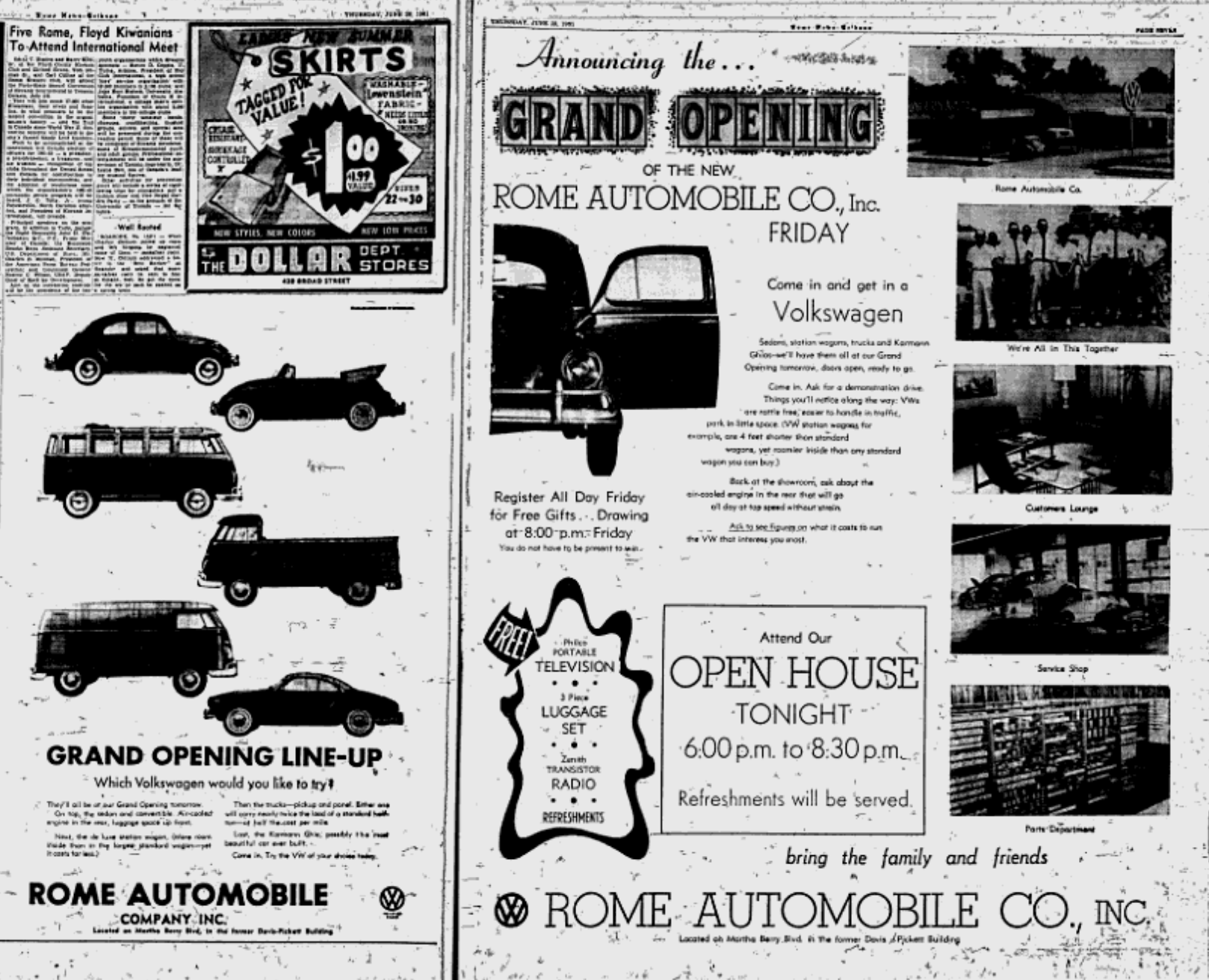
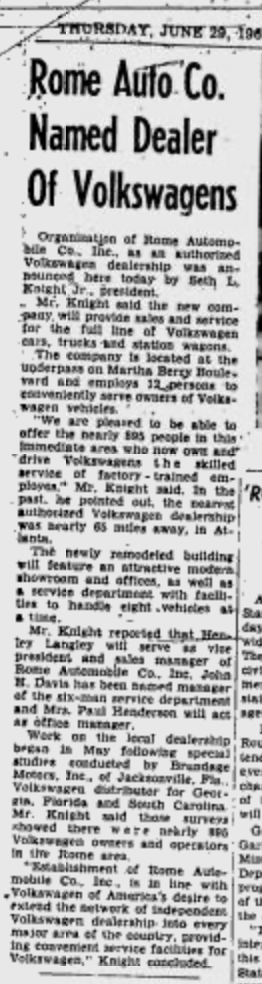
Volkswagen-Honda of Rome
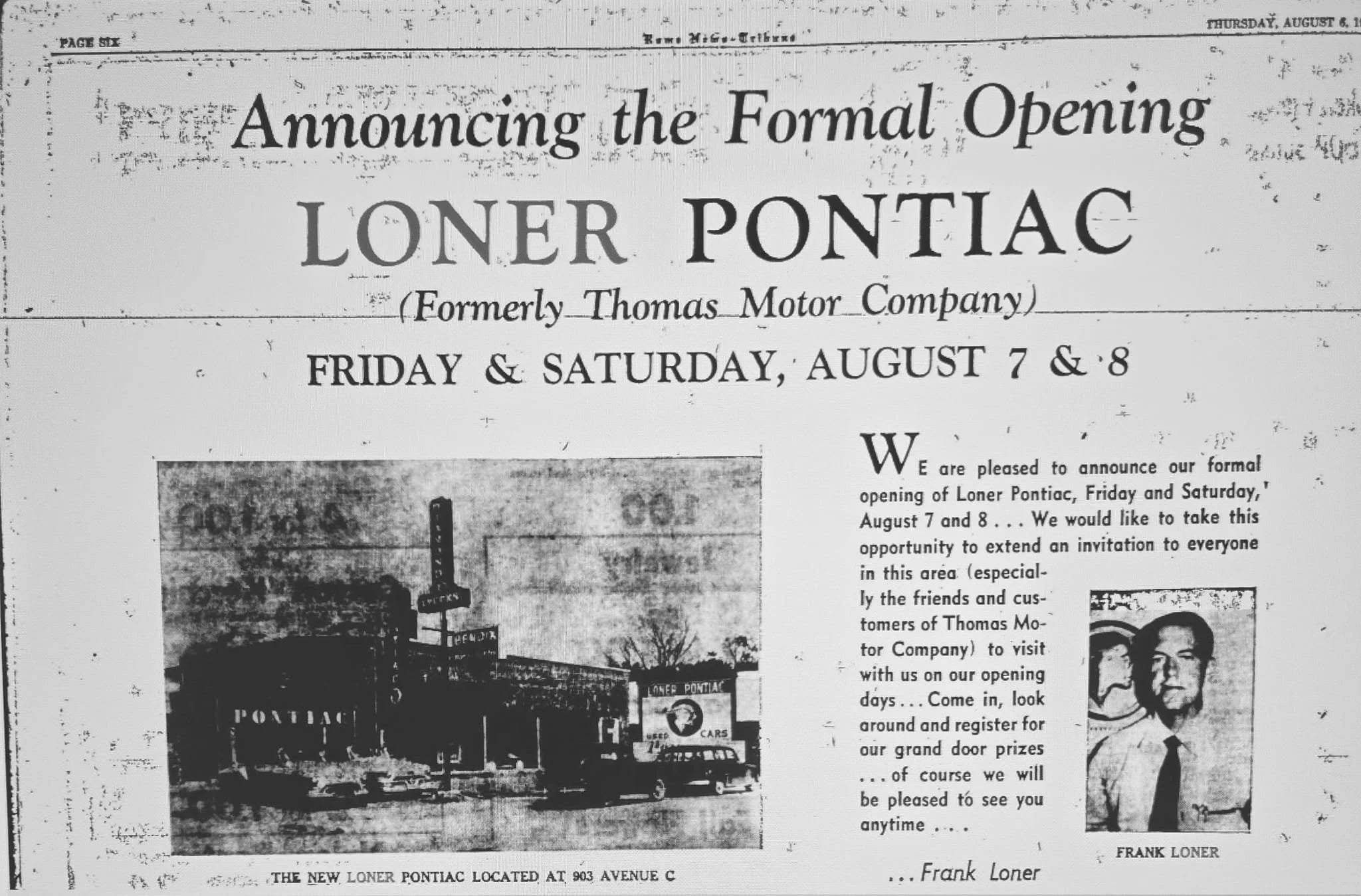
Tom Burns Buick-Pontiac
Bob Williams Dodge
Welborn Chevrolet-Peugeot
Riverside Toyota
Julian Harrison Ford-Mercedes
Wayne Blackwood Lincoln-Mercury
Richard Kelley Oldsmobile-Cadillac
Some of those marques are still familiar. Other brands have vanished altogether: Pontiac. Oldsmobile. Mercury. Peugeot (from the USA).
And then there were the imports.
Volkswagen. Honda. Toyota. Nissan. Mazda. Mercedes-Benz.
Rome may not have been Atlanta, but by 1986 you had considerably more choices than you might expect from a small Southern city.
My Own Rome Connection
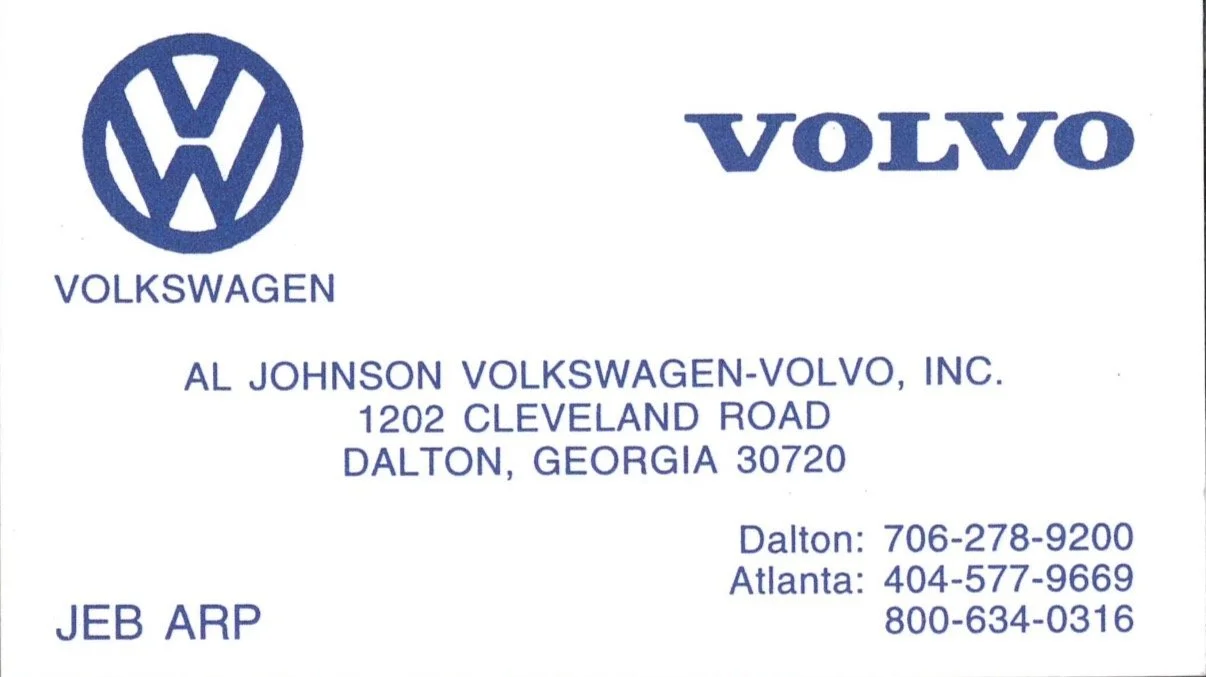
My first job in high school was selling Volkswagens and Volvos at Al Johnson in Dalton. This was right when the New Beetle came out, and we could barely keep them around. I remember very clearly that one of the Volvos I sold was to a lovely lady from Rome.
Local Realtor Ruth Terry bought a Volvo station wagon from me when I worked there. I remember that our detail shop had already closed so we sent her home in a loaner car and I delivered the Volvo wagon to her in Rome the following day. That was probably only the second time I’d been to Rome.
But less than a year later, I moved here to attend Berry.
I had completely forgotten the irony of that until I started researching this story: Long before Rome became my home, I had already began my real estate connections and even delivered a Swedish station wagon here.
Apparently the warning signs were there even in my youth.
AND THEN THERE WAS PEUGEOT
Which brings me to the Rome car mystery I most want to solve.
When I moved here in 2000, there was an enormous PEUGEOT sign near the intersection of Turner McCall Boulevard and Riverside.
I remember it vividly.
It wasn't a little metal sign tacked to a garage. This was a big, multi-letter illuminated sign with the Peugeot branding—the kind of sign that made you assume Peugeots must once have been sold there.
I particularly remember it because Peugeot had already left the American market by then.
I also remember it because the dealership had closed and I really wanted the plastic Peugeot logo panel off the sign for my dorm room at Berry (I still kind of want it).
But here is the mystery…
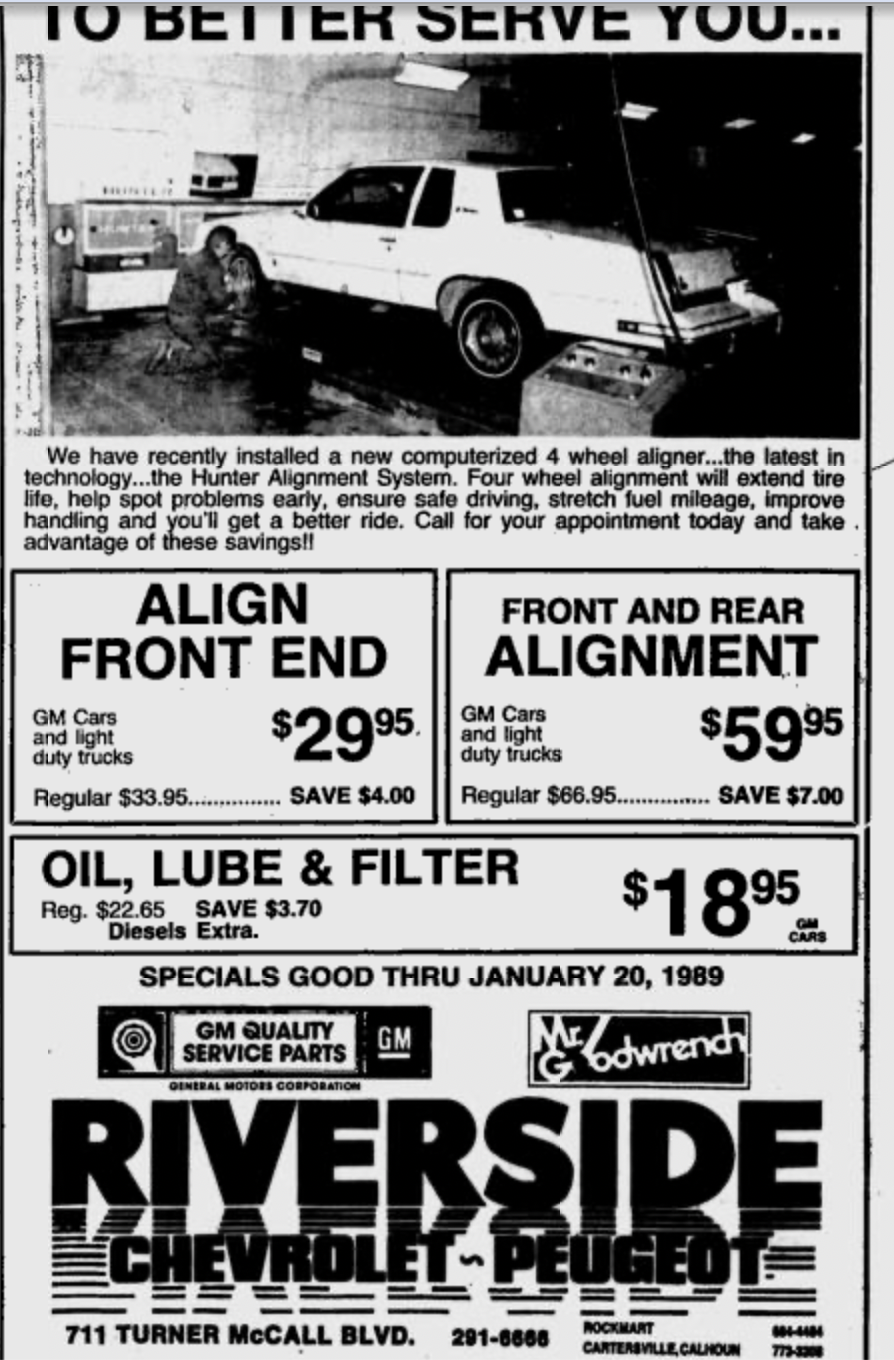
A Georgia Peugeot dealer list from near the end of the marque’s American run does not include Rome. It’s also hard to find any records from a brand discontinued in the United States before digital records. So far I haven't found documentary evidence of an authorized Peugeot franchise here nor a photo of the sign, but I did find a Riverside Chevrolet-Peugeot advertisement in a 1986 edition of the Rome News Tribune, so I know it existed…but I really want to see photographic evidence.
If you remember it—or, better yet, if you have a photograph of it—I need to hear from you.
And if someone somehow has that Peugeot sign sitting in a garage or storage unit, we really need to talk.
FOLLOW THE DEALERSHIPS AND YOU CAN WATCH ROME CHANGE
It would be easy to make all of this simply a list of old car dealers. But that's not really why it interests me. The dealerships tell us something about the physical development of Rome.
Look at where Rome bought its cars and you can watch the city reorganize itself around the automobile. First came the traditional downtown showroom.
Broad Street.
The dealership fit into the existing city. Then automobile businesses began moving into larger buildings and onto streets outside the traditional retail core.
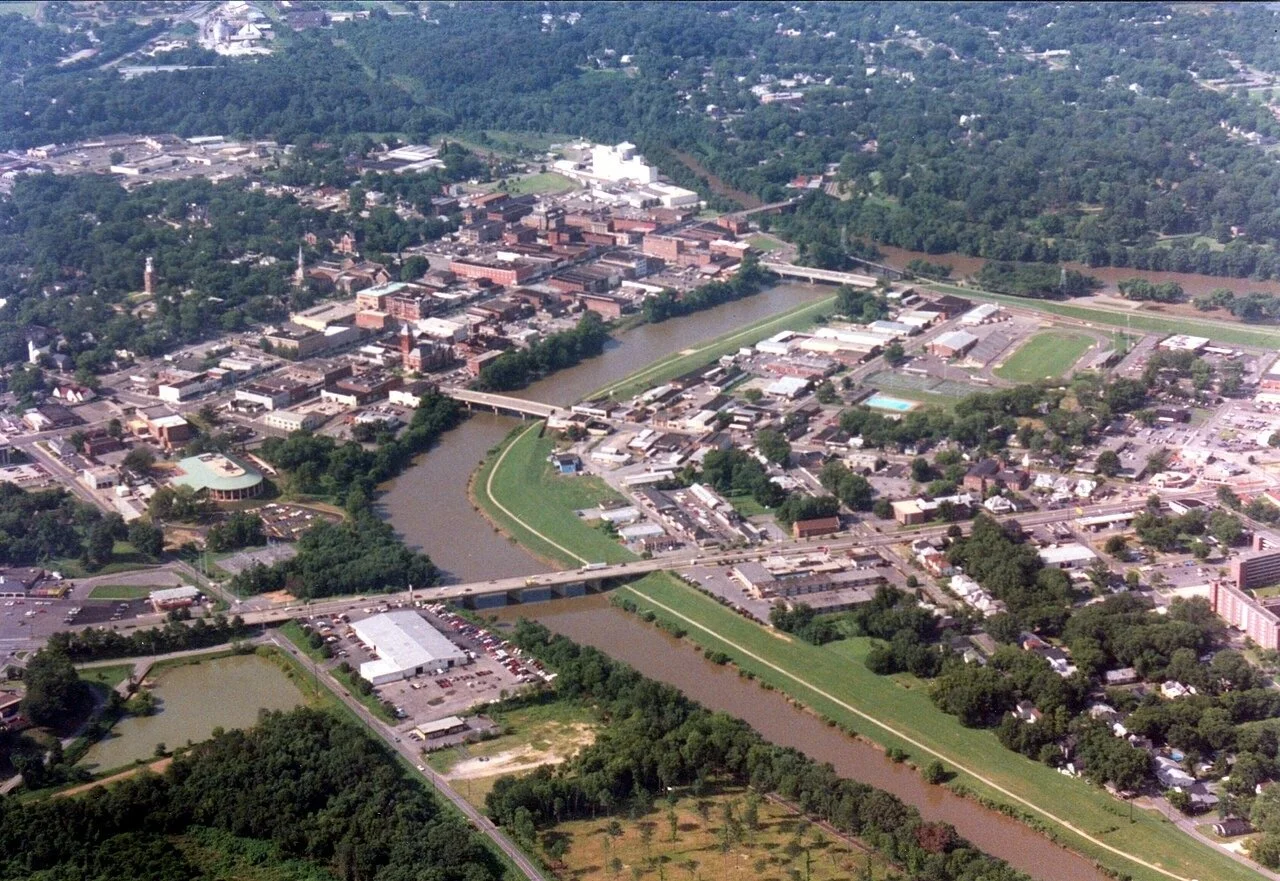
Eventually they moved to second Avenue and Turner McCall Blvd, where the dealership became part of an increasingly automobile-oriented commercial landscape.
And today the biggest dealerships occupy sprawling campuses along Highway 411 and Veterans Memorial Highway, where the showroom itself is only one small component of acres devoted to displaying, servicing and storing automobiles.
The progression is almost perfect.
First, we put the automobile dealership inside existing city buildings.
Then we designed buildings around the automobile.
Eventually, we designed whole sections of the city around it.
That is architectural history, whether the building involved has Corinthian columns or a giant Ford sign out front.
STAND HERE
Go to the 500 block of Broad Street.
Stand in front of the DeSoto Theater and turn around to look across the street.
Now mentally remove what you see around you.
Imagine the storefront glass gleaming under the downtown lights.
Behind one window is a brand-new Packard—the long hood, the chrome, the whitewall tires.
Next door, a Studebaker.
People are walking along Broad Street. Someone stops at the window.
Maybe he has been looking at that Packard for weeks.
Maybe she finally convinces him they can afford it.
They go inside. Papers are signed. Keys change hands.
And a brand-new Packard pulls away from 529 Broad Street and disappears into traffic.
That Rome is mostly gone.
But every once in a while, someone removes a layer of stucco and an old sign appears underneath.
PACKARD.
And for a moment, you can see it again.
A LITTLE AUTO_CHITECTURE
Cars and buildings are two subjects I apparently cannot leave alone.
Years ago, I created a mostly neglected alternate Instagram account called @Auto_chitecture for a very specific thing I kept noticing while traveling: interesting cars parked in front of interesting buildings.
Particularly in Europe, where an old Citroën, Saab, Fiat or Renault somehow always seems to be parked in exactly the right place.
Maybe researching all of this is my excuse to resurrect it.
Because cars and architecture have always been more intertwined than we realize. Sometimes the car completes the architecture. And sometimes—as Rome's old dealerships remind us—the architecture exists because of the car.