
RHJ: Two Houses on Maple Avenue
THE ROME YOU CAN’T SEE ANYMORE
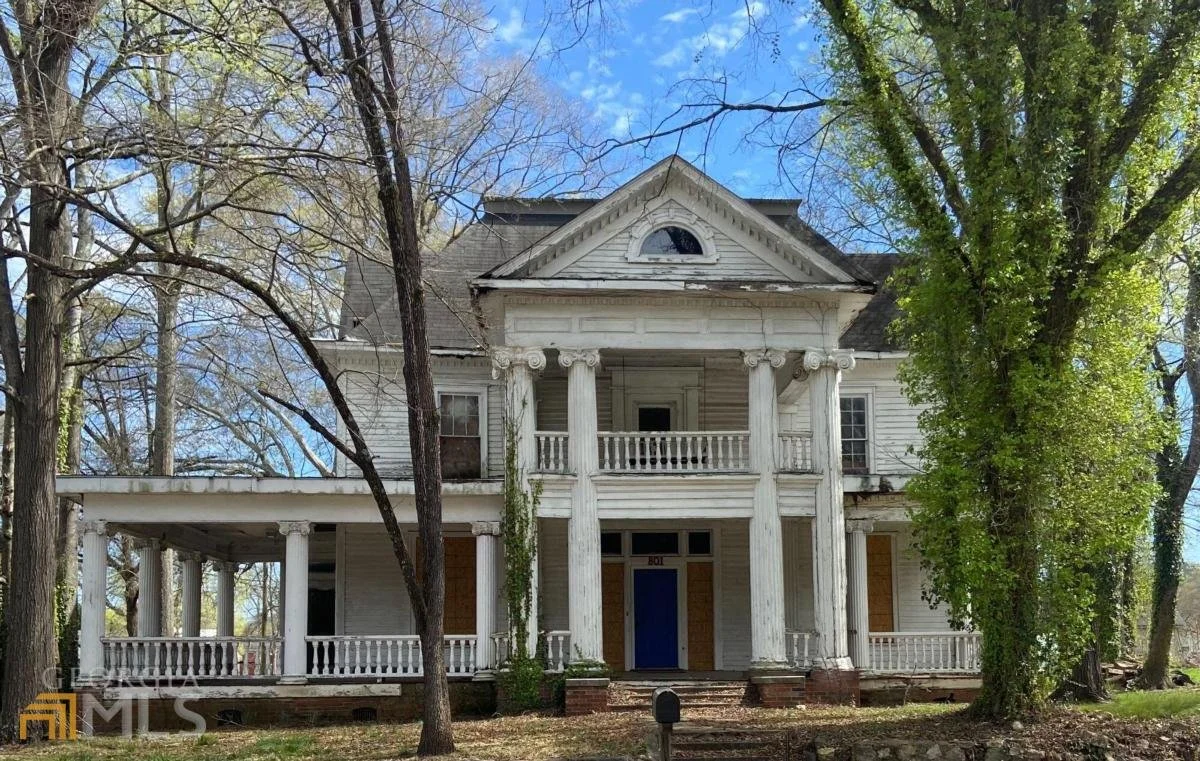
Two Houses on Maple Avenue—and When It’s Too Late to Save Them
I have a confession to make that may sound strange coming from someone who talks about historic preservation as much as I do: I don't think every old house can be saved.
I wish that weren't true. But sometimes a building deteriorates so badly that restoration stops being a reasonable renovation and becomes an act of philanthropy. The cost bears little relationship to what the finished property will ever be worth. The location may no longer make sense for the kind of house it once was. And years of deferred maintenance can eventually turn a preservation problem into a structural one.
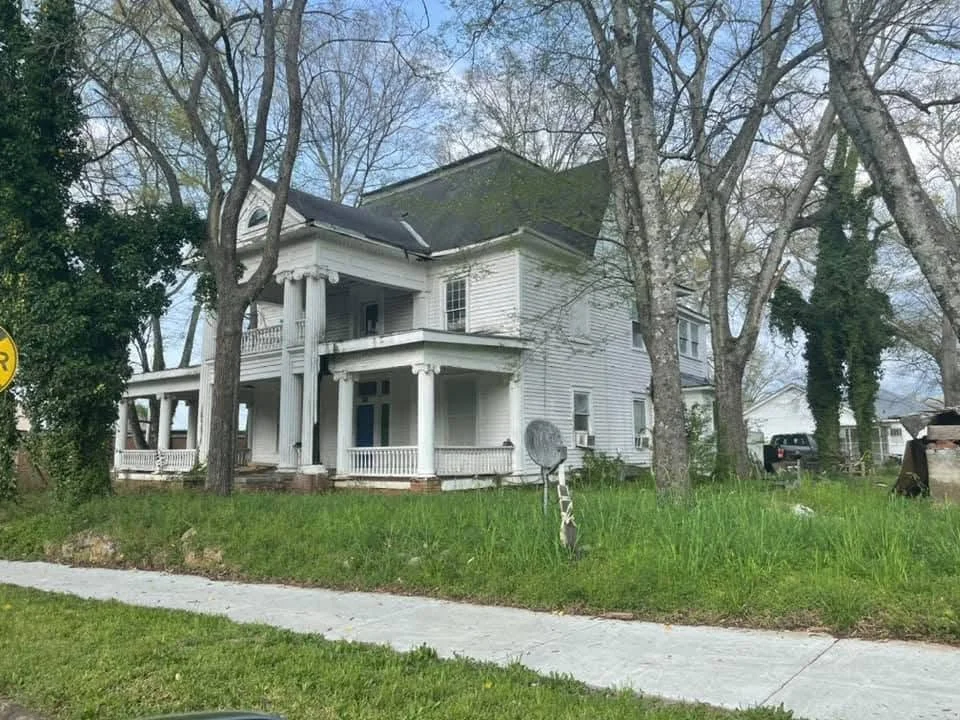
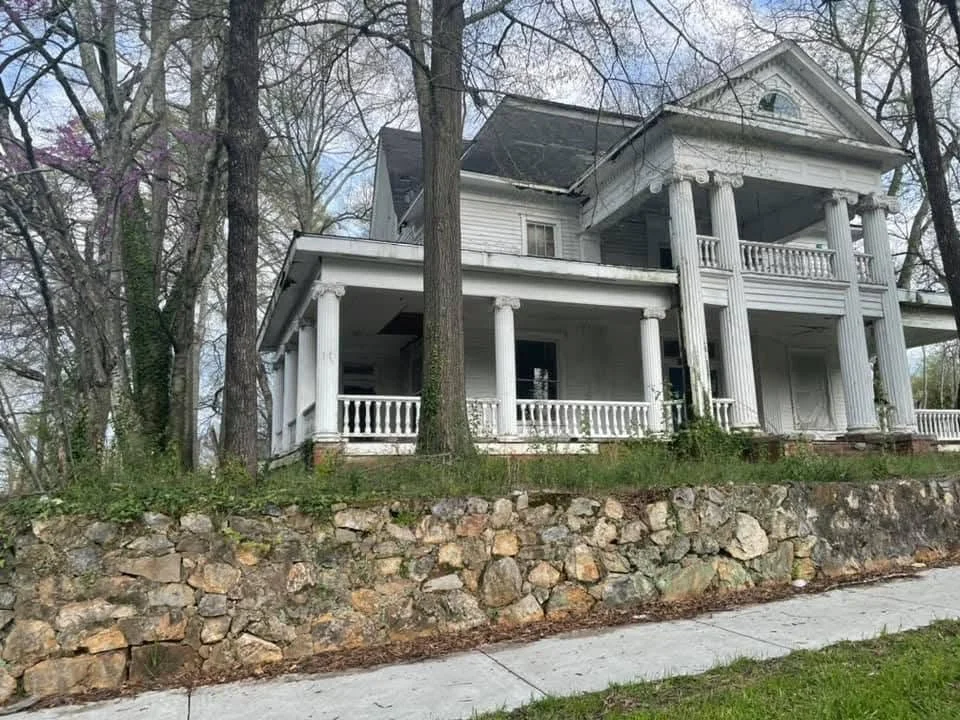
Two houses that recently disappeared from Maple Avenue in East Rome are good examples: 801 and 813 Maple Avenue. I knew both of them—not when they were grand houses filled with families, but near the ends of their lives, when I showed them to real-estate clients.
By then, both were in terrible condition.
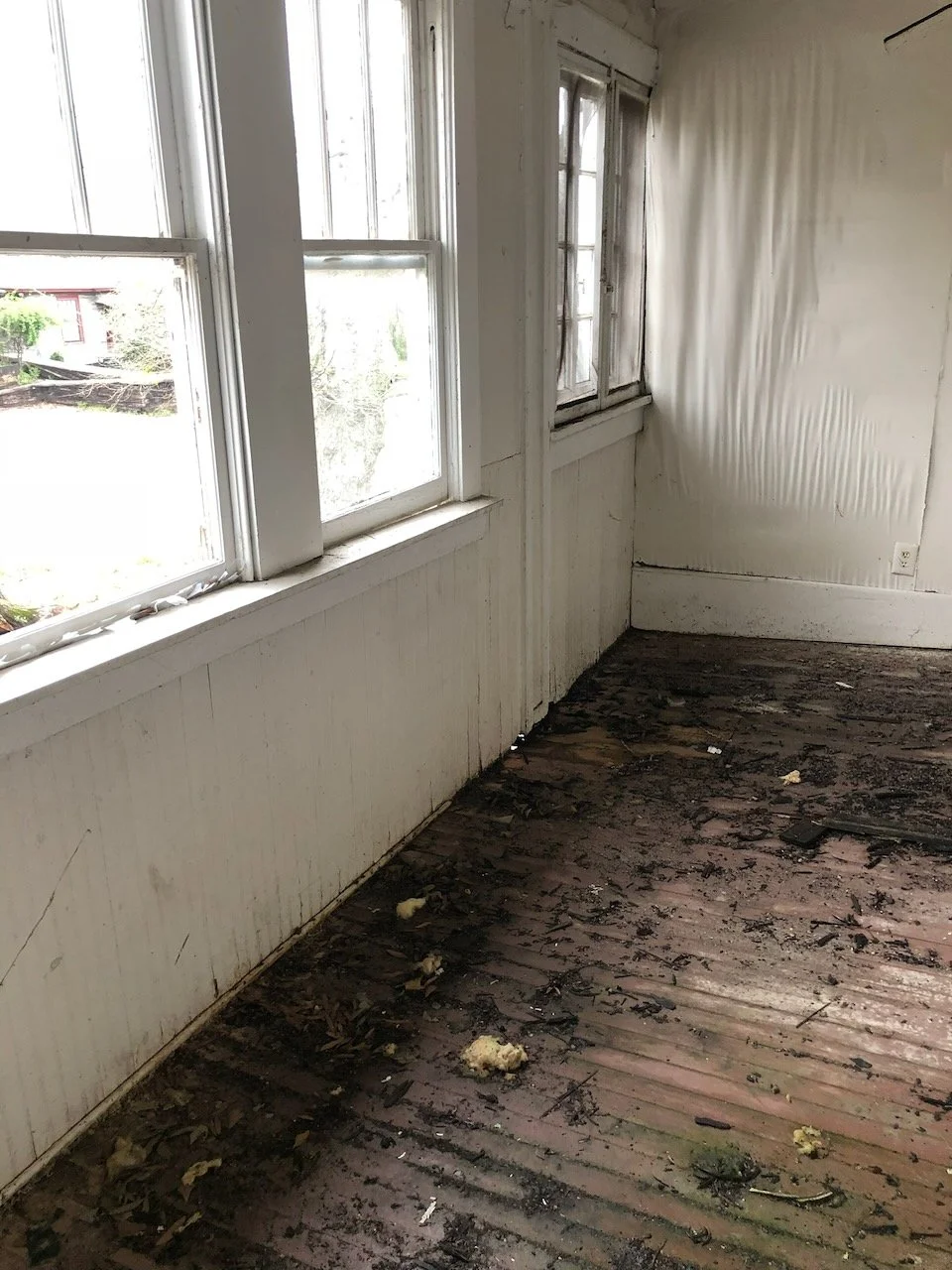
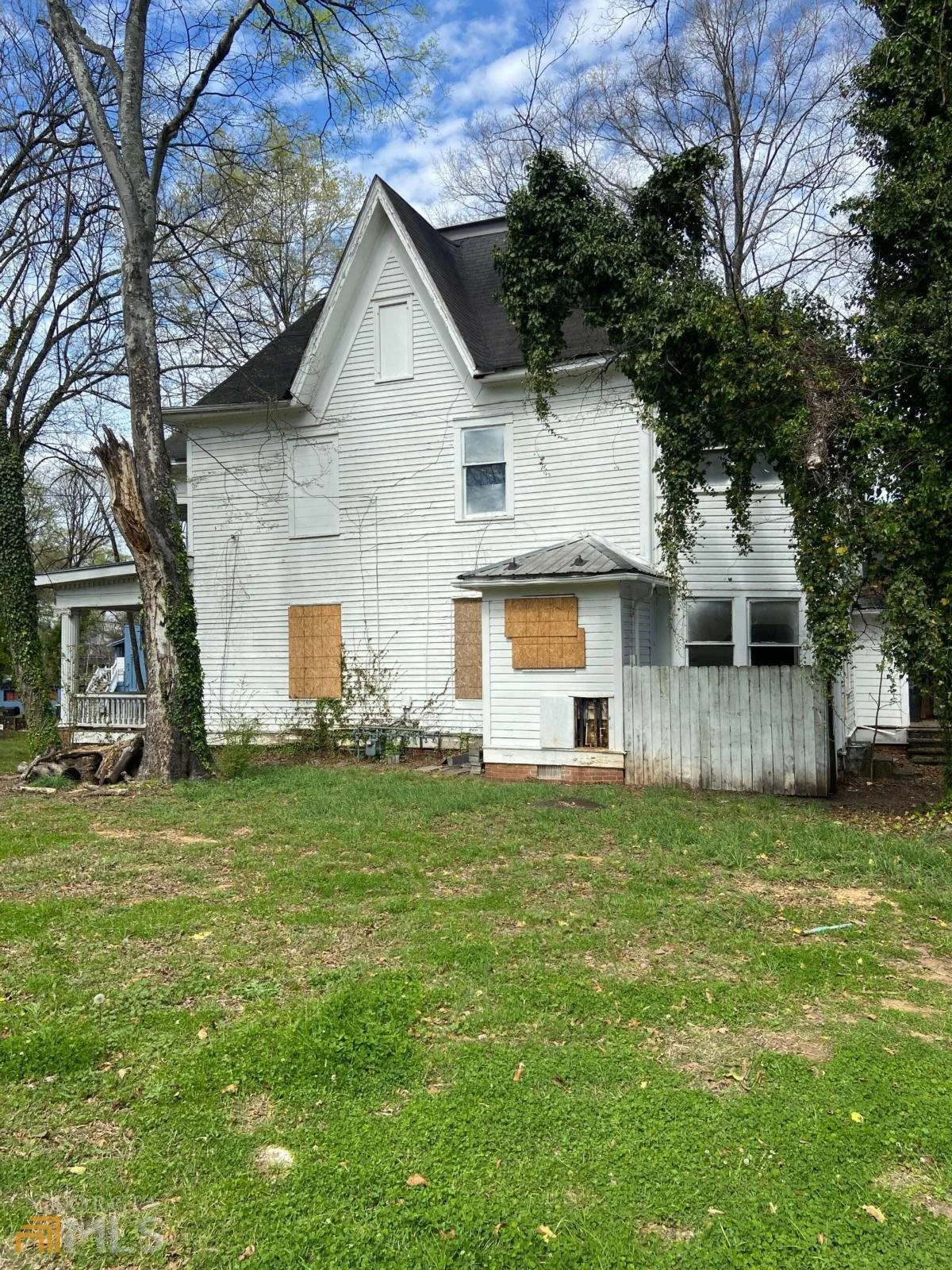
At 813, I discovered just how terrible firsthand when I fell through the floorboards during a showing. Not all the way through, thankfully, but nothing changes your assessment of a "fixer-upper" quite like having your life flash before your eyes.
Today, both houses are gone. And the more I've learned about them, the sadder that feels—even though I'm not convinced demolishing them was the wrong decision.
BEFORE EAST ROME WAS ROME
To understand the houses, you first have to understand their neighborhood. Did you know that East Rome was not originally part of the City of Rome? I didn’t until I began researching these two houses. The East Rome Town Company began developing land across the Etowah River in the 1870s, creating what was essentially a separate community. East Rome was incorporated as its own city in 1883 and did not become part of Rome until later.
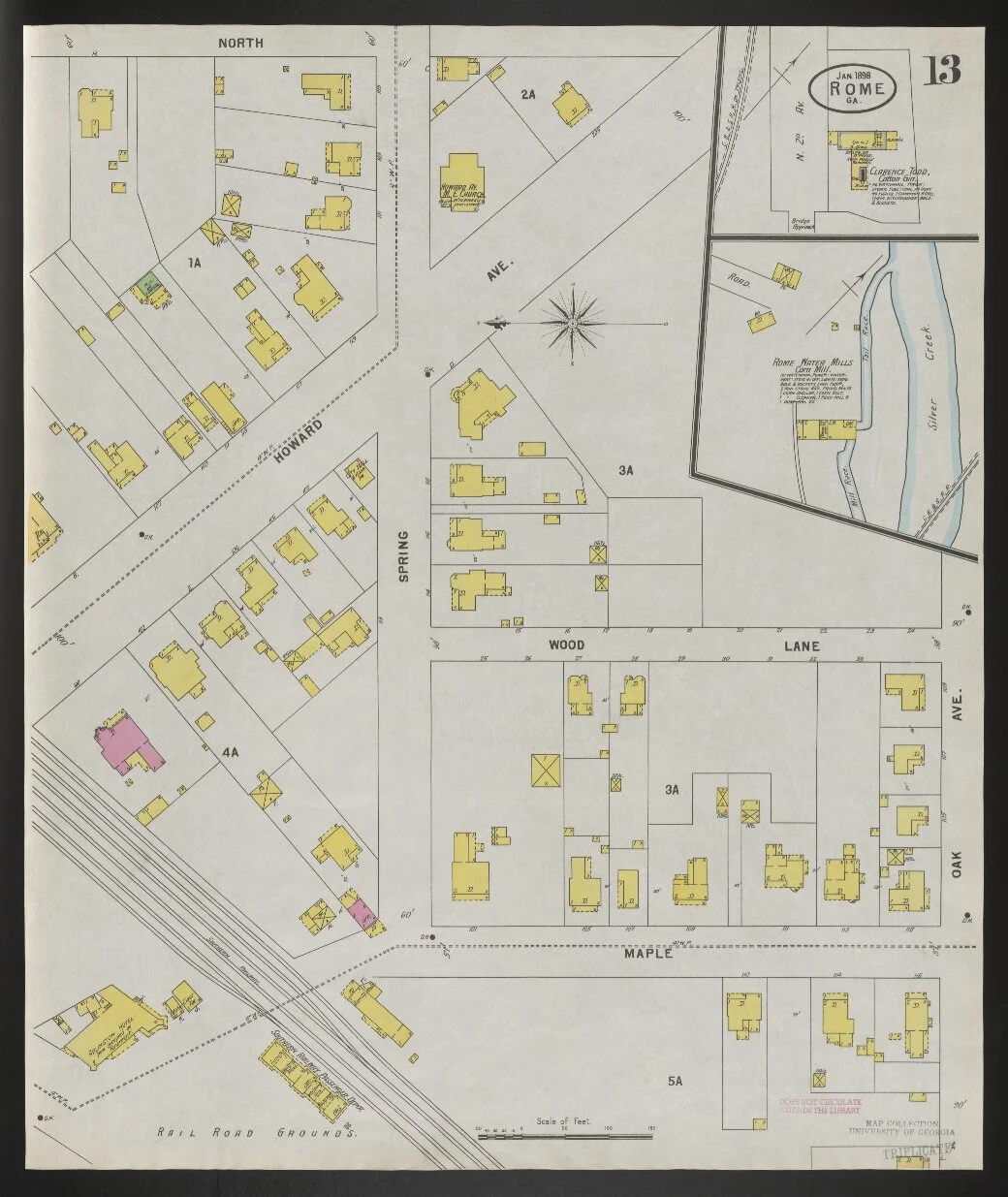
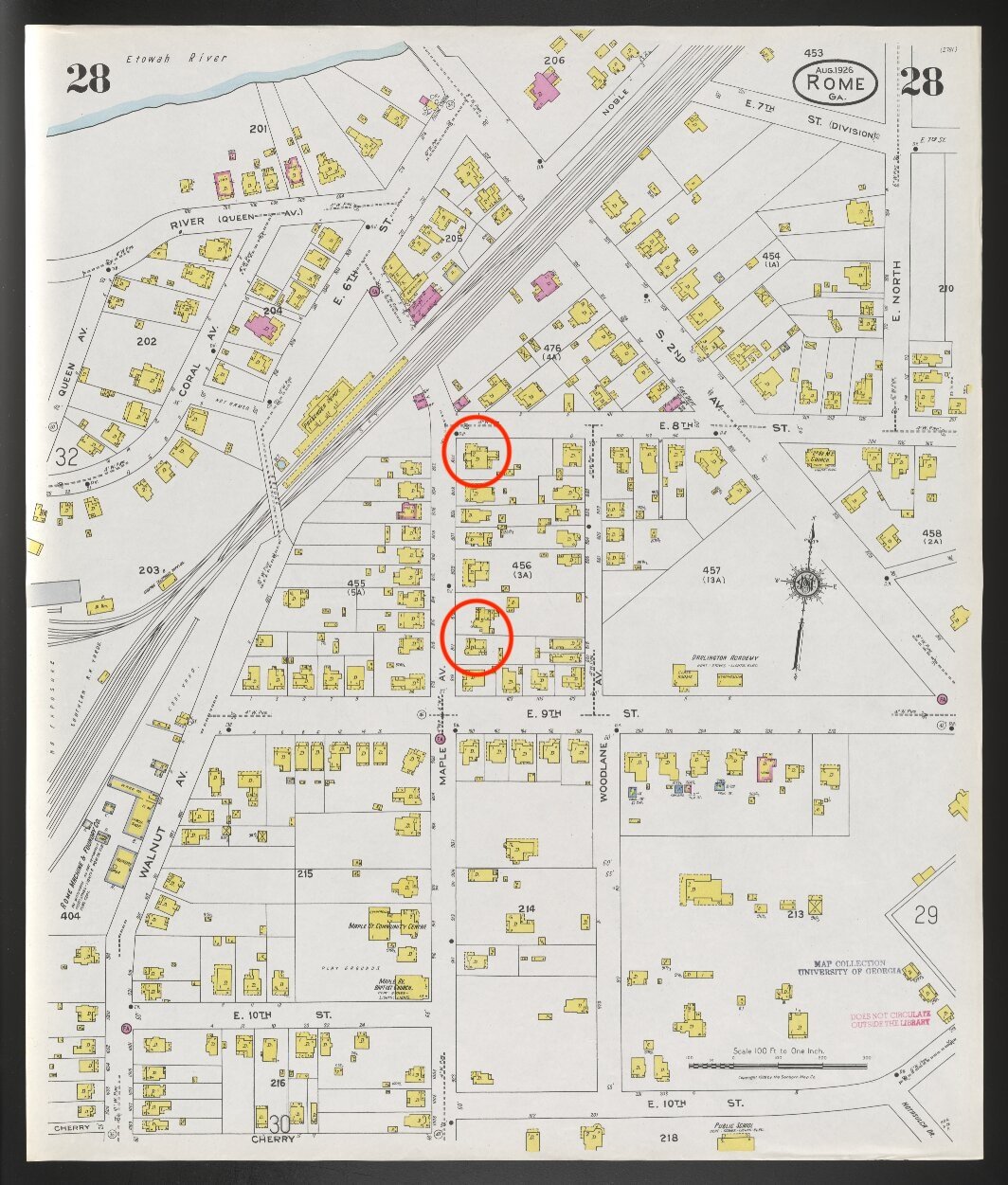
Maple Avenue developed during that period, and by 1898 a Sanborn fire insurance map shows it already lined with substantial frame houses on deep lots. These weren't little cottages scattered along the edge of town. This was an established residential neighborhood with large two-story houses, porches, outbuildings and yards stretching back from the street.
Several of those houses have survived well into the 21st century—including 801 and 813 Maple Ave.
Modern tax records aren't particularly helpful in telling us when they were built. One record gives 801 a construction date of 1930, while 1901 appears frequently as a default date for Rome houses that are clearly older. In this case, we can prove those dates are wrong: both 801 and 813 appear on the 1898 Sanborn map.
And 801 “appears” to have been considerably older.
801 MAPLE: THE DOCTOR'S HOUSE
A local researcher found an intriguing entry in an 1883 directory placing physician Dr. W. H. Boyd at the corner of Maple and East Eighth streets—the precise location of 801 Maple. I haven't independently verified that directory entry from the original source, so there is still an asterisk beside 1883.
But there is no question that Boyd later lived there.
His obituary describes him as one of Rome's oldest citizens, a longtime practicing physician, successful businessman, and one of the wealthiest men and largest real-estate owners in this part of Georgia. His funeral, the newspaper announced, would take place at his residence at the “corner Maple and East Eighth streets.”
There is also an intriguing piece of oral history floating around. Someone who explored 801 in 1992 recalled being told by its then owner that Boyd built the house in the 1880s. According to the story, the doctor traveled frequently to Atlanta and Augusta and chose the site partly because it was convenient to the railroad depot below the hill. The same source remembered being told that one of Boyd's daughters remained in the house until the early 1960s, after which it became a boarding house.
It's a great story, and the pieces fit. But until we find a deed, construction notice or other contemporary record confirming it, Boyd as the builder remains an educated possibility rather than established fact. What we can say is that Boyd lived at 801, the house existed by 1898, and secondary evidence may place him on that corner as early as 1883.
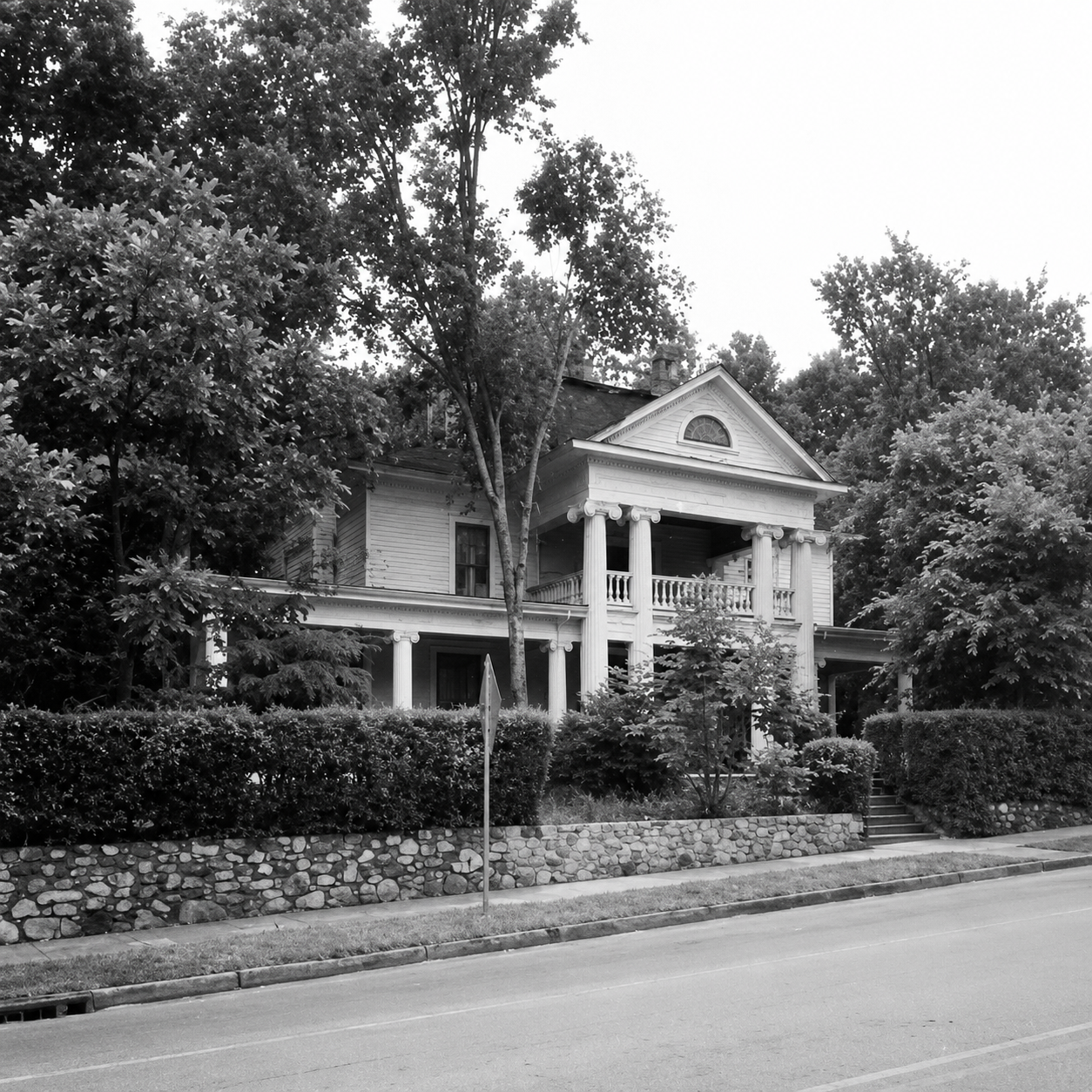
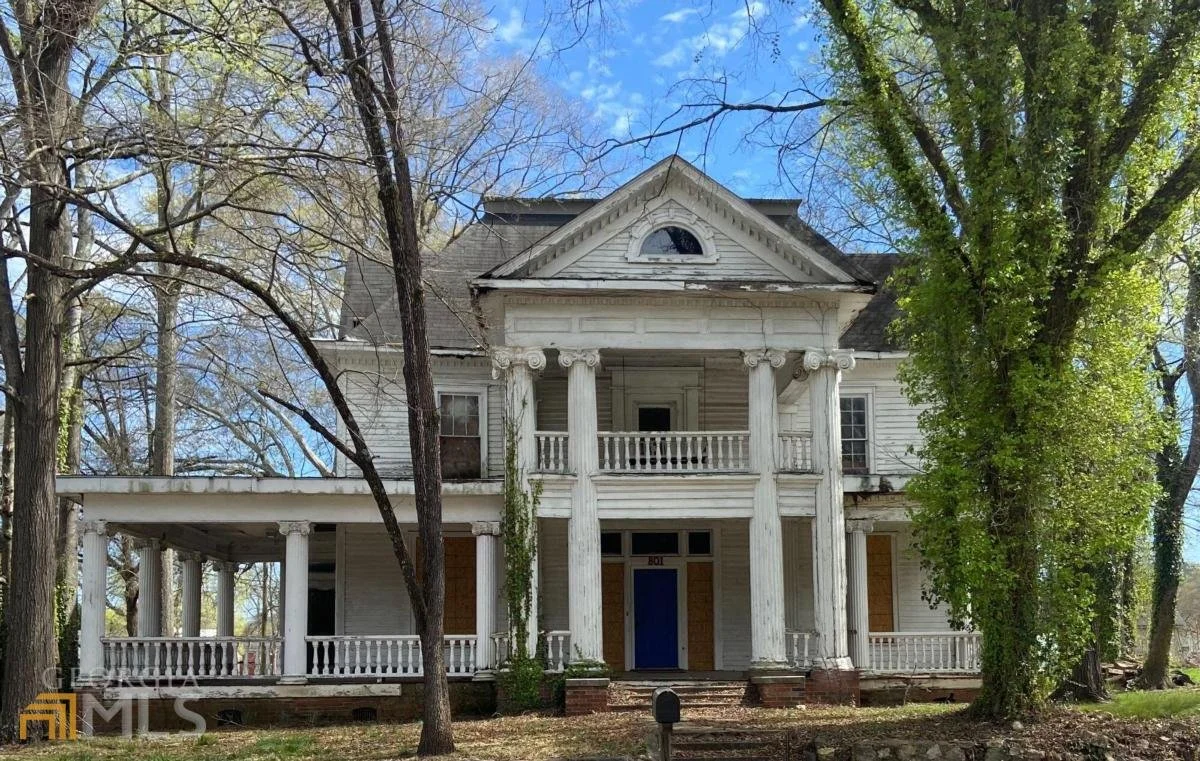
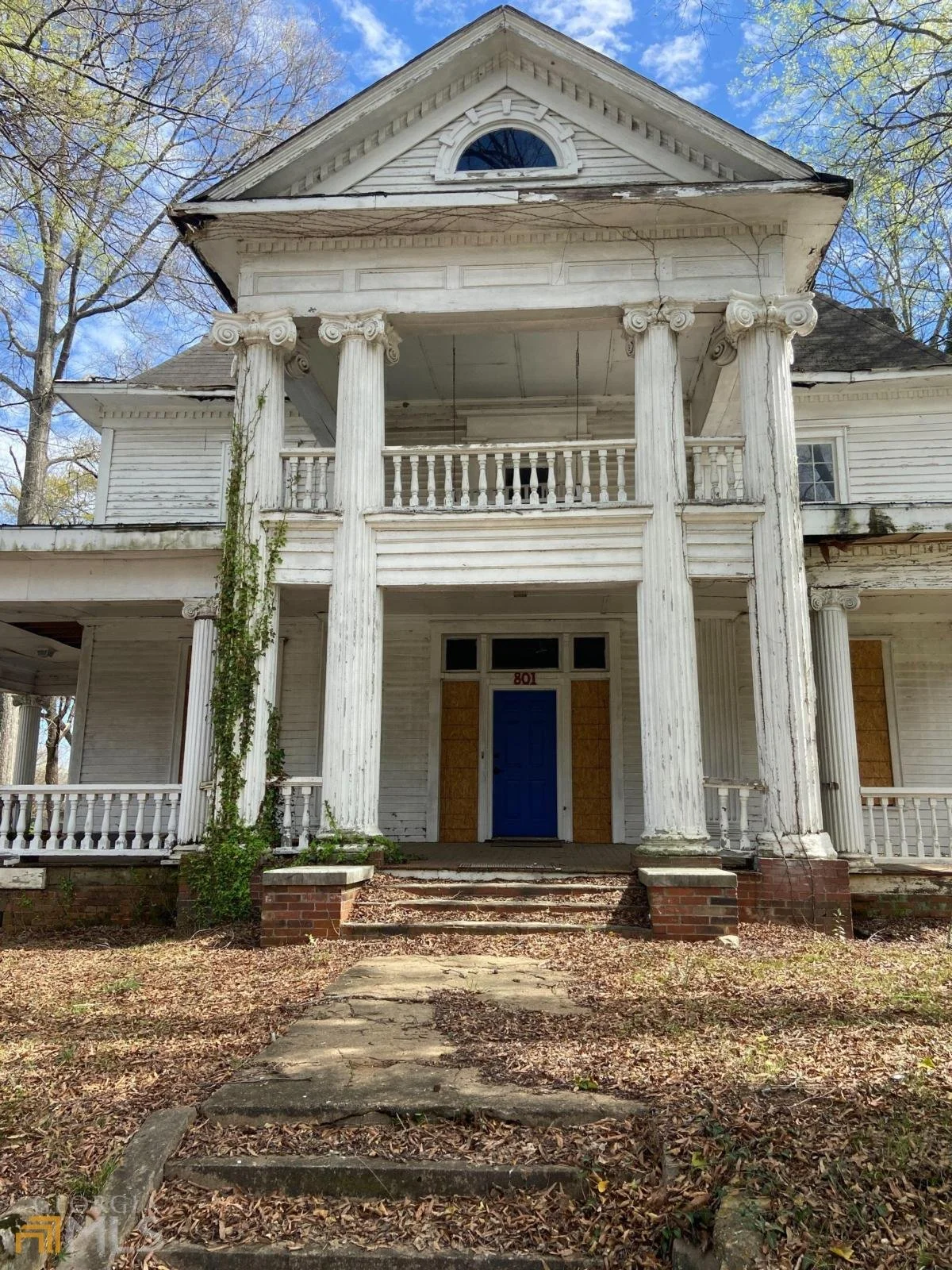
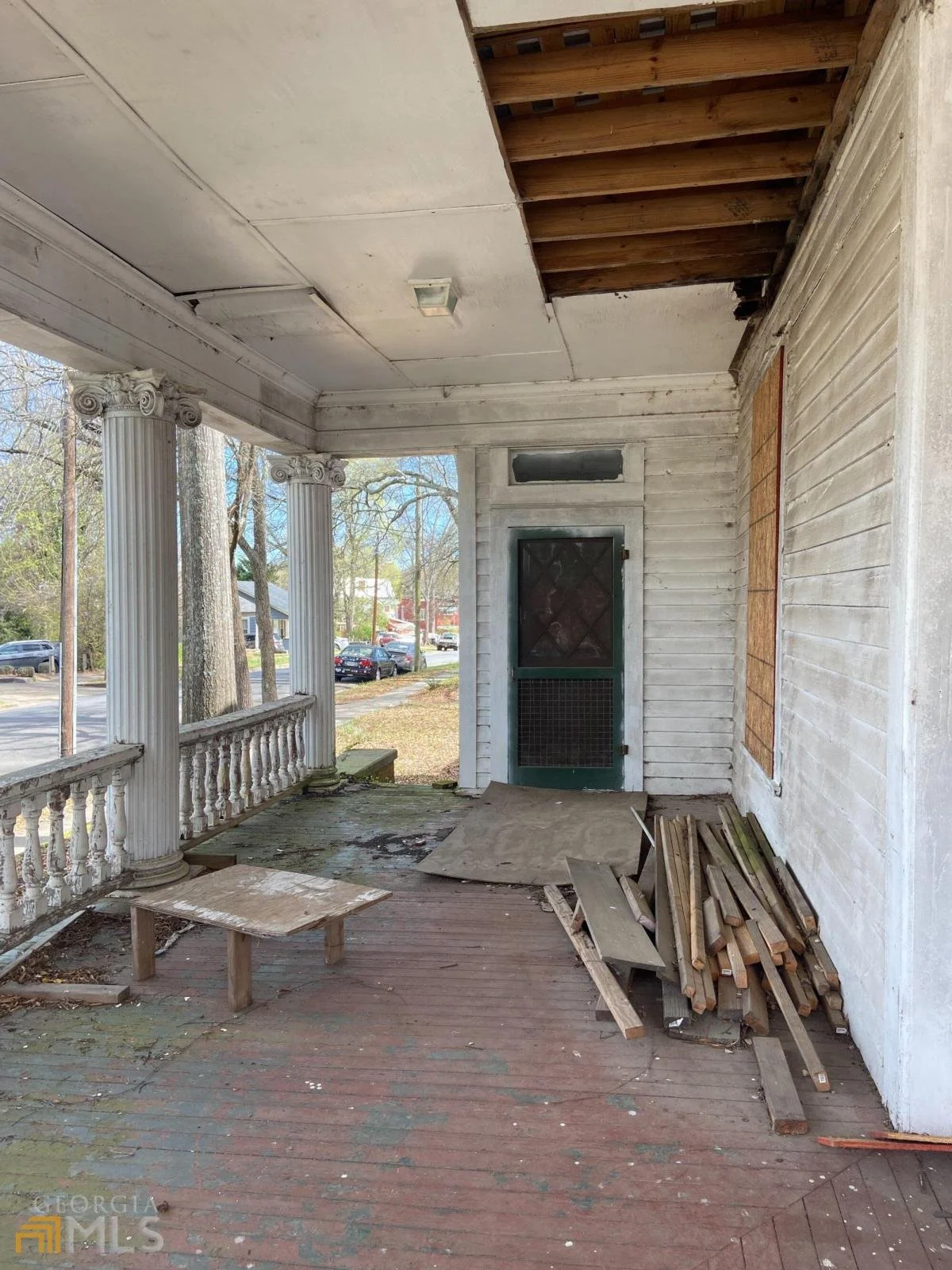
That early date also raises an architectural question. The 801 most of us remember had an enormous two-story Classical Revival portico with tall columns and a pediment. If the house really dates to the early 1880s, it probably didn't originally look exactly as it did at the end of its life. It may have begun as a Victorian-era house and received its grand classical makeover around the turn of the century, when updating older houses with columns, symmetry and classical details became fashionable.
In other words, someone may have substantially reinvented 801 more than a century before we started worrying about saving it.
813 MAPLE AVENUE
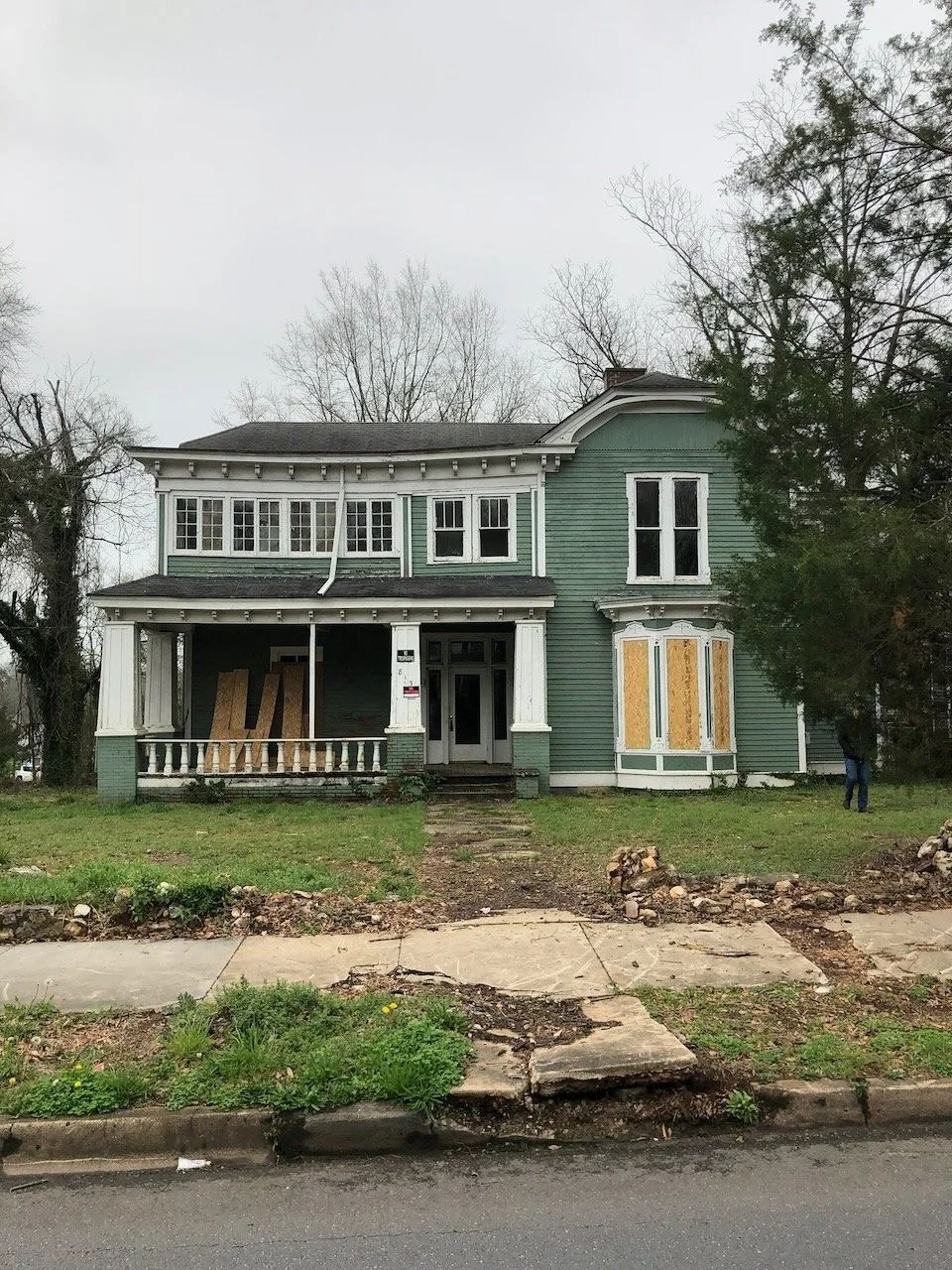
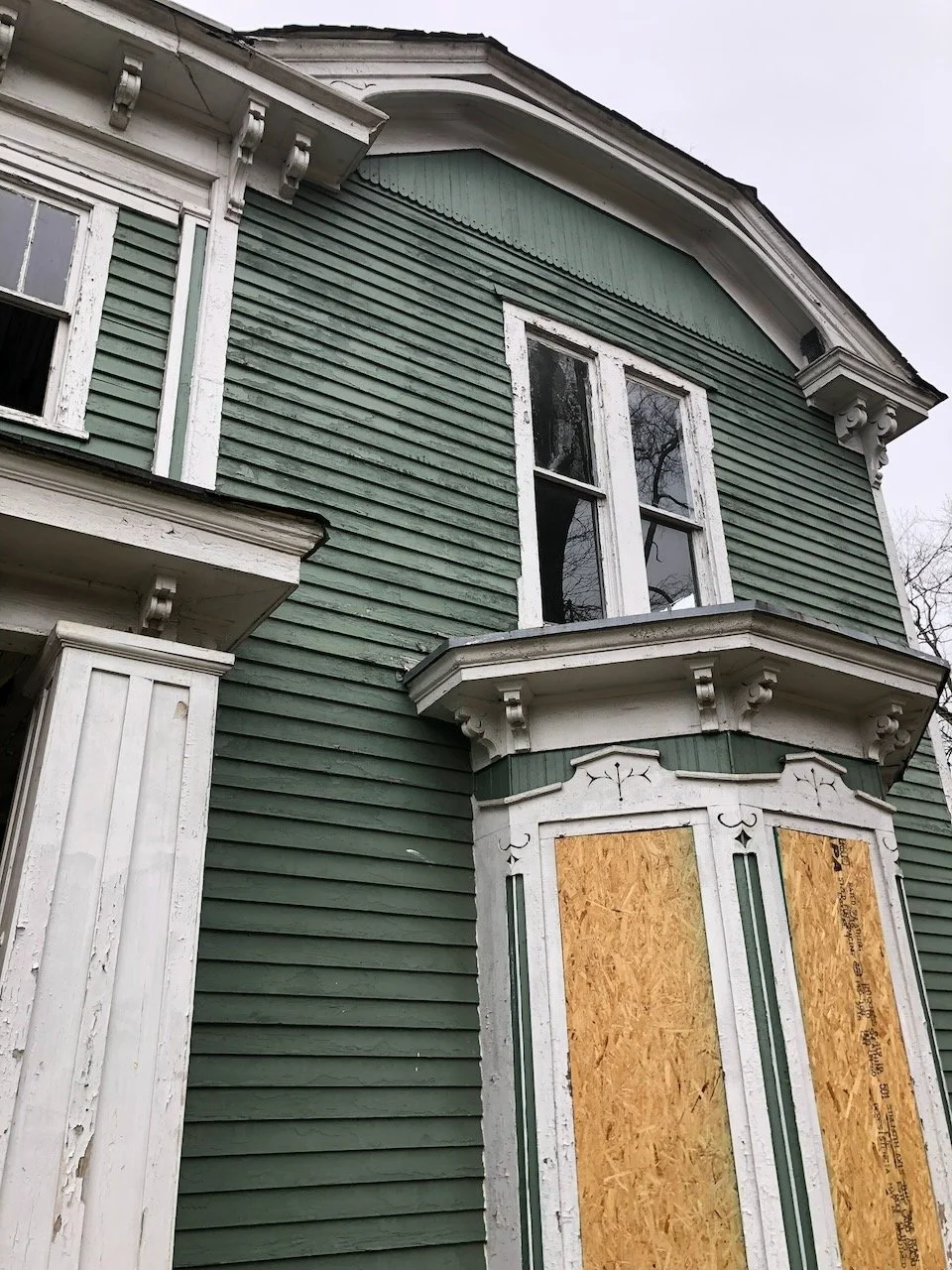
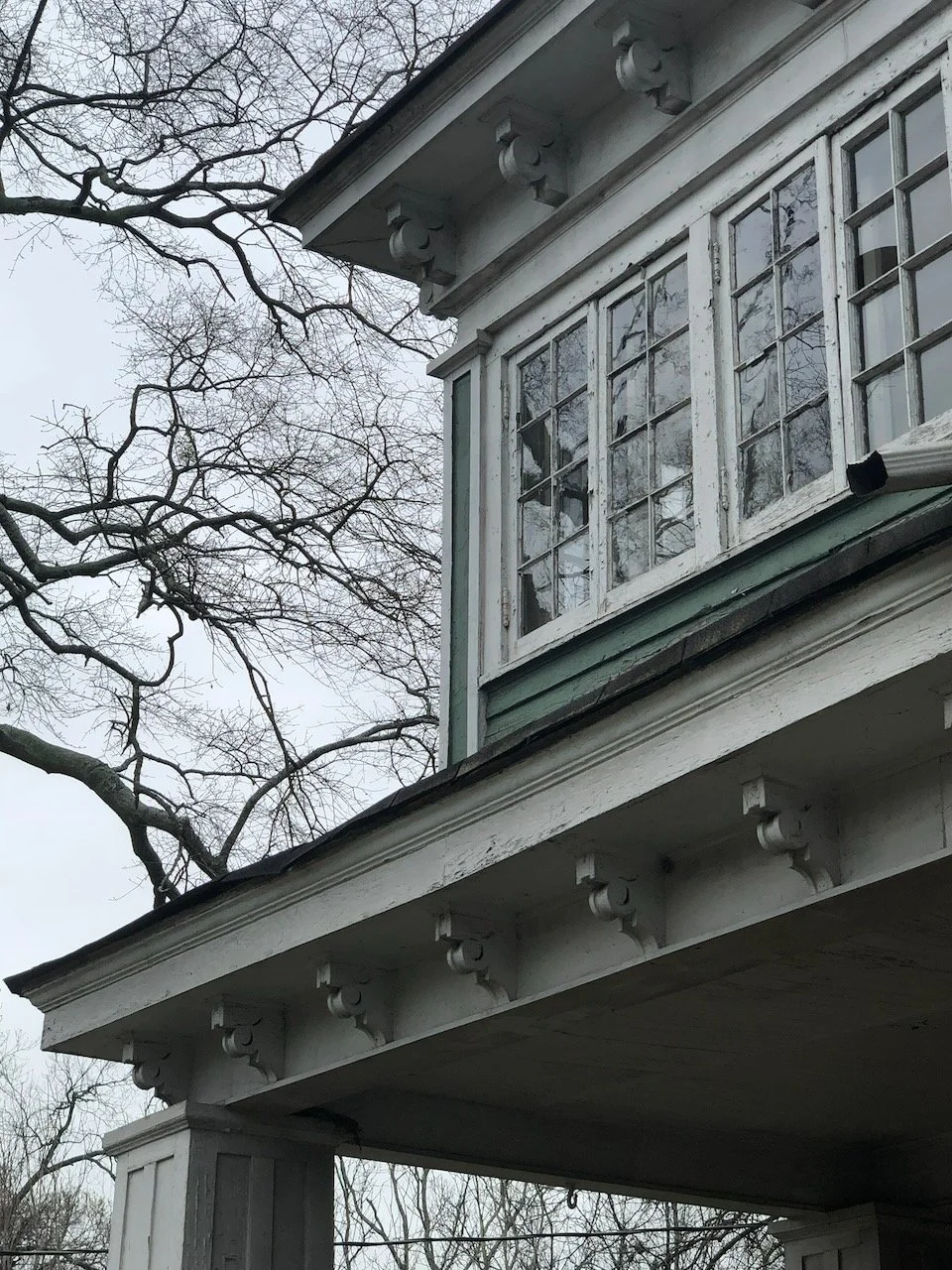
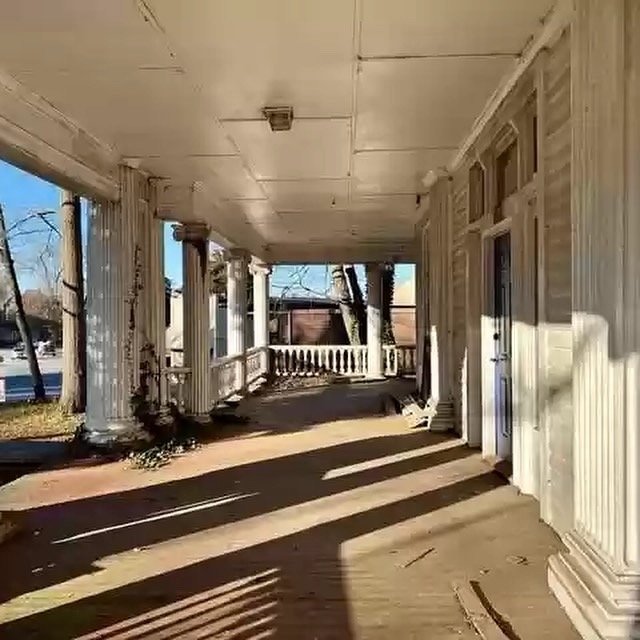
A short distance away, 813 Maple wore its age more openly. It was wonderfully asymmetrical, with a projecting bay, tall windows, bracketed cornice, broad porch and an irregular composition we associate with late-19th-century domestic architecture.
I haven't reconstructed 813's early history thoroughly as I sort of became stuck. Tax records give it the same questionable 1901 date, but the 1898 Sanborn proves it was already standing by then. Its architecture certainly supports a late-19th-century origin. Actually every home in Floyd County that was built in the 1800s has a “Year Built” note as 1901 as this is when the modern tax records likely began.
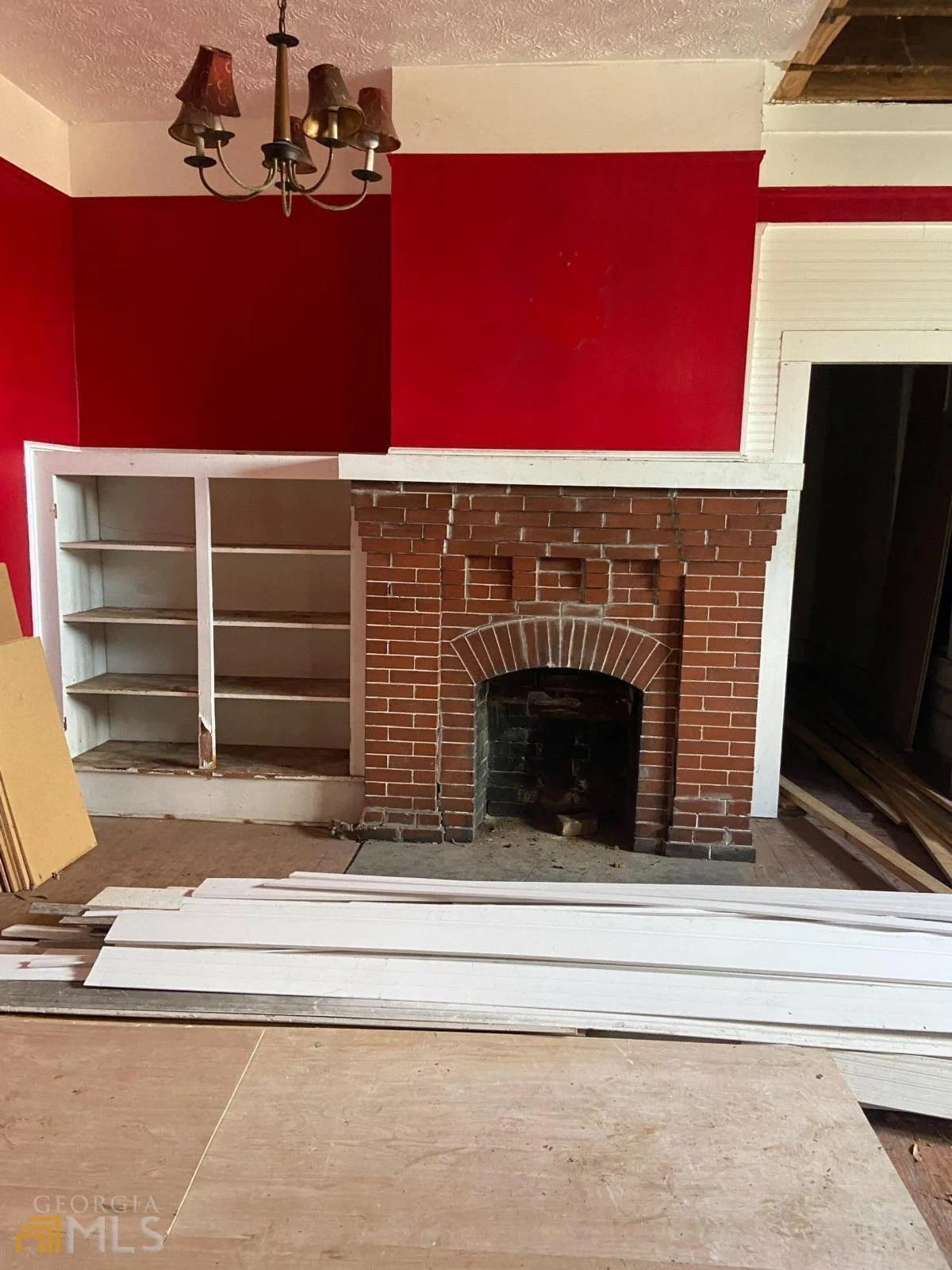
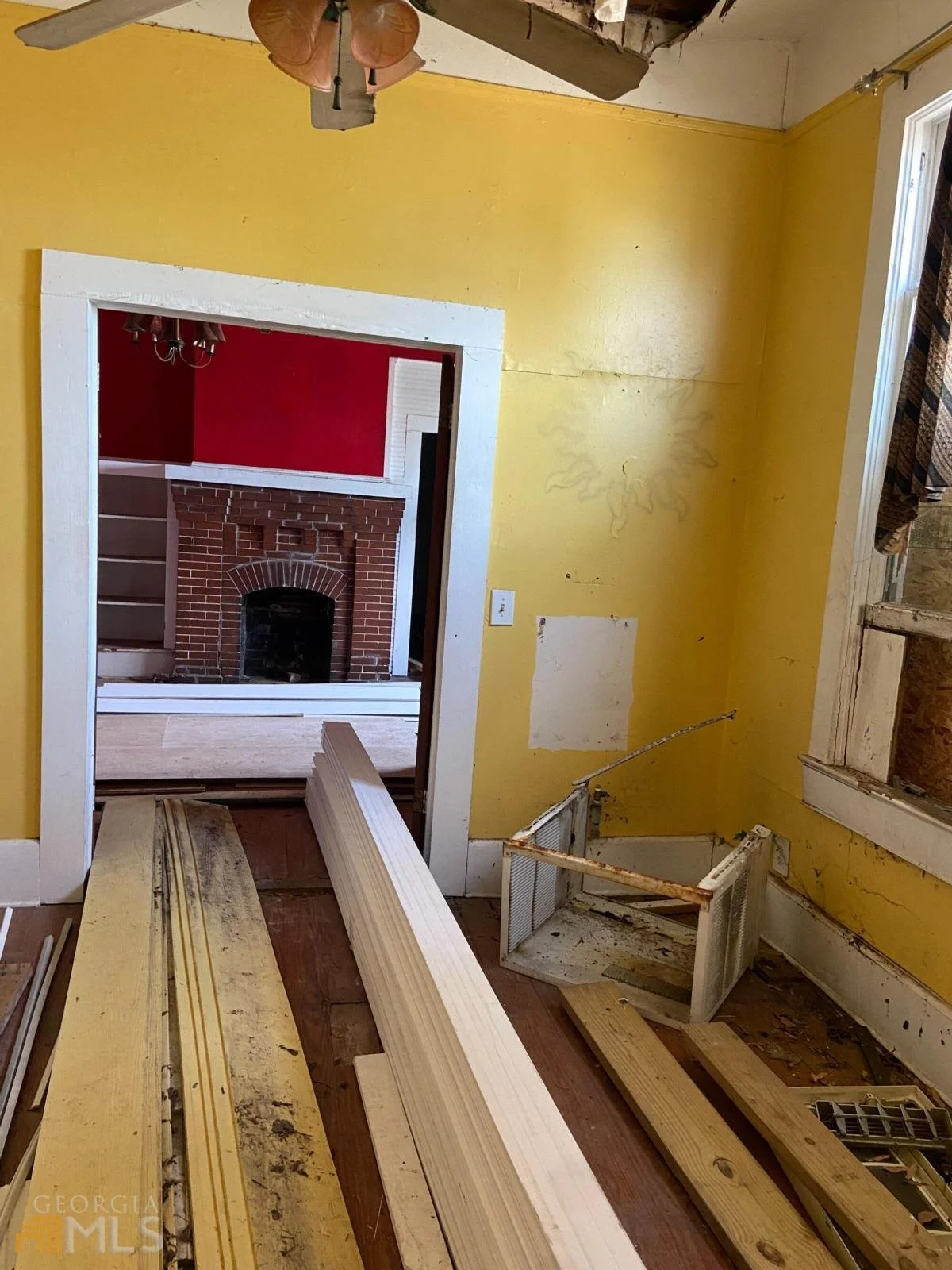
The later history is clearer. Like 801, the large single-family house eventually became an income property. By its final years, 813 was being converted into five separately metered apartments. When it sold for $40,000 in 2024, it still contained hardwood floors and four fireplaces, reminders of the much grander house underneath all the deterioration.
And deterioration is not an abstract word in this case.
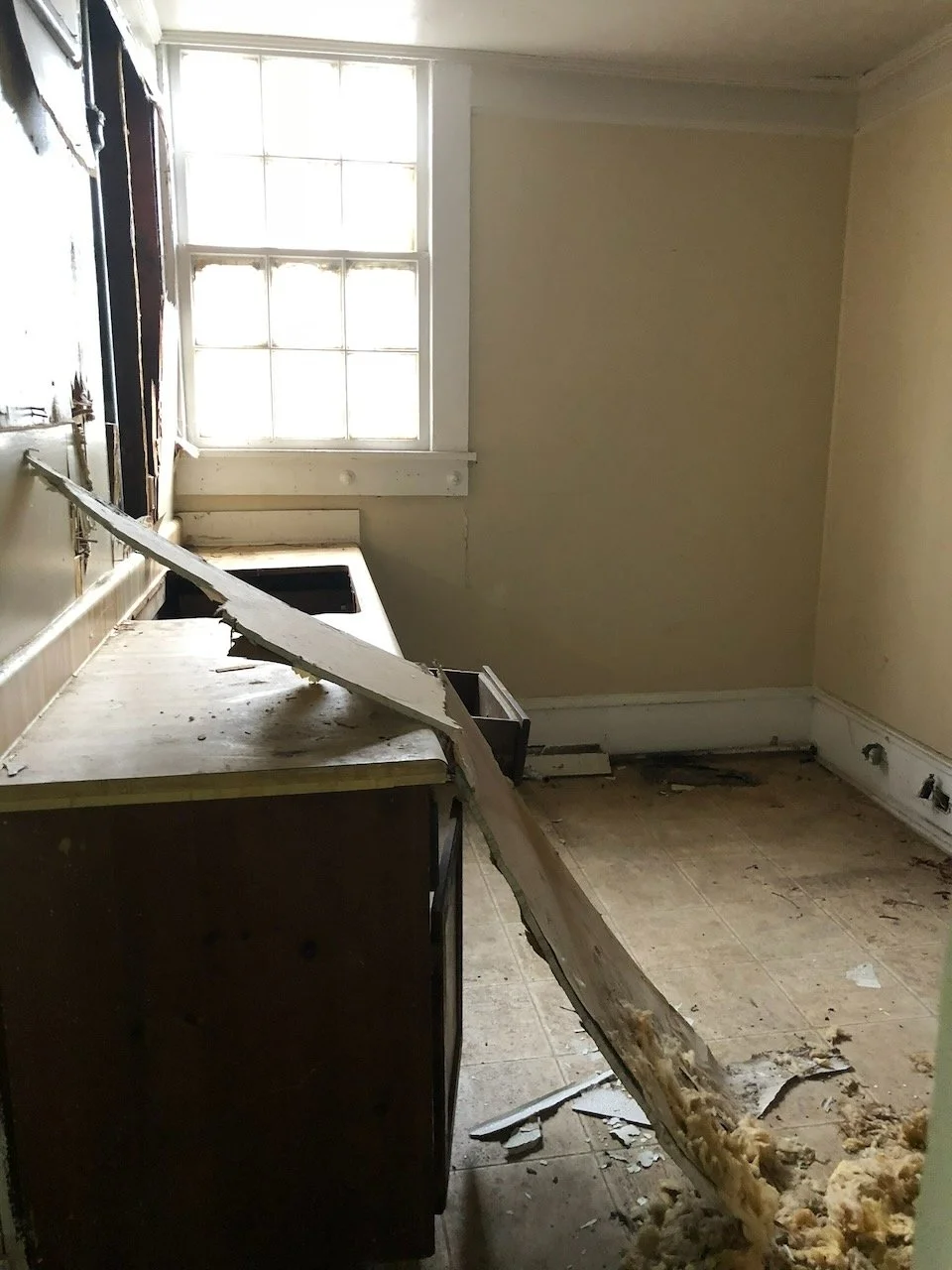
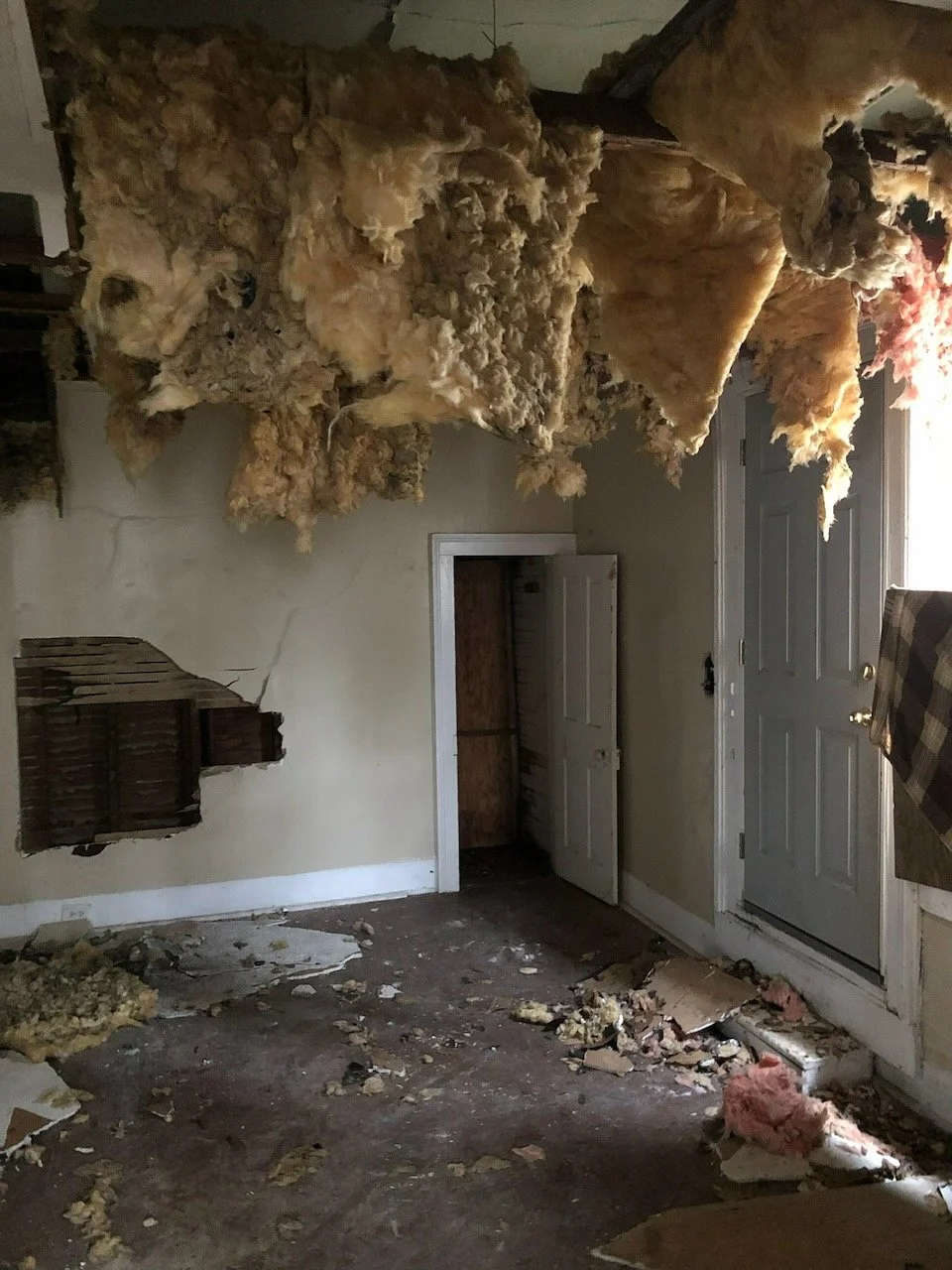
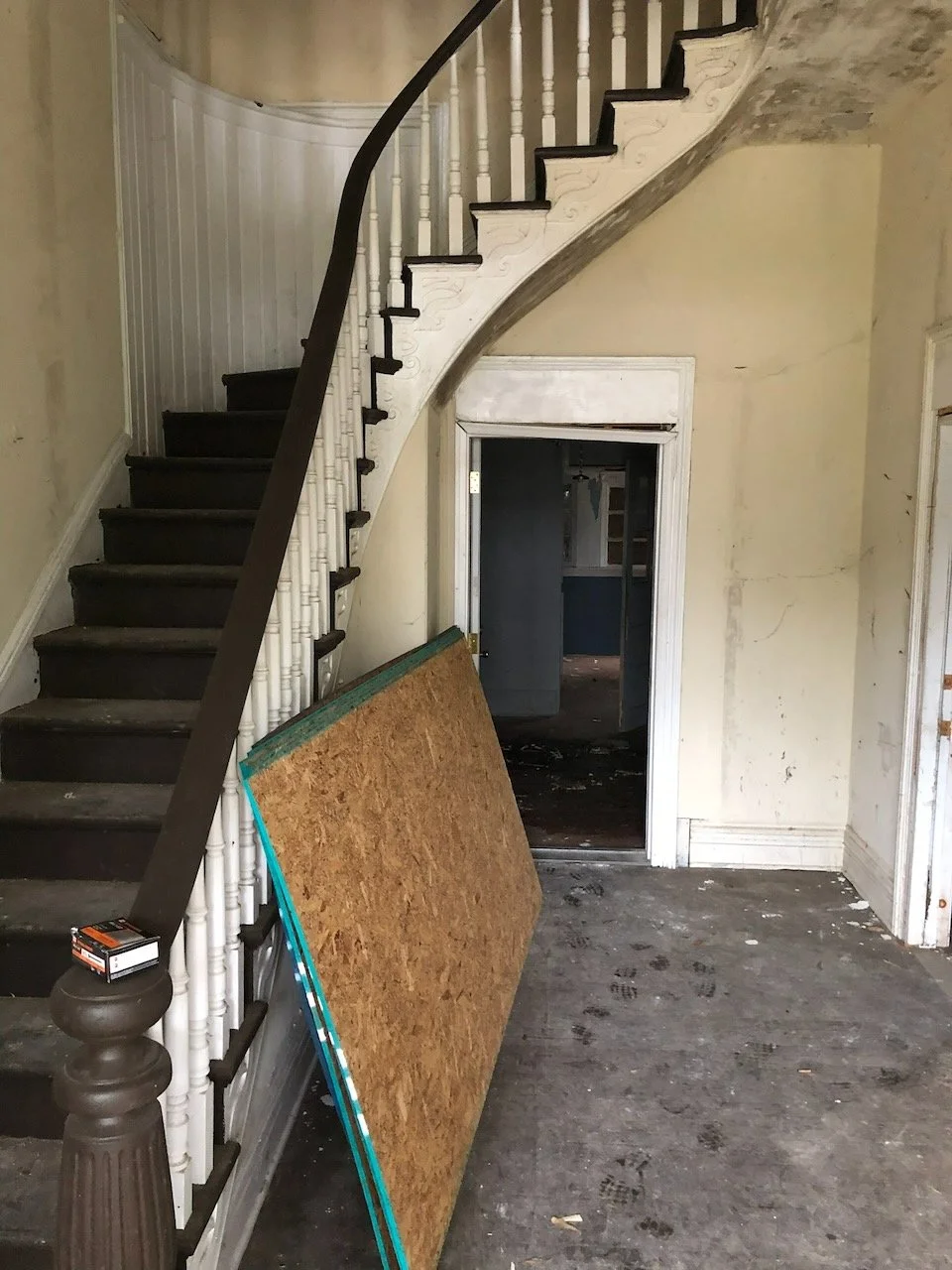
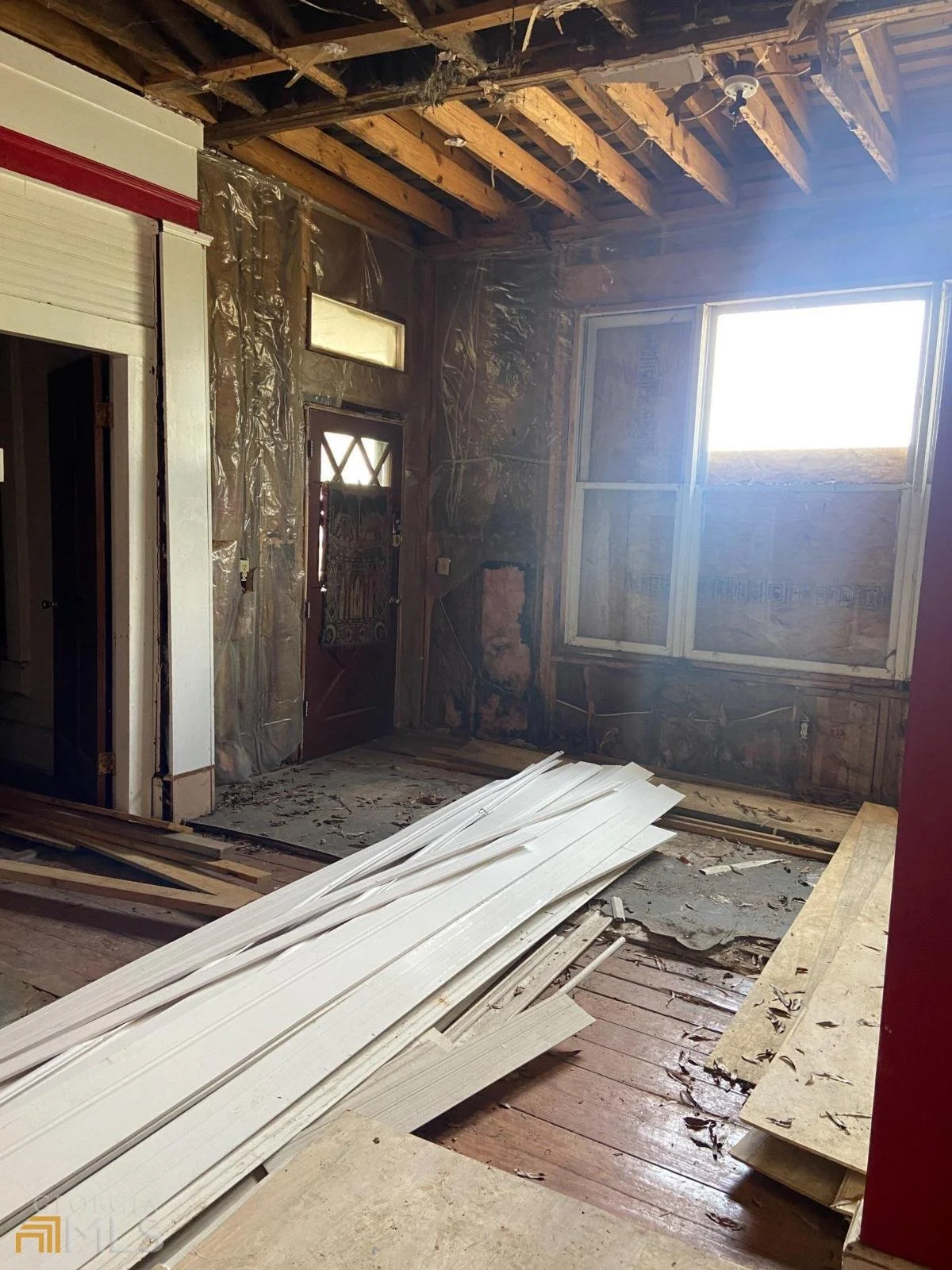
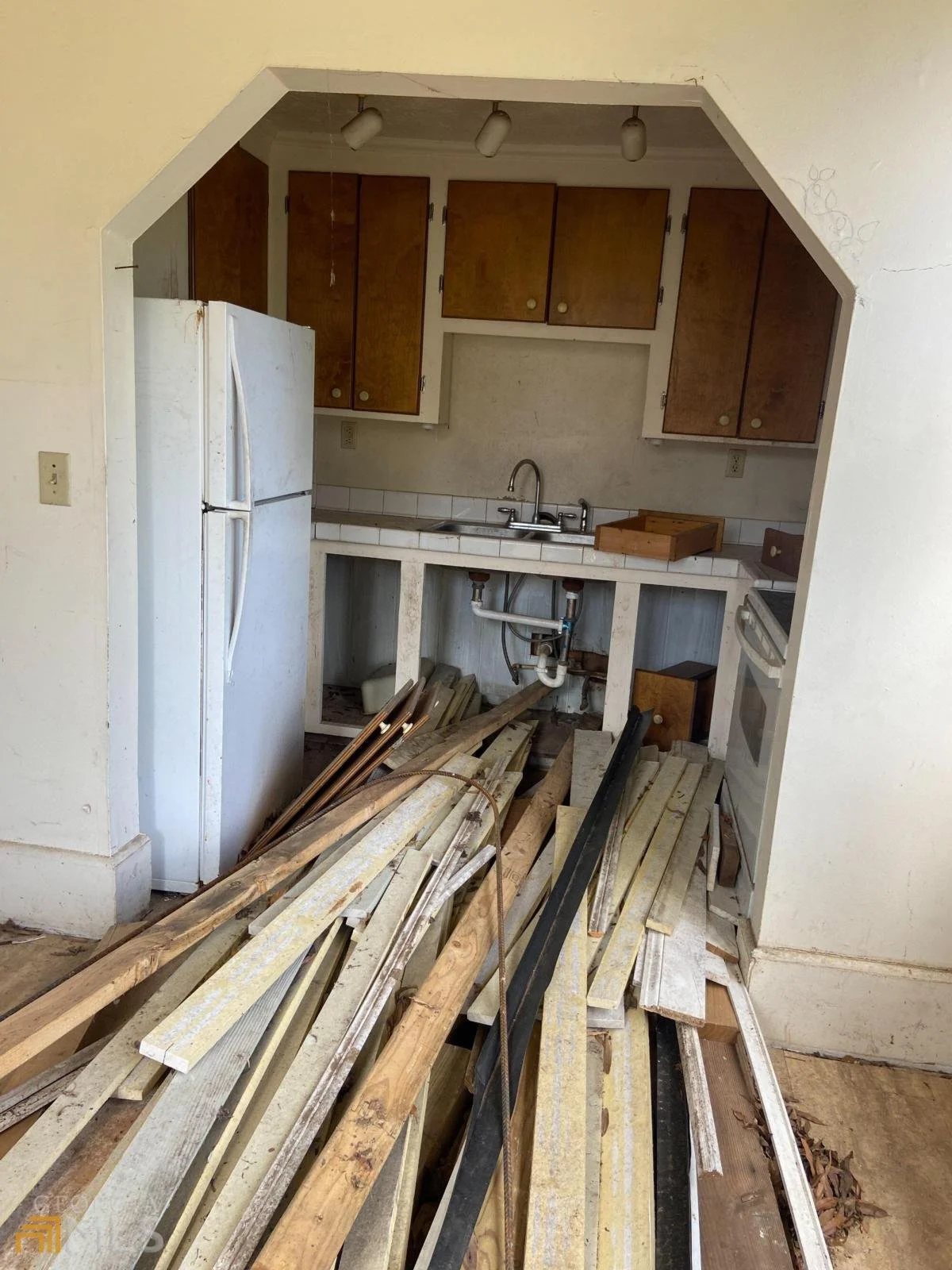
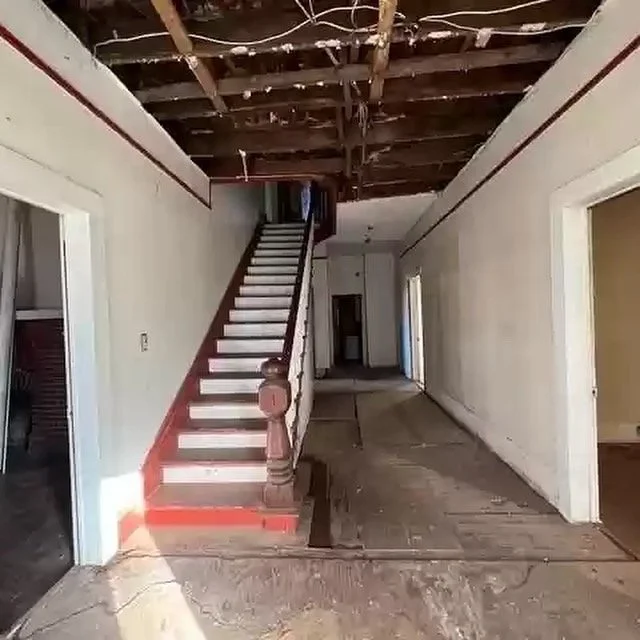
This is the house where I stepped onto a section of floor during a showing and my foot went through it. The wood was simply rotten. There were holes in the ceiling and vibrant colors of mold growing in the house too. There were beautiful things left in the house, but there were also very real structural problems.
That distinction matters when we talk about what should have happened to these buildings.
WHEN A GRAND HOUSE BECOMES A CHEAP HOUSE
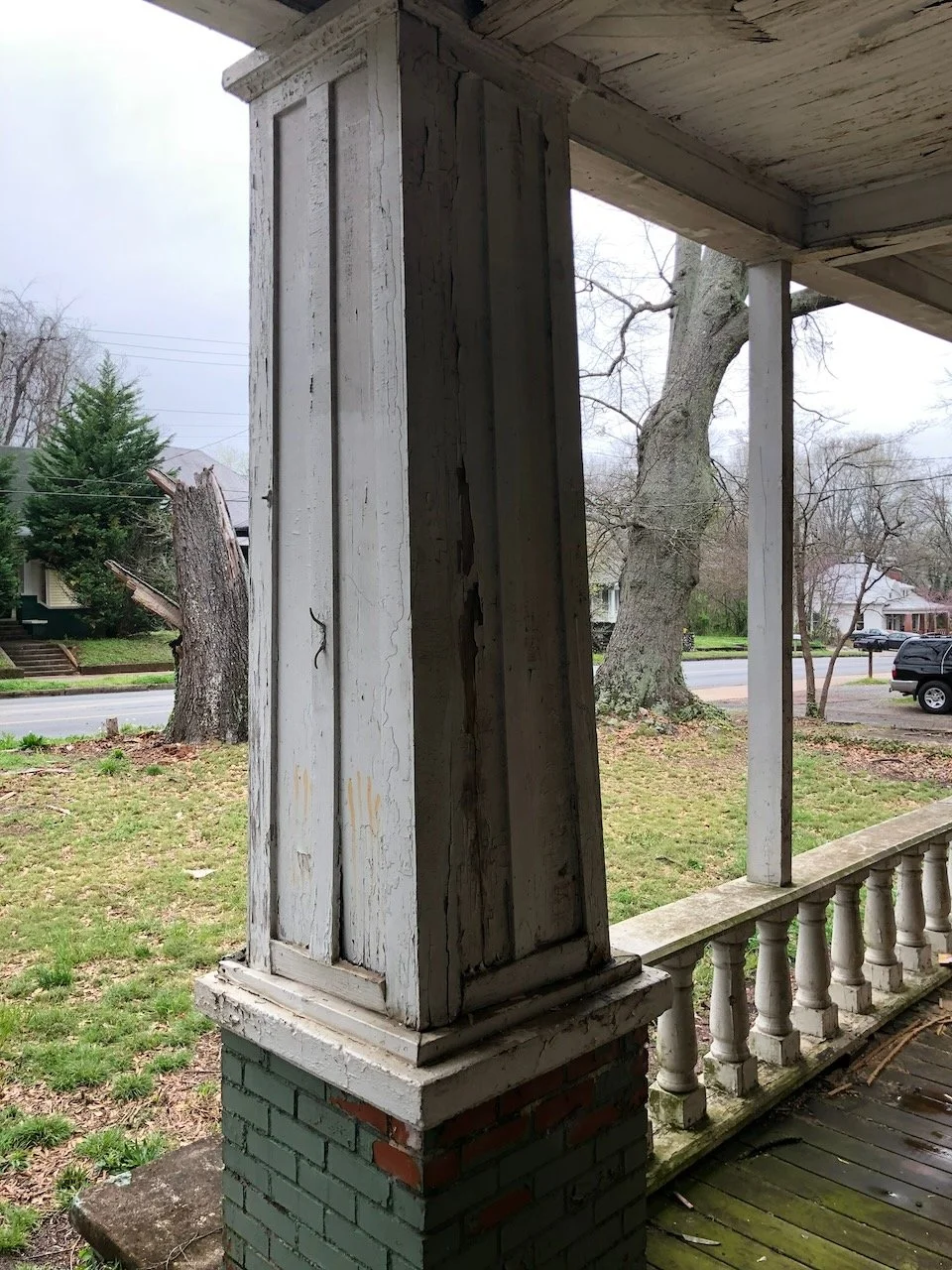
Old houses rarely become endangered overnight. They decline incrementally. A roof goes a little too long before replacement. Water gets behind siding. A porch begins to sag. Plumbing and electrical systems age. A large single-family residence becomes expensive to maintain, so dividing it into apartments makes economic sense. Original details disappear because replacing them is cheaper than repairing them.
No single decision destroys the house. Eventually, however, decades of small decisions compound.
By the end, 801 had become a four-unit property. It sold at auction in 2021 for $55,000, then for $90,000 in 2022 and $117,000 in 2023. Those numbers tell part of the story. This wasn't being valued as a grand historic residence anymore. It was an investment property whose worth increasingly lay in its units, land and potential rather than its architecture.
That's a dangerous place for an old house to end up.
And this is where preservation gets complicated.
“SOMEONE SHOULD SAVE IT”
I've said those words plenty of times. But there comes a point when someone should save it becomes an extraordinarily expensive thing to ask of someone else.
These houses didn't need kitchens, bathrooms and fresh paint. They had serious deterioration. Restoring either properly would have consumed hundreds of thousands of dollars before getting to any of the fun things—cabinets, wallpaper, light fixtures and landscaping. Foundations, framing, roofs, wiring, plumbing, HVAC, windows and rot don't make particularly exciting before-and-after photographs, but they still have to be paid for. And they aren’t cheap.
The railroad that once made this part of East Rome convenient likely became one of the properties' greatest liabilities. The tracks are right there. A preservation-minded buyer would have had to spend an extraordinary amount restoring one of these houses while accepting that, when finished, they would still own a large historic home immediately beside busy railroad tracks.
All in…$800,000? A million? More?
And when finished, have you created a house worth what you've put into it?
Probably not.
Preservation is important, but math still exists.
PRESERVATION HAS TO HAPPEN BEFORE THE CRISIS
That's the lesson I take from 801 and 813.
Their demolition wasn't the moment preservation failed them. This failure happened slowly over the preceding decades.
Preservation works best when a building is still useful: when the roof is repaired before water destroys the framing, when original windows are maintained rather than allowed to rot, when a house remains occupied, and when an old building can adapt to a new use without destroying the characteristics that made it worth keeping.
Most importantly, preservation works while the gap between what a building is worth and what it costs to save it is still manageable. By the time plywood covers the windows, floors are collapsing and rain has been entering for years, we're no longer having the same preservation conversation.
NOT EVERYTHING CAN BE SAVED
I hate seeing old buildings demolished, especially buildings like these. New construction simply cannot replace what disappeared. You can build a perfectly nice house on Maple Avenue tomorrow. You cannot build an 1880s house.
The materials are different. The craftsmanship is different. The proportions are different. Most importantly, the time is different.
A new house can imitate an old one, but it cannot have stood on Maple Avenue while East Rome was still its own community. It cannot have watched generations of families, trains, streetcars and automobiles pass by. It cannot accumulate 130 or 140 years of human lives overnight.
That is what preservation protects.
But preservation also has to acknowledge reality. I walked through these houses. I saw how far they had gone. Would I have loved for someone with deep pockets, enormous patience and questionable financial judgment to restore them beautifully? Absolutely.
Would I have advised an ordinary real-estate client to spend a fortune doing it?
That's a much harder question.
And perhaps that's precisely why 801 and 813 are worth remembering. They remind us that the time to care about an old building isn't when the demolition equipment arrives. It's twenty years earlier. Maybe fifty.
STAND HERE
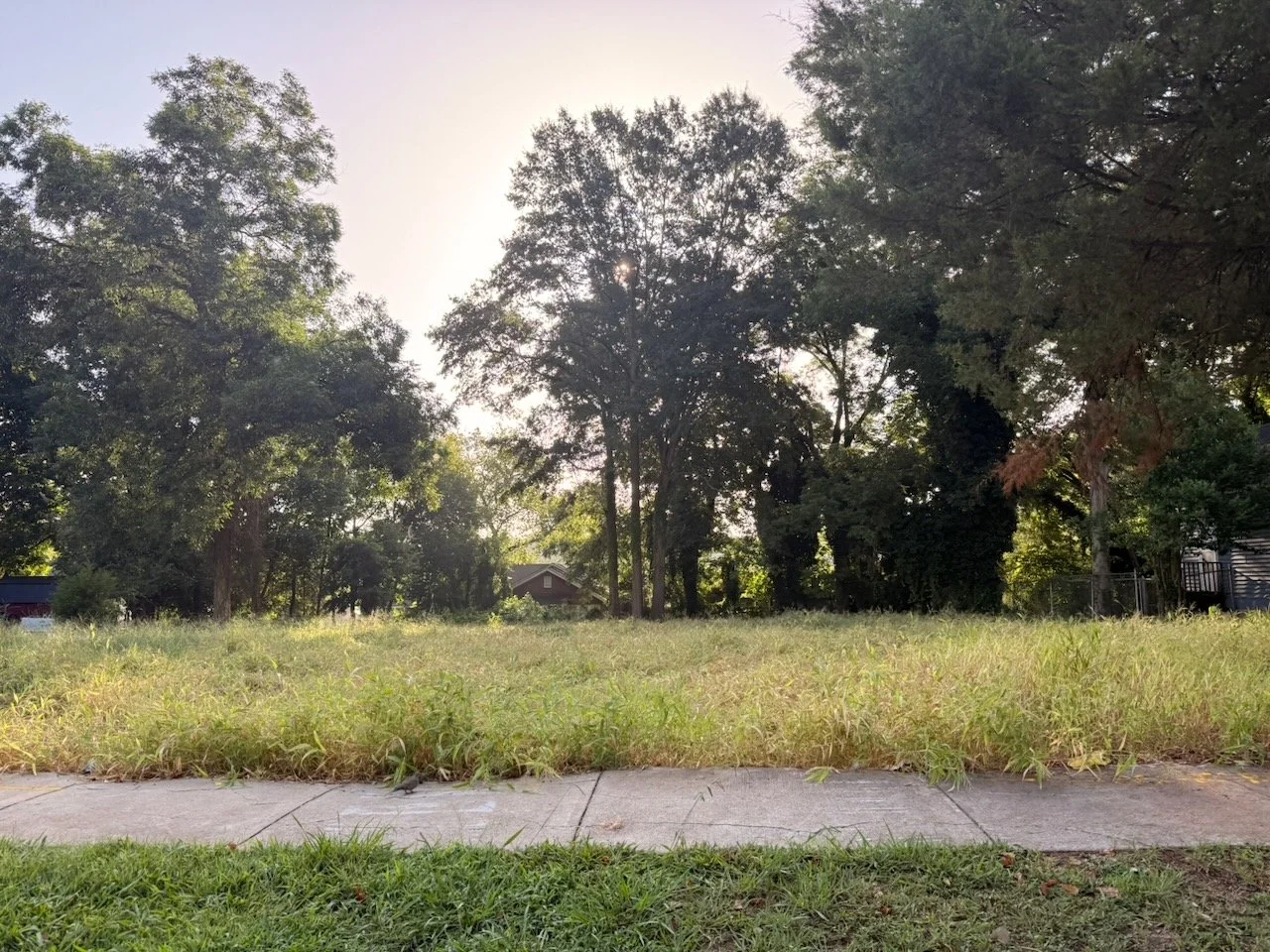
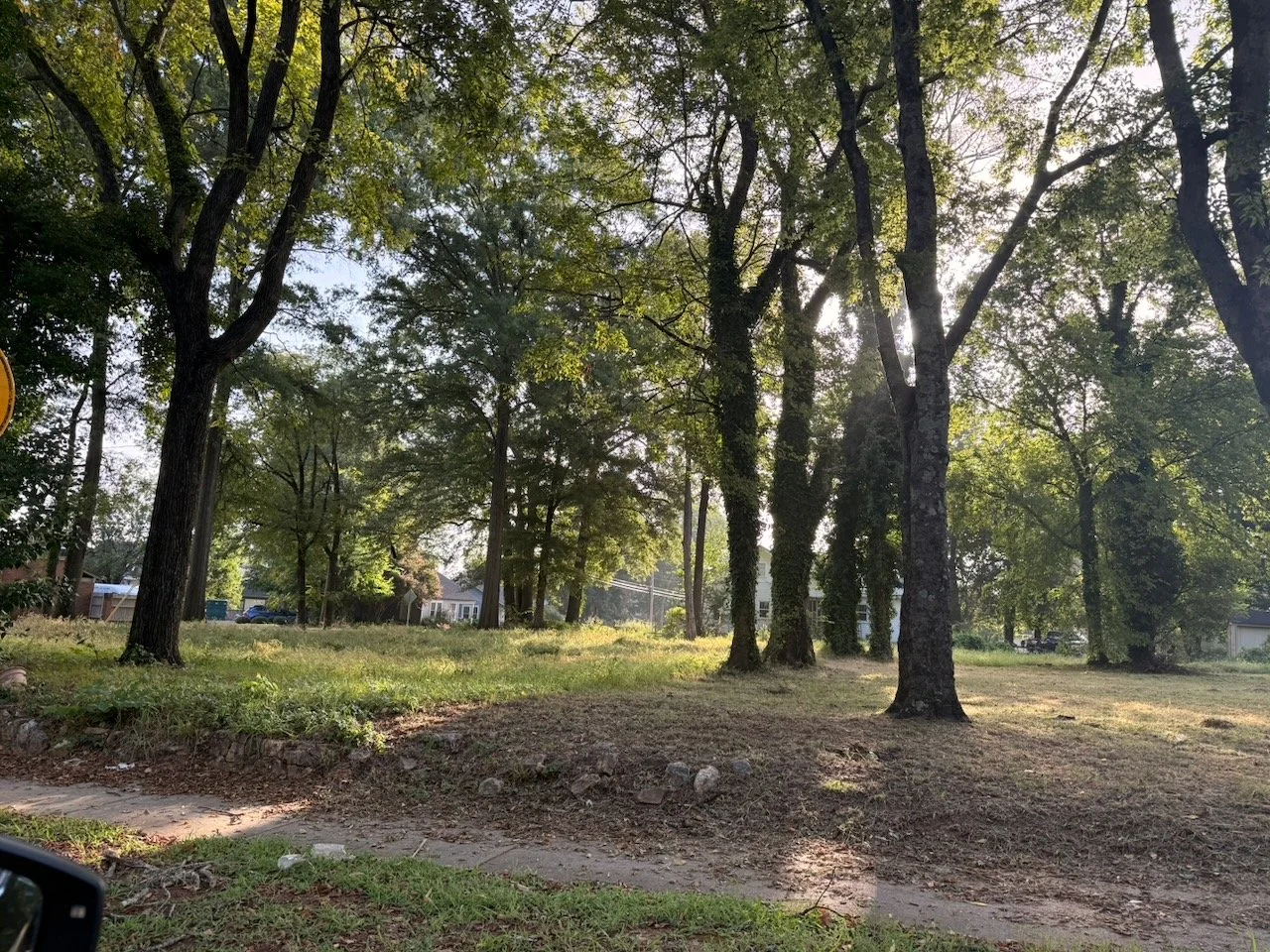
Go to Maple Avenue and East Eighth Street and stand where 801 once stood.
Forget the empty lot for a moment and imagine the neighborhood in the late 19th century, when East Rome was still a community distinct from Rome itself. Down the hill are the railroad tracks and depot. Large houses line Maple Avenue. Dr. Boyd is living on this corner.
Over the decades, the houses change. Families come and go. Rooms become apartments. The neighborhood changes around them. Maintenance gets deferred, and eventually these once-grand residences become buildings nobody can quite figure out how to save.
Then, one day, they're gone.
That's the Rome you can't see anymore.
And sometimes the lesson of a lost building isn't that we should have saved it at the end.
It's that we should never have let it get that far.
________________________________________________________________
THE ROME YOU CAN’T SEE ANYMORE :: TWO HOUSES ON MAPLE AVENUE
You may remember these two houses on Maple Avenue in East Rome. I do—because I showed both of them to real estate clients before they were demolished.
And in one of them, I fell through the floor. 😬
They were beautiful once. They were also, by the time I walked through them, in genuinely terrible condition.
I started researching their history and discovered they were considerably older than the dates in the tax records. Both were already standing when the 1898 Sanborn map was drawn, and 801 Maple may date to the early 1880s. It was once the home of prominent Rome physician Dr. W. H. Boyd, although parts of its earliest history are still being pieced together.
So should these houses have been saved?
I love old houses, and my instinct is almost always yes. But preservation gets complicated when the floors are rotten, decades of deferred maintenance have accumulated, and restoring a house could cost close to—or more than—a million dollars in a location immediately beside busy railroad tracks.
Sometimes demolition isn't where preservation failed. The failure happened decades earlier, when a building was allowed to deteriorate until saving it no longer made economic sense.
That's the story of 801 and 813 Maple Avenue—and the subject of the newest Rome Home Journal: The Rome You Can't See Anymore.
🏠 Read: Two Houses on Maple Avenue—and When It’s Too Late to Save Them
And if you remember either house, especially in better days, I want to hear from you.