
RHJ: Scary Berry

SCARY BERRY
Why Berry College Has So Many Ghost Stories
By Jeb Arp
Berry College may be one of the easiest places in Georgia to believe in ghosts.
There are Gothic towers rising above the trees. A three-mile road winds through thousands of acres of woods toward an isolated mountain campus. Century-old dormitories sit beneath enormous oaks. There are cabins, old school buildings, cemeteries, empty rooms and enough dark forest for practically anything to disappear into. And if you attended Berry, you probably already know some of the ghosts who supposedly live there.
I graduated from Berry, and like generations of students before me, I knew about the Green Lady of Stretch Road. I had heard about the girl who supposedly died in the tower at Mary Hall. I knew Martha Berry herself was said to occasionally turn up in Hoge. What I hadn't really considered was why Berry has so many ghost stories—or why its ghosts seem to be so particular about where they haunt.
The girl in Mary Hall doesn't simply haunt Berry. She haunts a Gothic tower. The Green Lady belongs to Stretch Road. Martha returns to the building where she worked. Another legend attaches itself to an old dormitory. Another to a log cabin. Even Berry's ghost horse apparently follows a route connected to its life.
Maybe that isn't accidental.
Because Berry isn't really one campus architecturally. It is several. Rustic log buildings associated with the school's earliest years give way to a more formal college campus of brick and classical architecture. Travel farther into the property and suddenly an enormous Collegiate Gothic complex rises out of the North Georgia landscape. Each feels different. And each has accumulated stories of its own.
The Girl Berry Put in a Tower
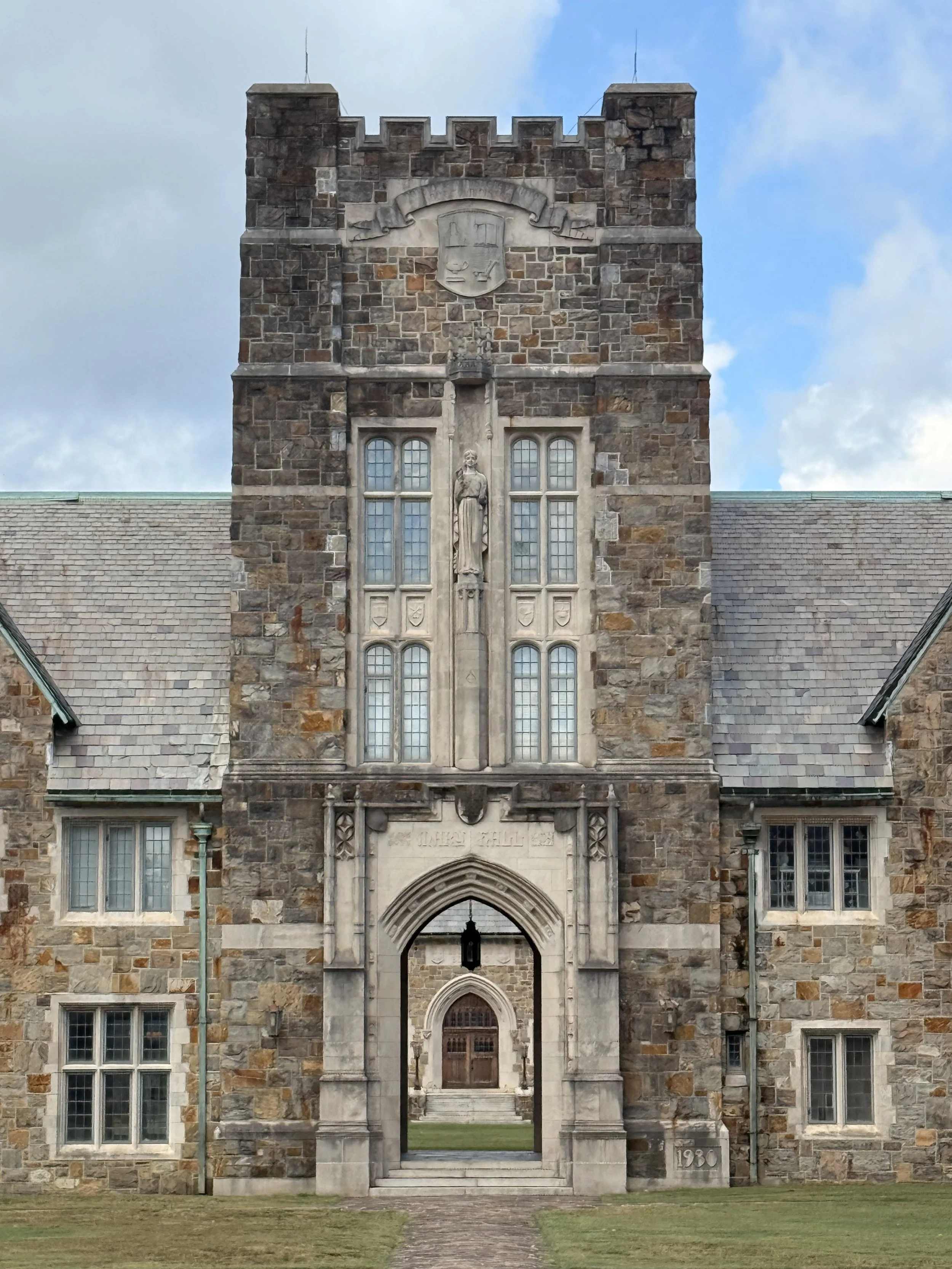
If you were going to design a haunted college from scratch, it might look like the Ford buildings. Henry Ford financed the buildings, but Boston architect Harry Carlson designed the complex beginning in the 1920s as an idealized Collegiate Gothic campus. Its inspiration came from the architecture of old English universities, filtered through American campuses like Princeton: stone walls, pointed arches, towers, enclosed lawns, slate roofs, copper spires and gargoyles.
Landscape architect Robert Cridland completed the illusion, bringing in cedars, boxwoods and magnolias from around Georgia to transform what had been agricultural land into a picturesque quadrangle.
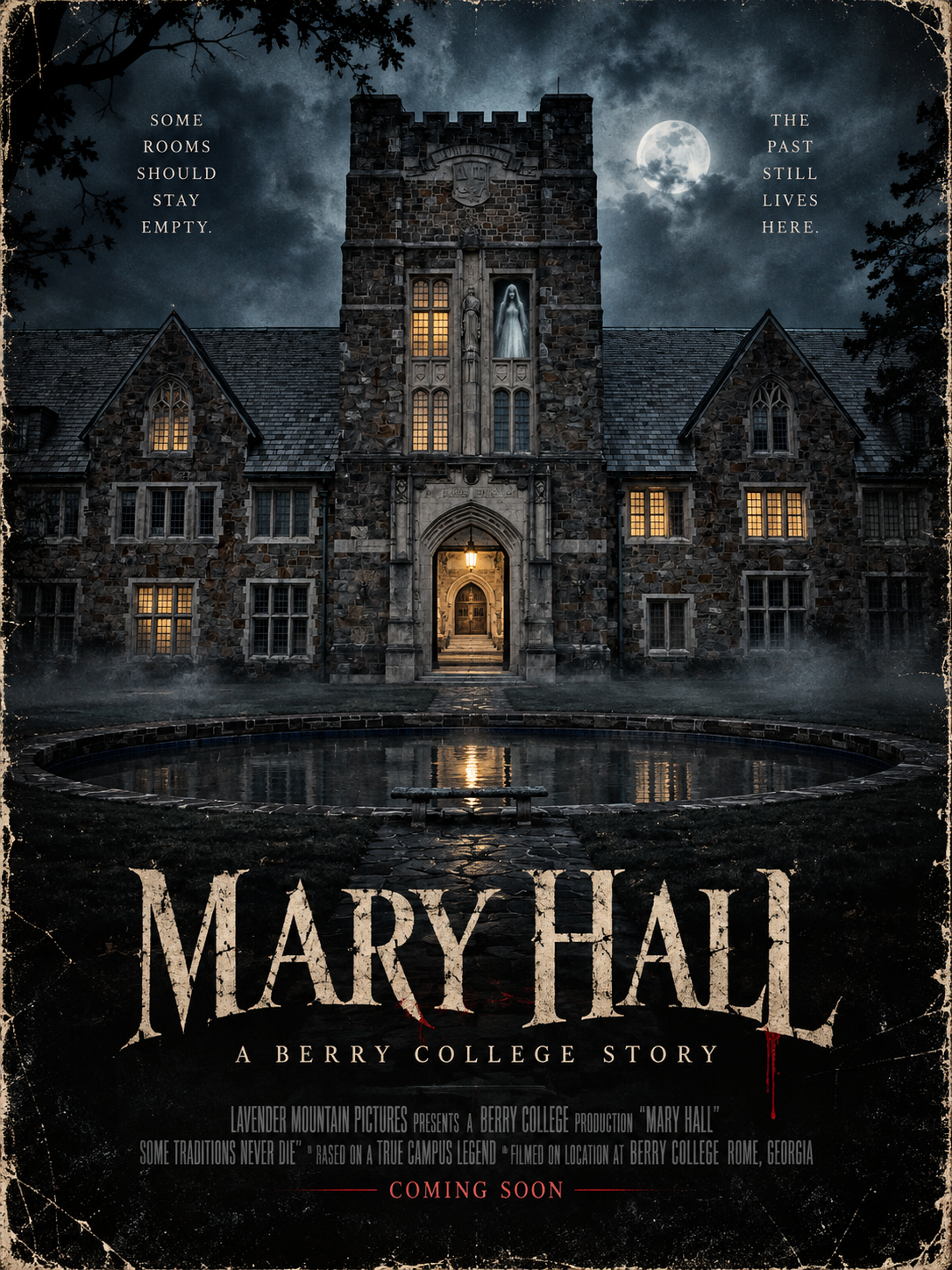
Completed in 1931 and named for Henry Ford's mother, Mary Hall became a women's dormitory and remains one today. And somewhere in one of its towers, generations of Berry students will tell you, a young woman died.
Her name is usually given as Agatha.
The familiar version places her at Berry during World War II. After learning that her fiancé or boyfriend had been killed overseas, she supposedly hanged herself in a room inside the tower connecting East and West Mary. Students later reported crying, cold spots and the uneasy feeling that someone remained there.
It's a wonderfully Gothic story, but possibly too wonderfully Gothic.
In 2024, Berry student journalist Tanner Huey went looking for the history behind several campus legends. Working with Oak Hill staff and college archivist Michael O'Malley, he found something more interesting than proof of a haunting: the deeper they looked into Agatha's story, the less neatly it fit the building.
O'Malley located an October 1990 Campus Carrier article in which a Berry official explained that much of the tower space wasn't residential at all. The towers primarily provided access to the roof and mechanical equipment, with large portions intentionally left empty.
The famous dorm room may never have existed.
There appears to have been an Agatha at Berry, but even the story of her death changes depending on who tells it. In another version preserved by Oak Hill, she leaves campus with her parents and dies at home.
Which raises a more interesting question than whether Agatha still haunts Mary Hall:
How did she get into the tower? I suspect the architecture helped put her there.
Collegiate Gothic architecture was deliberately evocative even when it was new. American colleges adopted it because towers, quadrangles and medieval forms suggested age, permanence and academic tradition. Berry's Ford buildings were barely a generation old when the supposed World War II tragedy occurred, yet visually they already seemed centuries removed from ordinary Georgia.
A sad story about a student could have happened anywhere. A sad story about a student who hanged herself in a Gothic tower? That is the story people remember.
The Green Lady Doesn't Need a Building
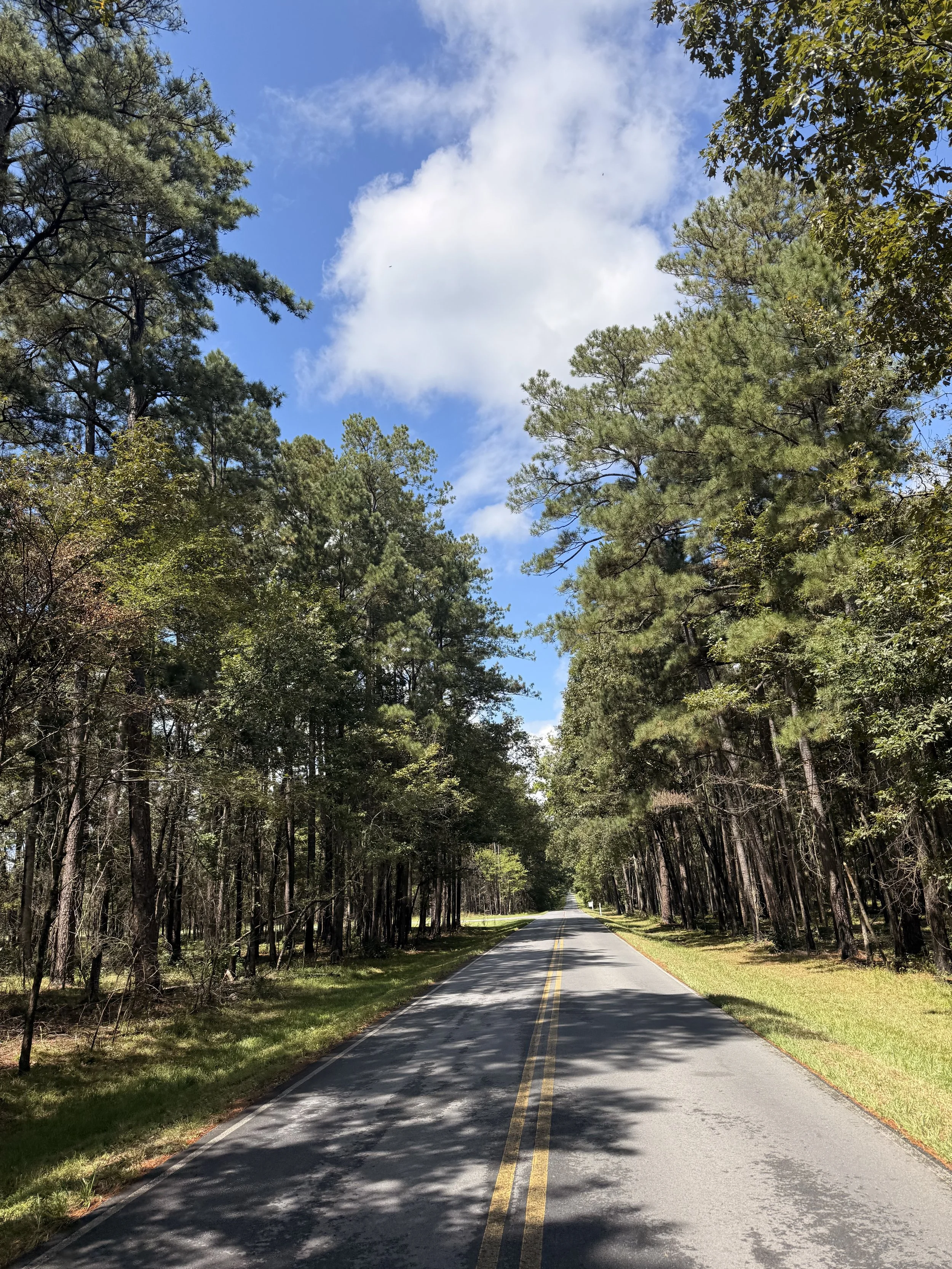
The Green Lady is different. Her architecture is landscape. Stretch Road—officially Lavender Mountain Road—connects the main campus with Mountain Campus. During the day, it is one of Berry's most beautiful drives. The road follows the terrain rather than overpowering it, narrowing visually as the forest closes around it. Development largely disappears. At night, so do most of the visual cues that tell us where we are.
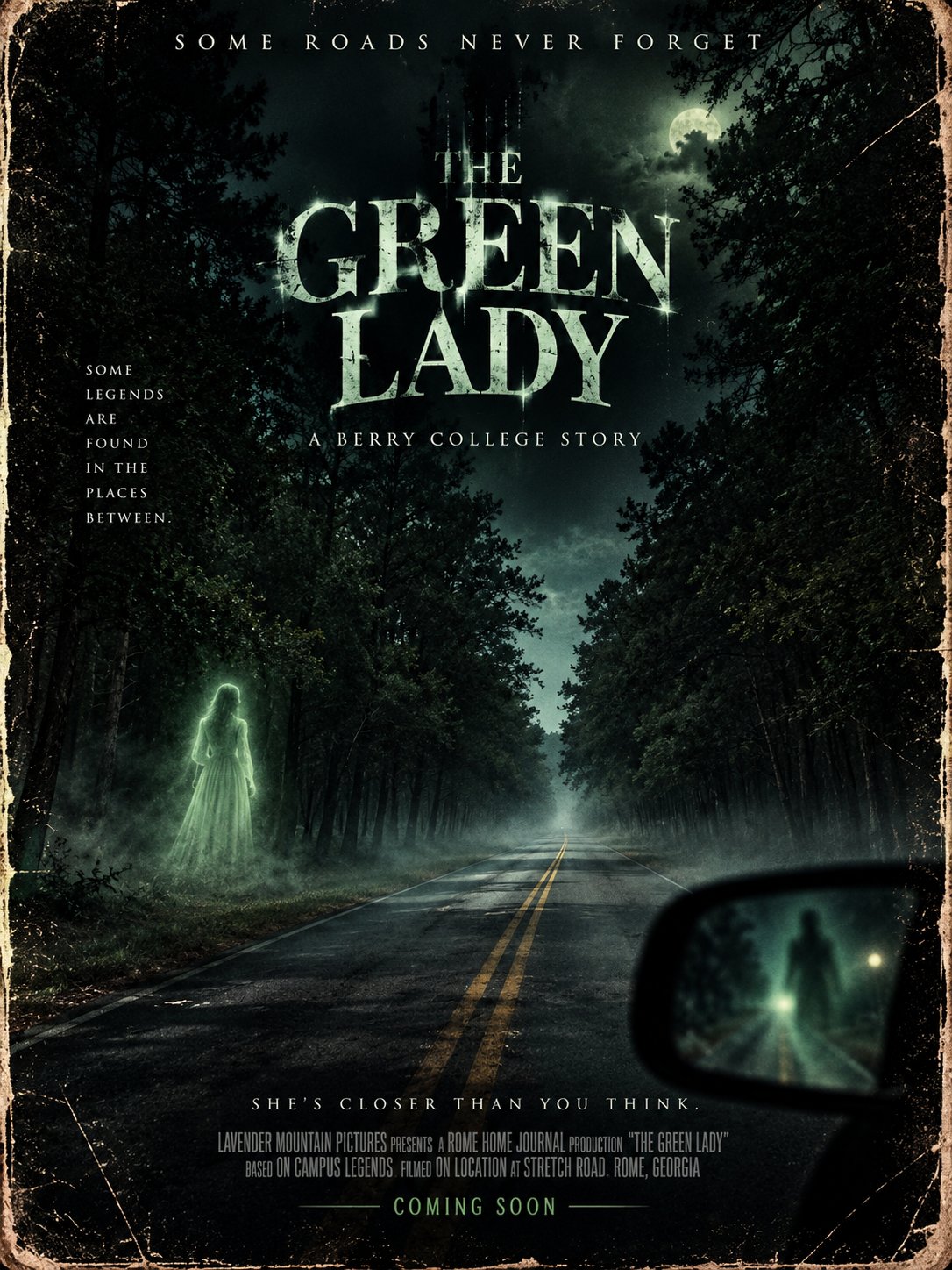
Headlights illuminate a small tunnel of pavement and trees. Beyond that is darkness. That is where the Green Lady lives. Descriptions vary wildly. Sometimes she's a woman beside the road. Sometimes she is green light or mist. In some versions she appears in a rearview mirror. Her identity changes just as often.
One frequently repeated explanation identifies her as Lindsey Elizabeth Will, a Berry student who died following a nighttime bicycle accident on Stretch Road in 1988..
Research by Oak Hill staff, reported by Huey, places a documented Green Lady sighting in 1984—before Will's death. Other versions attach the apparition to different women and different tragedies. Oak Hill researchers have even wondered whether the color itself might preserve a much older Berry memory: senior students at the Martha Berry School for Girls once wore light green.
Maybe the mistake is assuming the Green Lady has to be one person. Folklore often attaches itself to landscape just as strongly as it does to buildings, and Stretch Road provides almost perfect conditions. It is old, isolated, wooded and traveled by generations of young people who have been told what they might see before they ever see it.
The Green Lady may not belong to a particular woman at all. She may belong to the road.
Martha Goes Back to Work
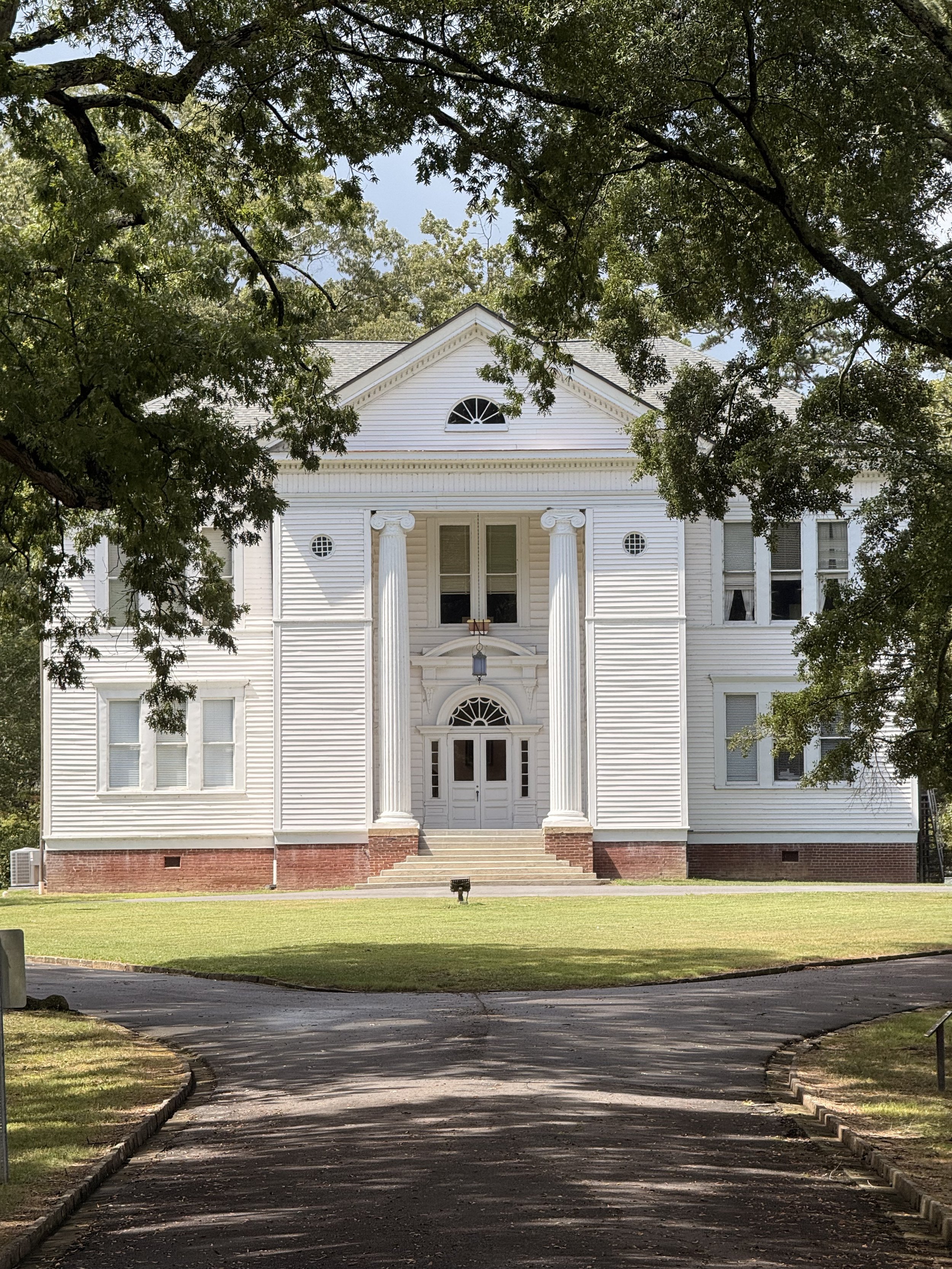
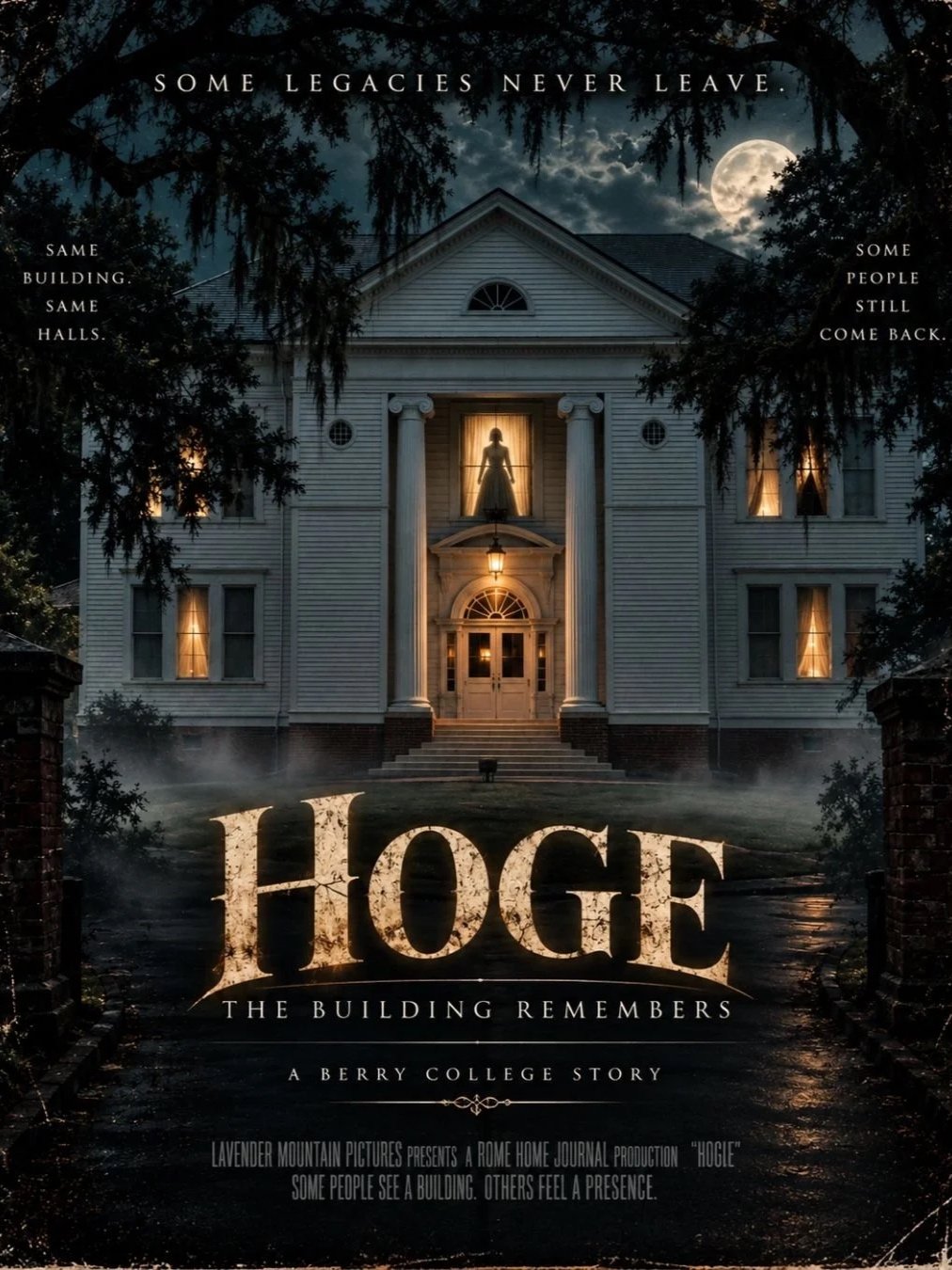
If there is one Berry ghost who seems to have chosen her location logically, it's Martha Berry. She supposedly haunts Hoge. Unlike the theatrical Gothic architecture of the Ford Complex, Hoge belongs to another chapter of Berry's architectural story. It sits on the older portion of campus among the buildings that developed around the early Berry Schools, before the monumental Ford complex transformed Mountain Campus.
More importantly, Hoge was part of Martha Berry's daily world. She worked there.
One of the most enduring stories involves the young daughter of former education dean Leo Anglin. Berry professor Jim Watkins later recalled that the child encountered a friendly older woman inside Hoge who apparently showed her around. Later, the story goes, she saw a photograph of Martha Berry.
That was the woman.
Normally, a story like that would be nearly impossible to trace beyond campus folklore. This one is a little different. Watkins knew the Anglin family and said the child's mother personally confirmed the incident to him. Watkins had a story of his own. While living on Faculty Row, he could see the part of Hoge associated with Martha's former office. He recalled the light in that office occasionally coming on and going off at unusual hours.
Could someone simply have been inside? Of course.
But what I like about the Martha stories isn't whether they're provable. It's where Berry puts her. Martha doesn't haunt some random staircase because it's creepy. She doesn't appear in the Ford towers because they're prettier. She returns to the place associated with her work. That feels almost biographical. Even Berry's ghosts understand the importance of place.
A Very Real Night in Pilgrim Hall
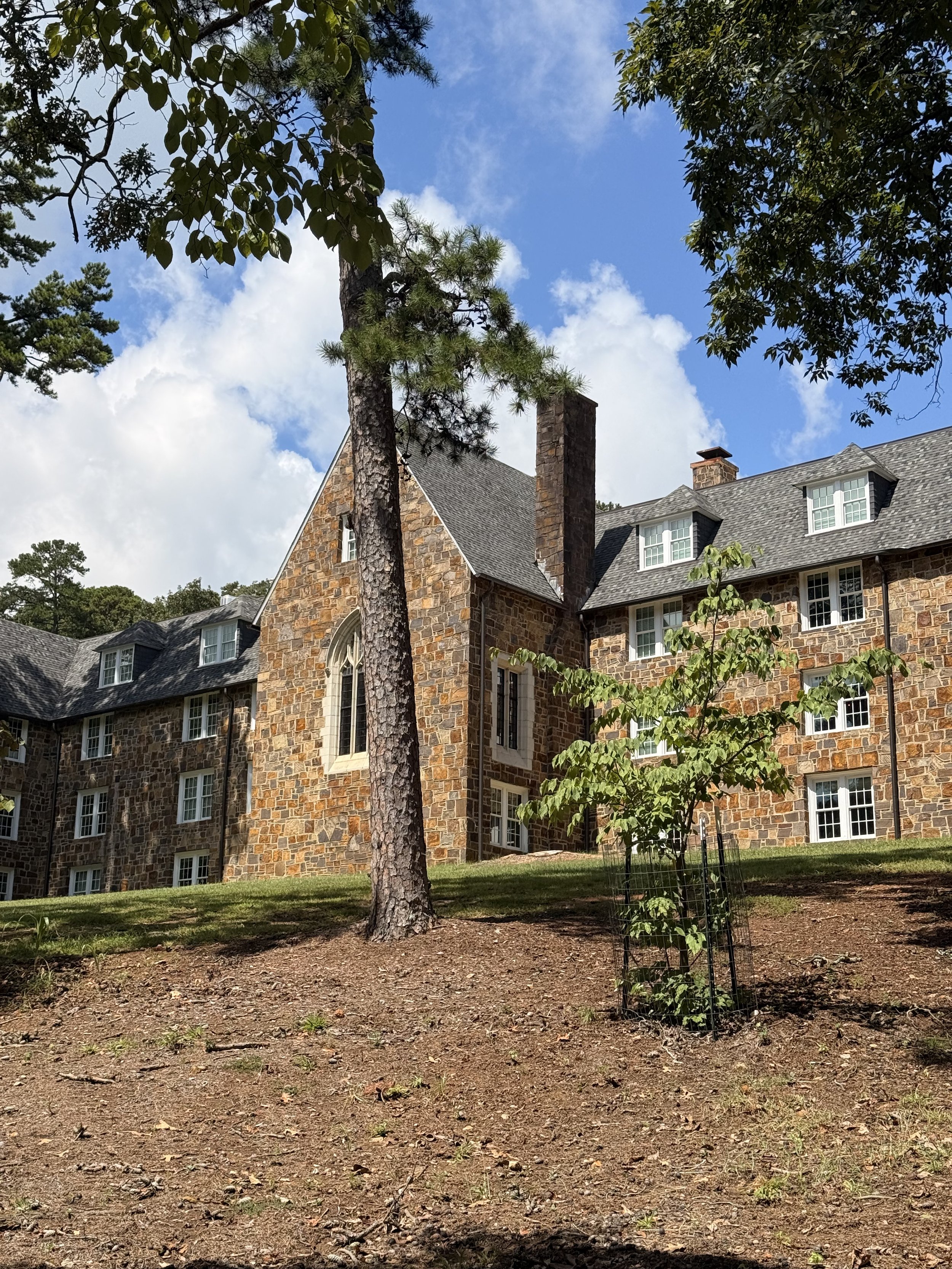
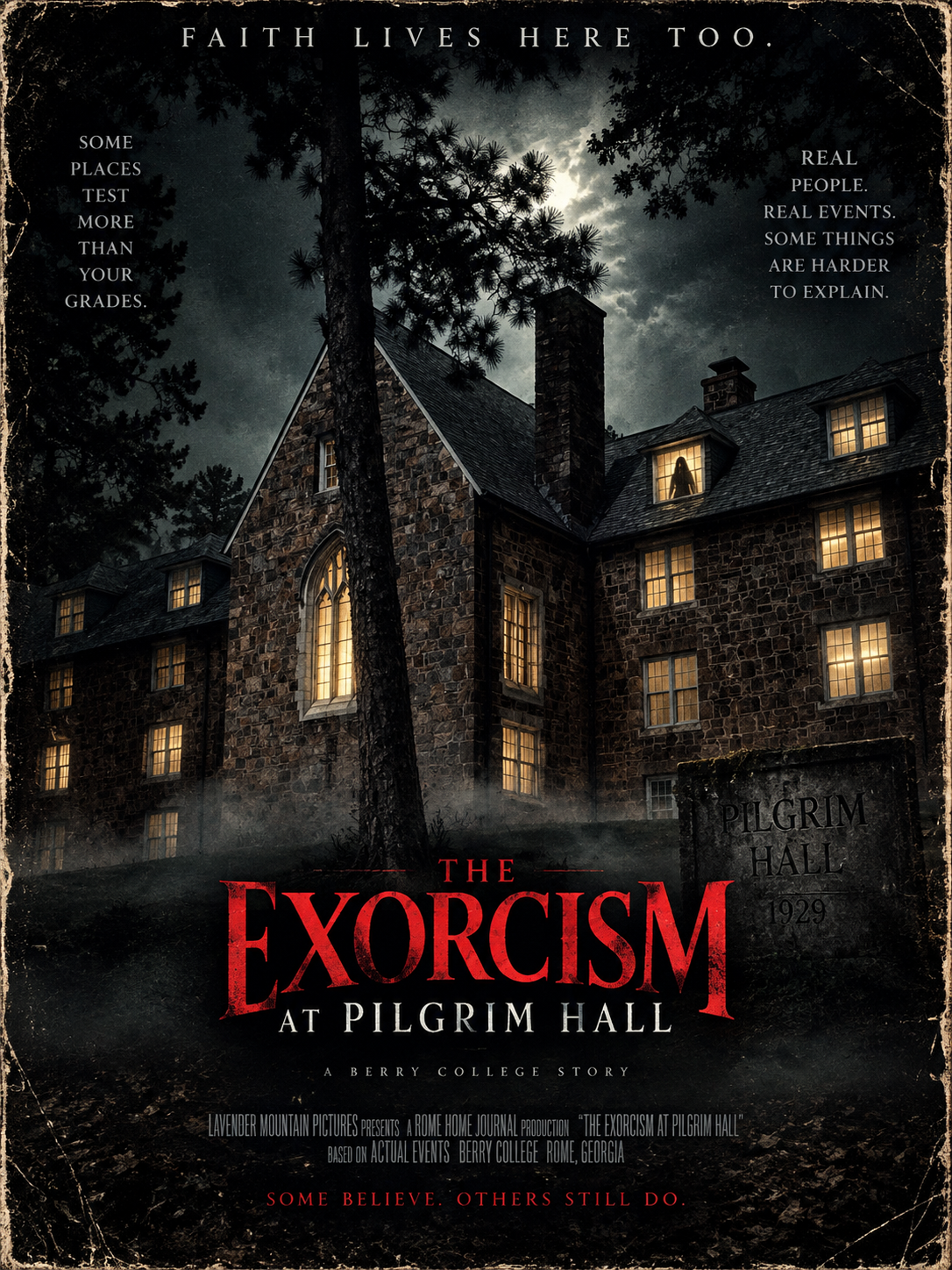
And then there is Pilgrim Hall. This story is different because we don't have to ask whether the event itself happened. It did.
Pilgrim was constructed in 1929 on Mountain Campus, one of several stone buildings designed by the Boston firm Coolidge and Carlson and built with student labor. Unlike the theatrical richness of the Ford buildings, these Mountain Campus structures are more restrained—substantial stone institutional buildings whose craftsmanship reflected Berry's philosophy that education and physical work belonged together.
Pilgrim still functions as a residence hall. And on September 24, 2009, something extremely unusual happened inside one of its dorm rooms. A group of students had gathered there for worship. One student later said that during the gathering he became convinced that a former female student was demonically possessed. That student performed what he described as an exorcism. The incident became controversial enough to reach The Atlanta Journal-Constitution. Berry administrators emphasized that the gathering wasn't sponsored by the college or an approved student organization. WinShape said it neither endorsed nor condoned the exorcism.
What actually happened spiritually in that dorm room is a matter of belief. But the incident itself isn't folklore. People were there. Firsthand accounts describe what happened. Berry responded. Newspapers reported it.
That makes Pilgrim an interesting counterpoint to Mary Hall. At Mary, generations of storytelling may have gradually created an event that the architecture itself calls into question. At Pilgrim, we know an event occurred. What people disagree about is what the event meant. Nearly a century after students helped construct the stone building, Pilgrim acquired a very different kind of campus story.
And Berry Has More
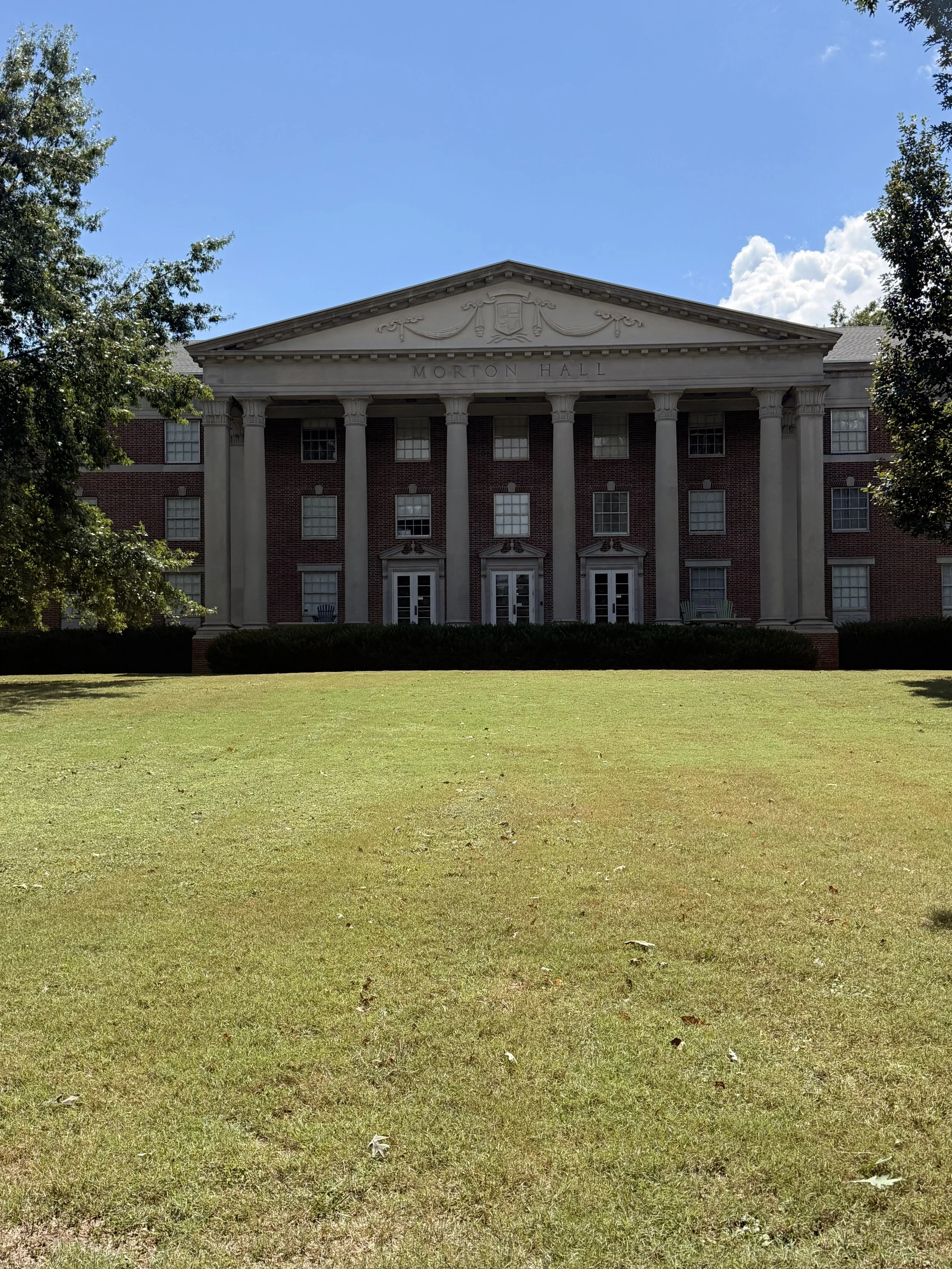
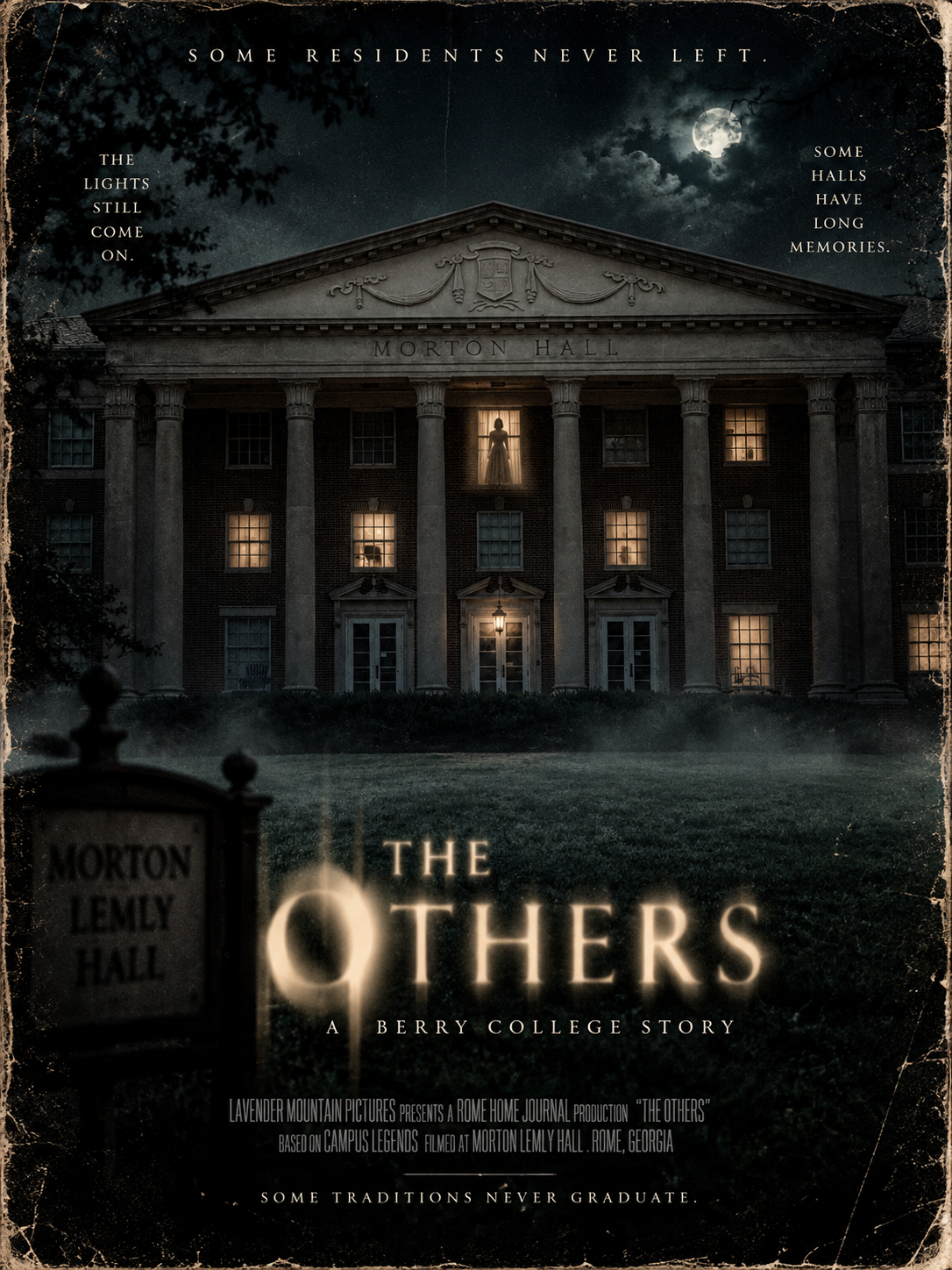
Once you start looking, Berry's supernatural map gets crowded quickly. At Morton-Lemley Hall, students have long told stories about Ruth, reportedly an early dorm mother who never entirely gave up supervising the place. A 2005 Campus Carrier article shows that the legend was already well established by then, with students blaming her for unexplained disturbances around the residence hall.
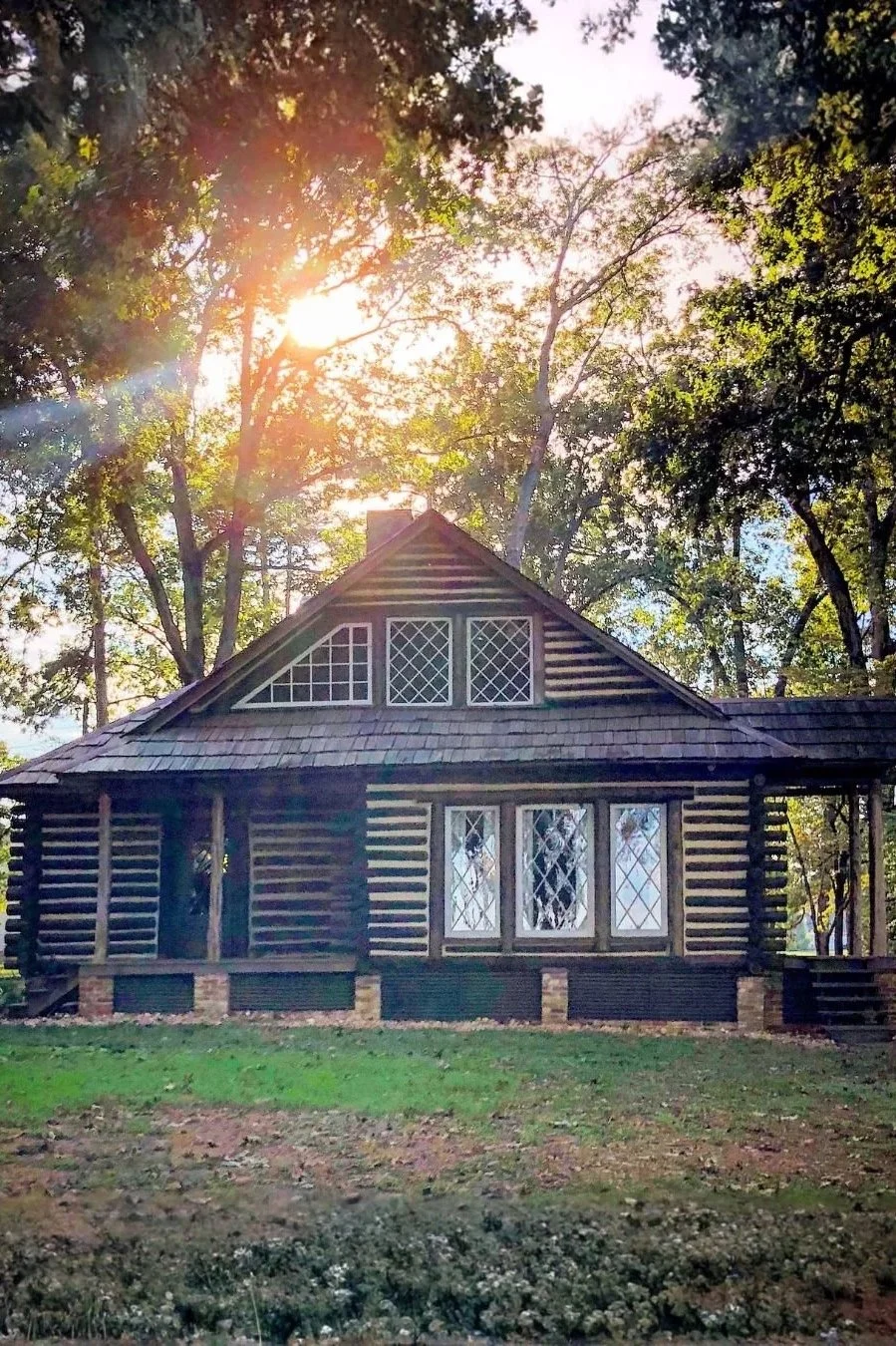
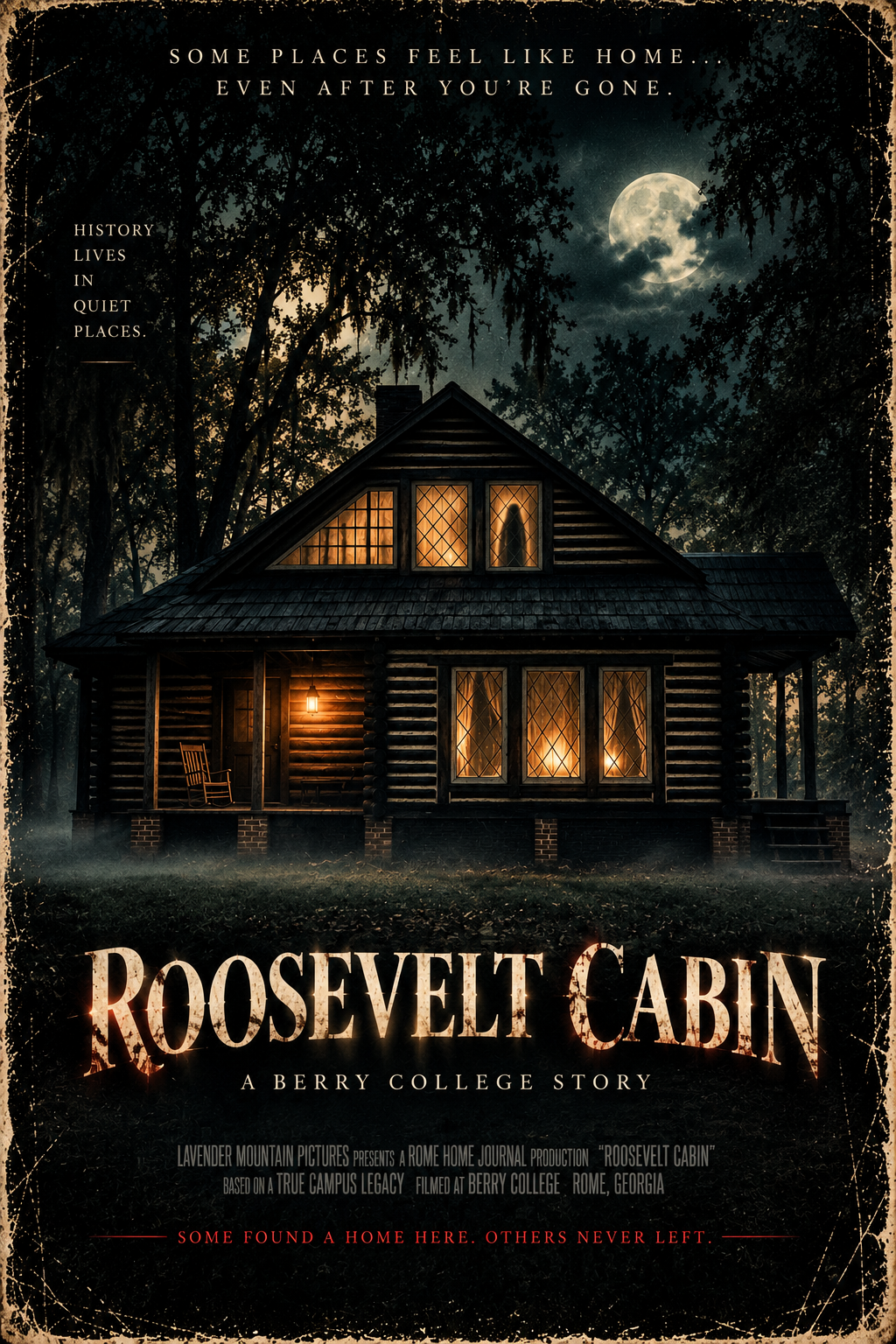
At Roosevelt Cabin, longtime Berry employee Milton Chambers remembered walking past as a child and occasionally seeing a light burning in an upstairs window when he believed the building to be empty. The cabin was built shortly after the Berry Schools opened in 1902, designed with architect John Gibbs Barnwell as a deliberately rustic demonstration of Berry's belief that an inexpensive home could still be beautiful. Martha herself lived there beginning in 1903. Constructed of logs, centered around enormous fireplaces and surrounded today by a campus that grew far beyond it, the little building looks almost like a physical fragment of Berry's founding years.
It doesn't need much embellishment. An unexplained light in the window will do. There are stories associated with Martha's mother, Frances Rhea Berry, at Oak Hill. There is the old Mountain Campus bogeyman Swafford. Modern students have added the strange Deer Man or "NotDeer" to the woods.
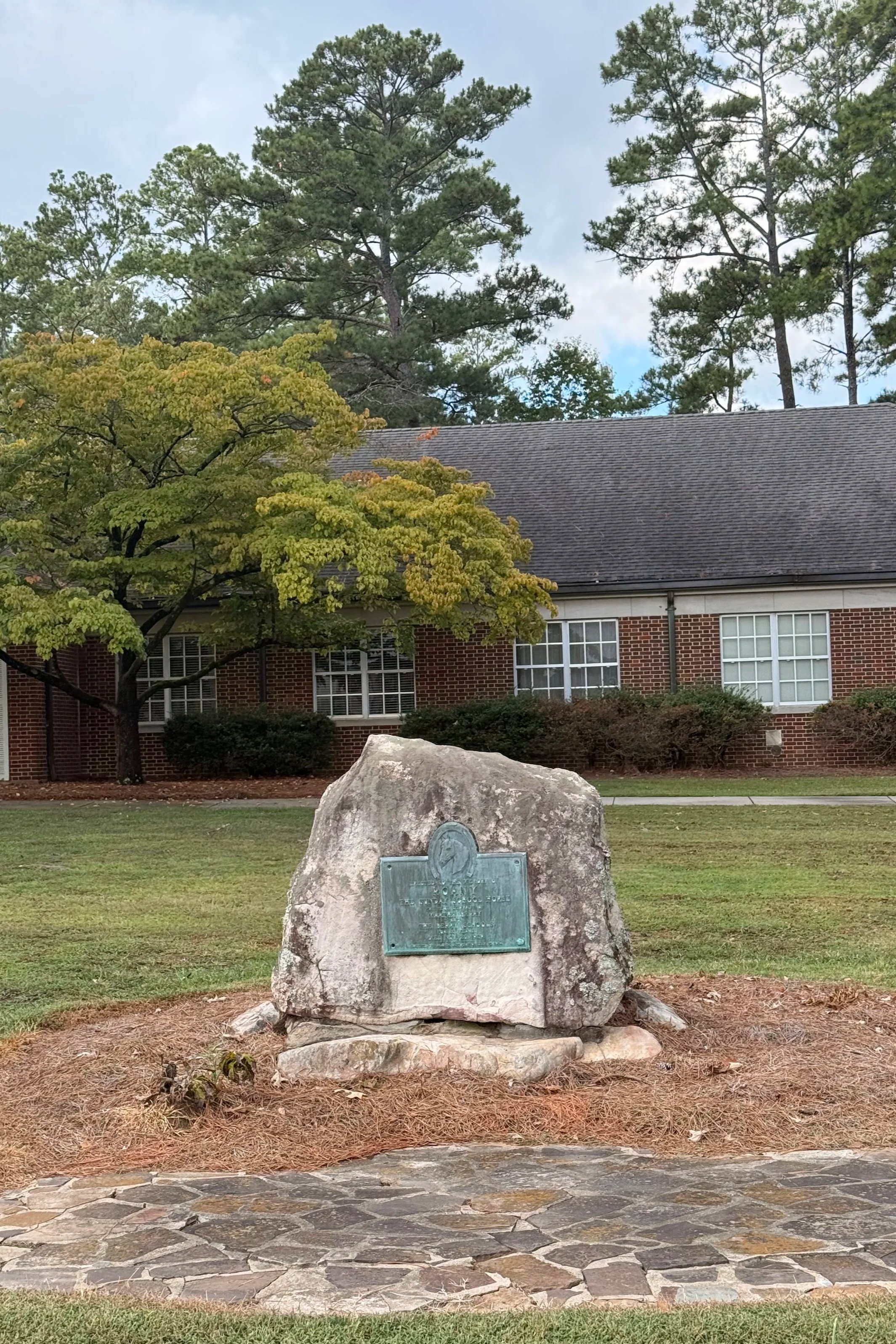
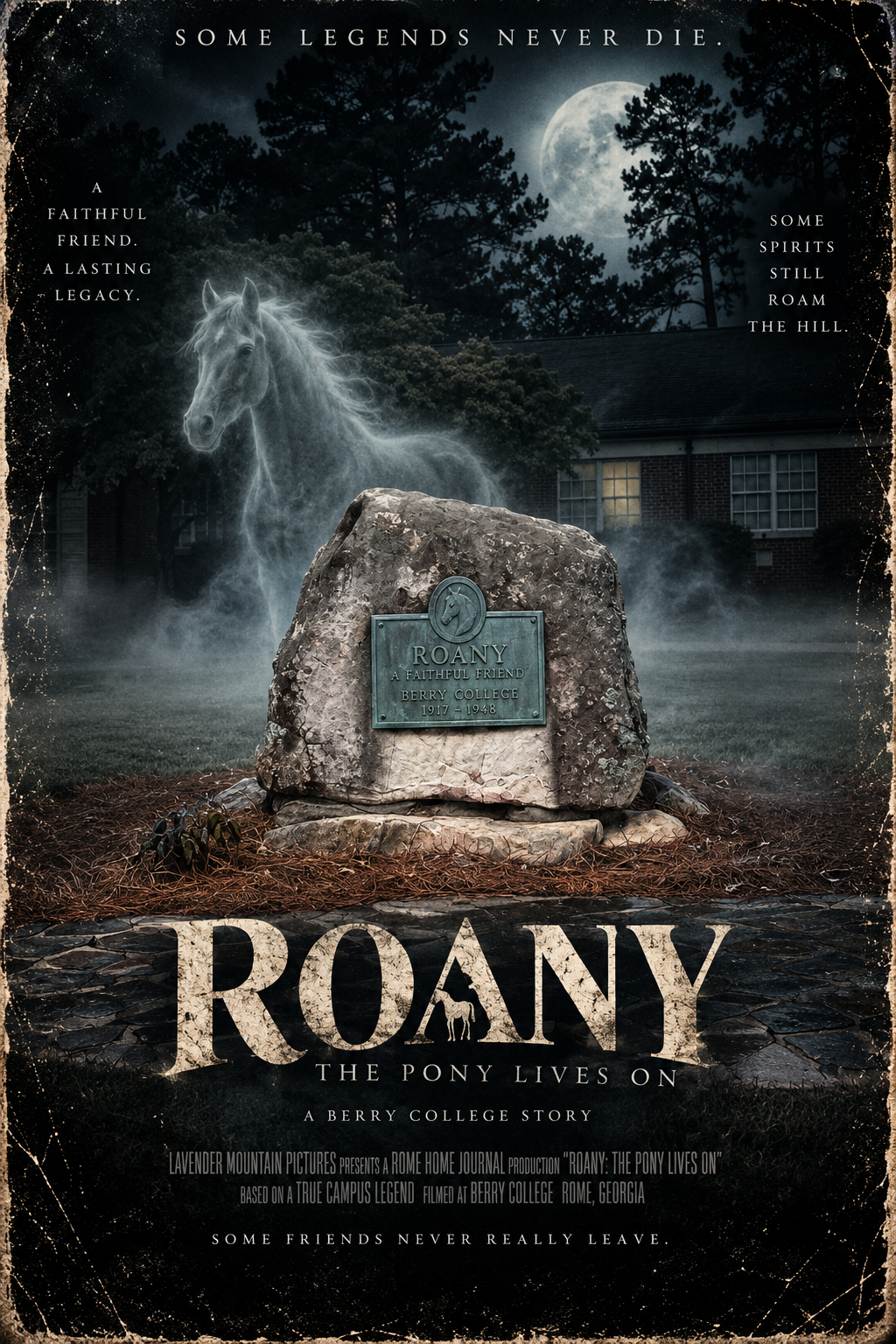
And then there's Roany. Martha Berry's horse died in 1929 and is memorialized on campus, but Berry folklore occasionally has him trotting toward Martha's grave near the College Chapel on Sunday mornings.
There is absolutely no historical evidence that a dead horse travels across Berry College on Sunday mornings. I nevertheless refuse to write an article about Berry ghosts and leave out the ghost horse.
Why Berry?
Age helps explain Berry's ghost stories. But architecture explains something more. Berry College isn't simply old. It contains an unusually broad collection of environments in which history remains physically present.
Roosevelt Cabin represents the school's rustic beginnings. Oak Hill preserves Martha Berry's domestic world. The main academic campus developed with brick buildings and the classical language American colleges often used to express permanence and institutional importance. Mountain Campus combines stone school buildings with an almost rural isolation.
And then the Ford Complex appears like something transported from another country entirely. Architectural historian Robert M. Craig has described Berry as essentially three campuses with distinct characters. Walking or driving between them can feel less like moving across one college than moving between different periods in its history.
That matters because ghost stories depend on setting. Put Agatha in a modern residence hall and the story loses something. Put her behind a narrow window in a Collegiate Gothic tower and generations remember her.
The Green Lady needs Stretch Road.
Ruth needs her old dormitory.
Martha needs Hoge.
The Roosevelt Cabin story needs an old log building with one unexplained light glowing upstairs.
These stories also preserve something that architectural histories sometimes don't: how people emotionally experience buildings.
A floor plan can tell us how Mary Hall functions. A history can tell us who designed it. A ghost story tells us that generations of students looked up at that tower and thought something might be looking back.
JEB'S TAKE
As a Berry alumnus, I've returned to campus plenty of times since graduation. One of the things I appreciate more now than I did as a student is just how architecturally strange Berry really is.
There aren't many places where you can move from a rustic log cabin to formal academic buildings, drive several miles through forest and suddenly arrive at something resembling an English university—all without leaving campus.
The ghost stories create another way of navigating it.
Researching this article gave me a kind of second Berry map. It isn't organized around classrooms or residence halls. It's organized around the places generations of students decided were mysterious enough to deserve a story.
Some of those stories almost certainly aren't true.
One of Berry's most famous ghosts may haunt a dorm room that never existed.
But folklore doesn't have to be factual to tell us something about architecture.
We preserve buildings with stone, brick and wood. We document them with photographs, drawings and archives. But we also preserve the experience of places through the stories people tell about them.
At Berry, those stories have been passed from class to class for generations.
Which is why you can explain all you want that the Green Lady probably isn't standing beside Stretch Road.
I'll still be looking in the rearview mirror.