
RHJ: A Promise Made in 1909
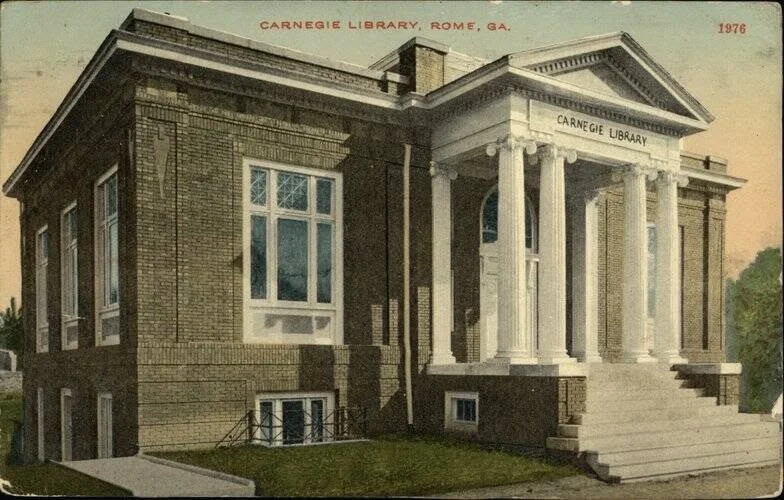
Rome's Carnegie Library, the architecture of public knowledge, and a responsibility that spans generations.
In December 1909, Rome received some very good news. Andrew Carnegie, one of the wealthiest men in the world, was willing to give the city $15,000 to build a public library. There was, however, a condition. Rome would have to agree to maintain it. Carnegie would pay for the building. The community would assume responsibility for what happened inside it.
Rome accepted.
More than a century later, as Floyd County considers cutting its annual contribution to the local public library by 50%, that seemingly straightforward arrangement deserves another look. But first, let's talk about the beautiful little building at 607 Broad Street.
Before Carnegie
Rome's library story actually begins thirty years before Carnegie's gift. On February 10, 1879, the Young Men's Library Association was organized in Rome. Despite its name, the organization eventually employed a female librarian, Hallie Alexander, in 1886. Alexander helped increase circulation and demonstrated that a librarian's role extended well beyond simply looking after books.
Unfortunately, the association was unable to sustain its efforts to maintain a public library. Its collection eventually went into storage. Rome had the books. It had people who wanted to read them. What it lacked was a sustainable institution to connect the two.
Enter Andrew Carnegie.
The Man Who Built Libraries
Andrew Carnegie's story is one of the more extraordinary in American history. Born in Scotland in 1835, he immigrated to the United States as a child and eventually built an enormous fortune in the steel industry. But Carnegie understood something about access to knowledge. As a young working man, he benefited from the opportunity to borrow books from a private collection, an experience that helped shape his later philanthropy. He would eventually finance the construction of more than 1,600 public libraries across the United States, including 24 in Georgia.
What I find particularly interesting about Carnegie's approach is that he wasn't simply writing checks to communities. He was establishing partnerships. Communities typically had to provide land, make the library available to the public and commit to annual financial support. Carnegie was interested in creating lasting institutions, not simply constructing impressive buildings. The distinction is important.
The Architecture of Public Knowledge
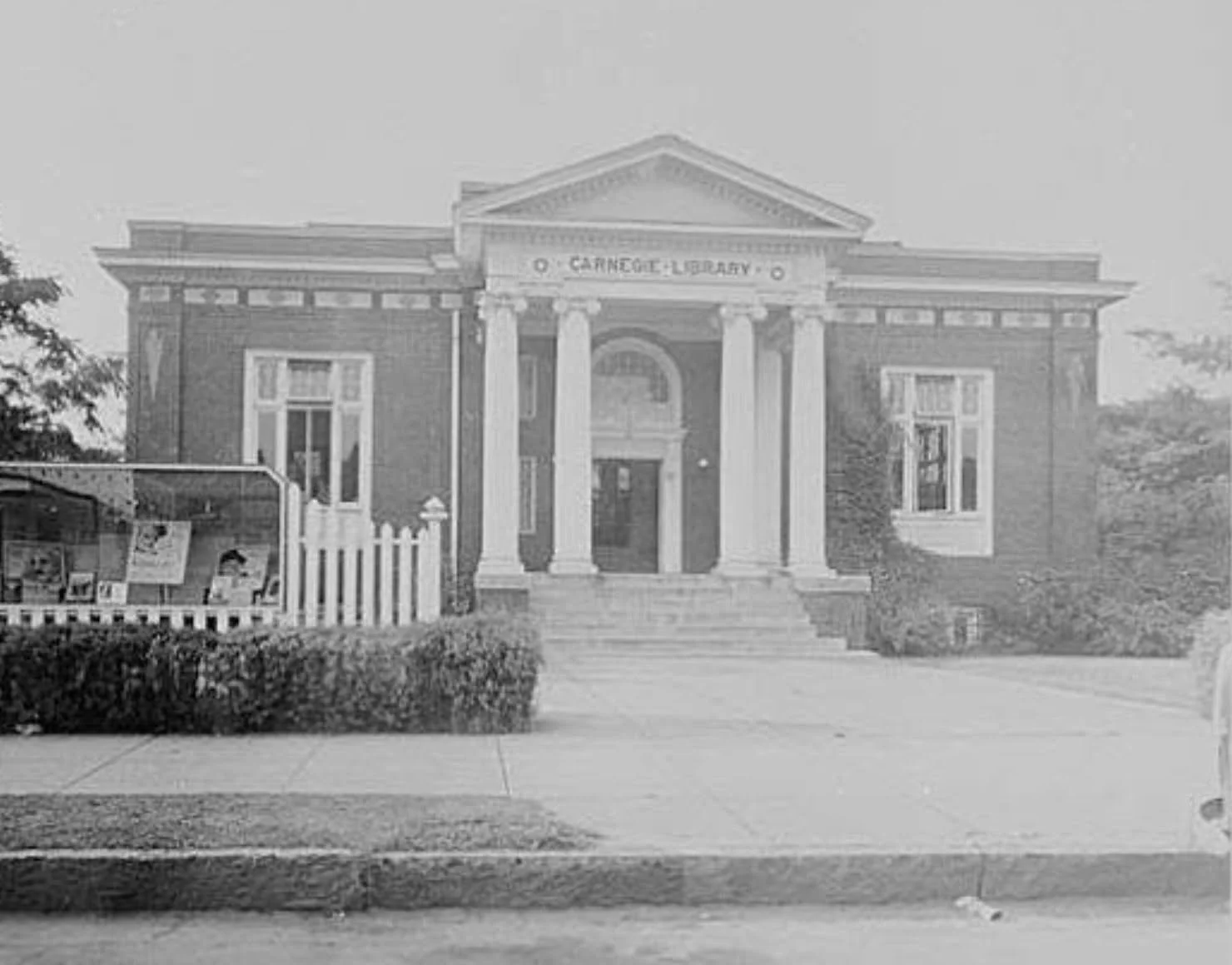
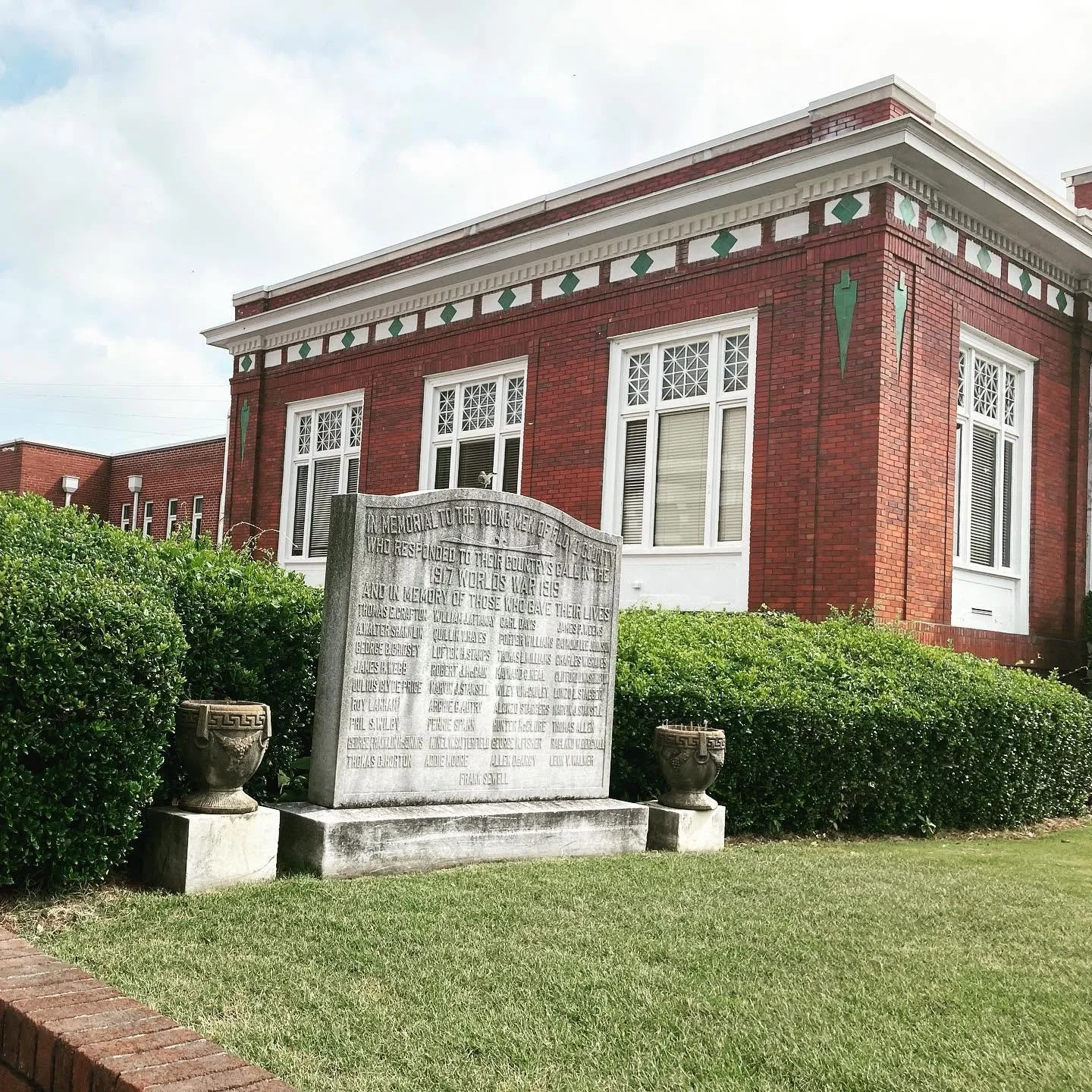
Rome's Carnegie Library opened on May 2, 1911. The books that had once belonged to the Young Men's Library Association were retrieved from storage, and a librarian was employed at a salary of $40 per month. After decades of trying, Rome finally had a permanent public library. Architecturally, the building is a lovely example of early twentieth-century civic design. Rome's historic resources survey identifies it as Neoclassical Revival, a style closely associated with the public architecture of the period.
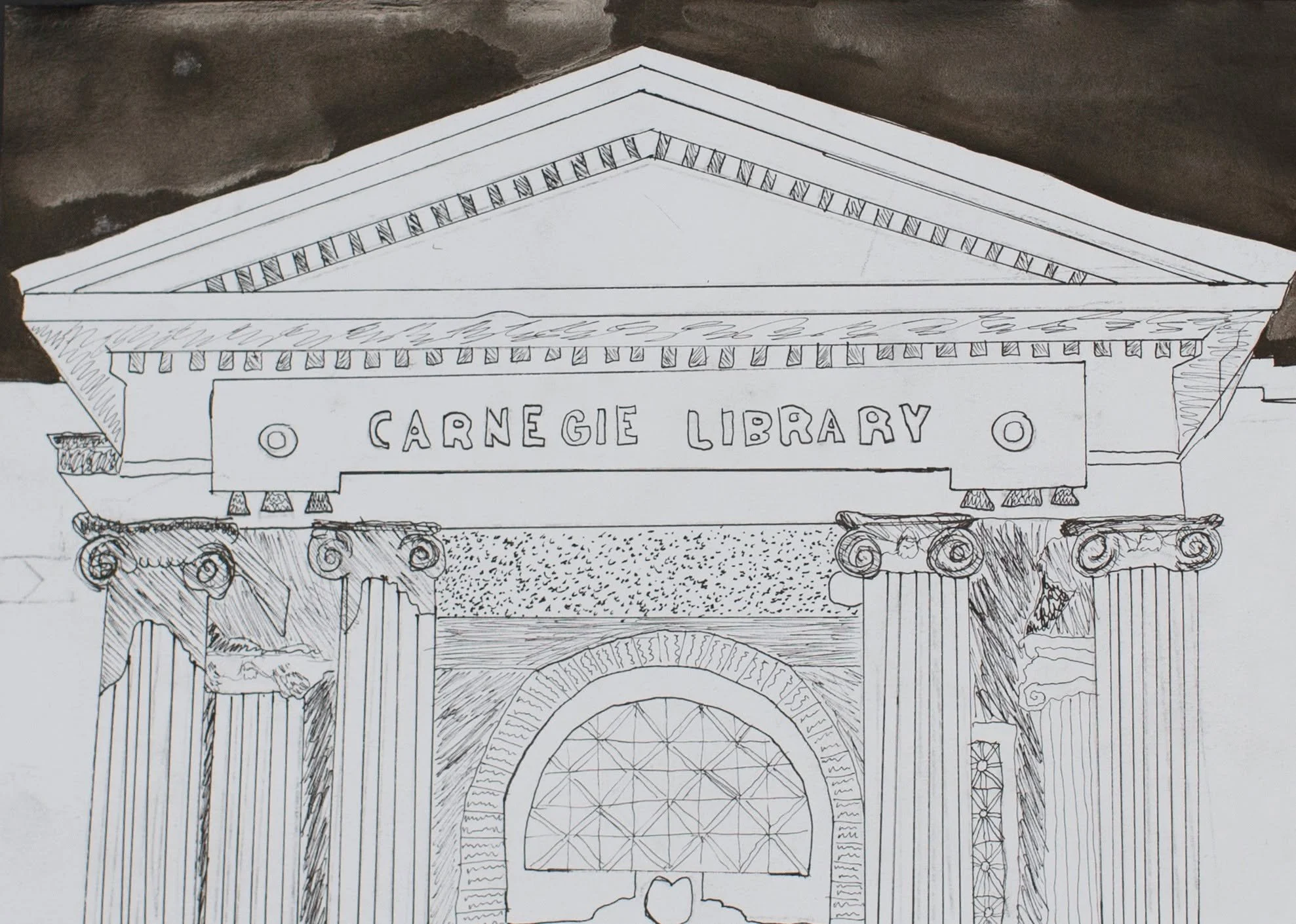
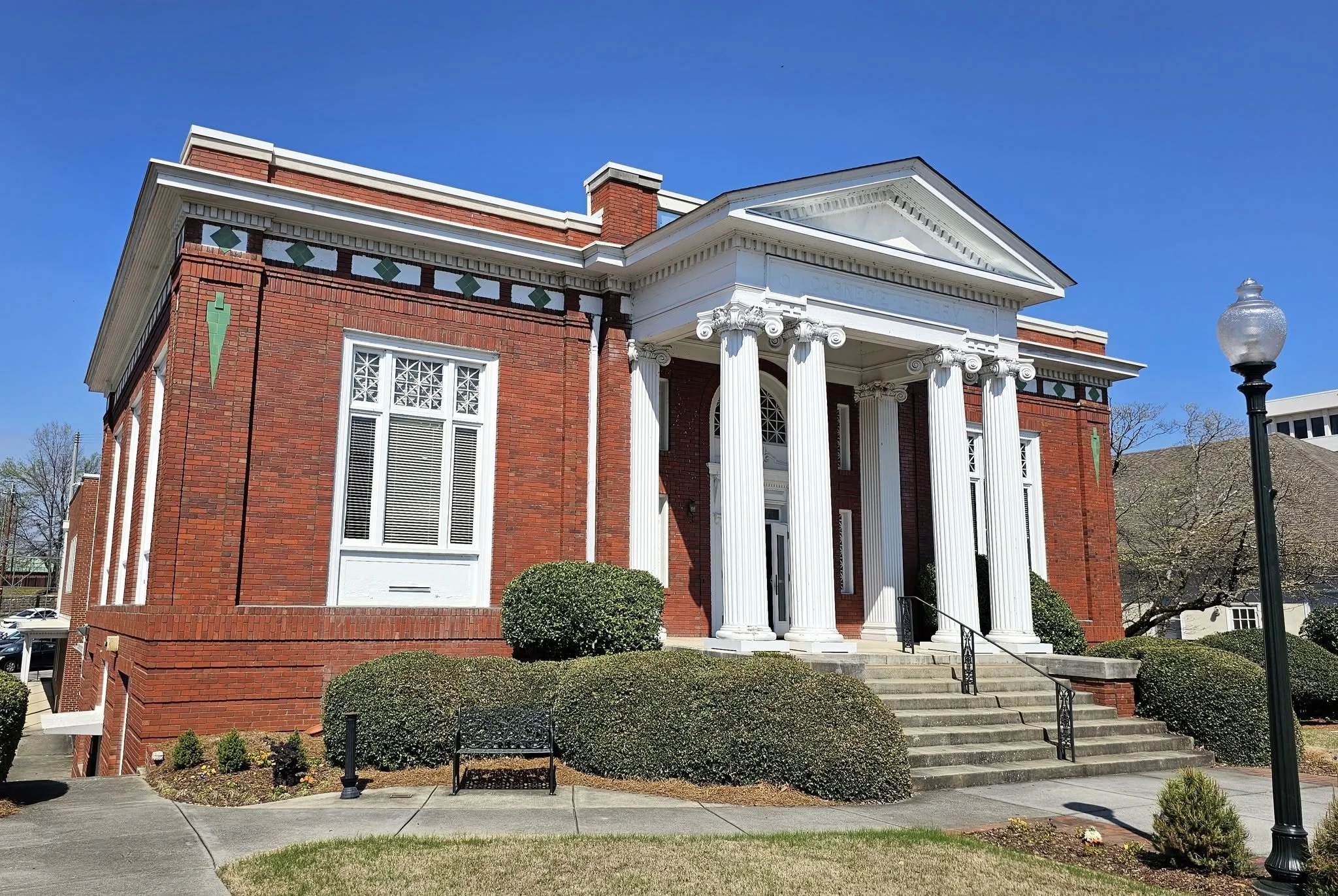
Look at the building the next time you're downtown. Its symmetrical composition, red brick exterior, elevated entrance and contrasting white classical portico give a relatively modest building an impressive civic presence. The raised foundation and entrance steps add a sense of ceremony. The triangular pediment establishes a clear focal point, while the orderly arrangement of windows reinforces the symmetry of the facade. It borrows from the architectural language of temples, courthouses and other important public institutions, but on a much more intimate scale.
And consider its location. Standing beside the City Auditorium near the upper end of Broad Street, the library became part of a concentration of buildings devoted to the civic and cultural life of Rome. This was valuable downtown real estate dedicated to learning. There is something particularly interesting about the architectural hierarchy here. During this period, communities routinely used classical architecture to communicate the importance of law, government, banking and religion. Applying that same architectural language to a public library placed knowledge among those institutions.
The building wasn't simply a place to store books. Its architecture communicated an ambition for the community.
How Public Was the Public Library?
As much as I admire the building and the ambition behind it, we also need to acknowledge a contradiction in its early history. Rome's Carnegie Library was built during the Jim Crow era, when African Americans across the South faced barriers to public facilities, including libraries supported by their own tax dollars.
Historian George S. Bobinski, in his study of Carnegie libraries, documents an interesting exchange involving Rome. Initially, local officials indicated that Black residents would have access to the library because it would be supported by public funds. After the building was constructed, however, Rome sought Carnegie funding for a separate library for Black residents.
That application was unsuccessful because the city proposed purchasing an existing building rather than constructing a new one. The complete history of library access and eventual integration in Rome deserves further research, but this correspondence reminds us that the meaning of a public institution has not always been straightforward.
The history of our public institutions is not simply the history of their construction. It is also the history of who was permitted to use them.
Outgrowing Carnegie
The Carnegie Library served Rome for approximately 77 years. Over time, the building was expanded to accommodate the growing needs of the community. Think about how much changed between 1911 and 1988. The library opened before commercial radio broadcasting became widespread, before television, before the interstate highway system and decades before the arrival of personal computers. By the time Rome moved its library operations to Riverside Parkway in 1988, the expectations placed upon a public library had changed considerably.
A library designed for the collections and reading habits of a small Southern city in 1911 could no longer easily accommodate the needs of a growing regional library system. Fortunately, Rome recognized that outgrowing a building did not mean it needed to disappear.
The Carnegie Library was adapted for municipal offices and remains a contributing part of downtown's architectural character. It is one of those preservation successes we probably don't celebrate enough because the building has become such a familiar part of our surroundings.
From Broad Street to Riverside Parkway
Today's Rome-Floyd County Library at 205 Riverside Parkway serves as the headquarters of the Sara Hightower Regional Library System, which also includes libraries in Cave Spring, Cedartown, Rockmart, Summerville and Trion. The architectural transition from Carnegie to the contemporary library reflects an enormous change in the function of libraries themselves.
Libraries now provide computer and internet access, research databases, children's programming, educational resources, community meeting spaces and access to collections far beyond the walls of their own buildings. As an educator, I also think about the importance of having places outside of school where children can explore their interests independently. Not every learning experience needs to be guided by a curriculum, measured by an assessment or assigned by a teacher. Sometimes, a child simply needs the opportunity to discover something interesting.
And from an architectural and urban planning perspective, libraries belong to an increasingly unusual category of buildings: indoor public spaces where people can spend time without being expected to purchase anything. Think about how few of those places remain in our daily lives. The library is not merely a collection of materials. It is a physical place in the community.
The Conversation in 2026
As I write this on November 24, 2026, Floyd County is considering a significant reduction in library funding as part of its proposed 2027 budget. The county's current annual allocation of $1,291,270 would be reduced to $645,635—a reduction of exactly 50%. County commissioners are working to balance the budget, which reportedly has a remaining shortfall of approximately $136,000. These are decisions that involve competing demands for public resources, and the proposed budget has not yet been adopted.
But there is an additional complication.
Georgia's maintenance-of-effort requirements generally tie eligibility for state library funding to the continuation of local financial support. Certain exceptions exist for broader governmental budget reductions, but the proposed library cut has raised concerns about whether those requirements would be satisfied. The potential consequences, therefore, are not necessarily limited to the loss of $645,635 in Floyd County funding. State-supported positions, technology, catalog services and access to shared library resources could also be affected. And because Rome is the headquarters of a regional system, the implications could extend into neighboring counties.
Whatever the final budget looks like, understanding these relationships is important. The actual financial and operational consequences of a reduction in local funding cannot necessarily be understood by looking at a single line in the county budget. It is interesting, too, how closely the modern funding structure echoes the arrangement Carnegie proposed in 1909. Outside financial assistance is connected to an ongoing commitment by the community receiving it. The institutions have changed. The scale has changed. The underlying relationship is remarkably familiar.
We must ask, what are our priorities as a community?
STAND HERE.
The next time you're on Broad Street, stop in front of the Carnegie building.
Look at the columns, the entrance, the brickwork and the little replica library outside.
Imagine Rome in 1911. Automobiles were still relatively new. Streetcars traveled through town. Many of the historic buildings we now take for granted were relatively recent construction.
Imagine the doors opening for the first time and the books that had spent years in storage finally finding a permanent home.
Then consider how many generations passed through those doors before the library moved to Riverside Parkway.
The Carnegie Library is no longer Rome's public library, but it remains a physical record of the city's decision to establish one.
JEB'S TAKE
One of the things I enjoy most about studying architecture is discovering what buildings tell us about the people who built them. A city's buildings are a record of its priorities. They tell us where people invested their money, what they considered important, how they organized their communities and what they imagined the future might look like.
In 1909, Rome agreed to something that it could not accomplish with Carnegie's money alone. The gift would construct a library, but the residents of Rome would sustain an institution. Those residents could not have imagined the technology, services or regional reach of the library system that exists today. They could not have anticipated how dramatically the definition of a public library would evolve.
Yet the building they helped establish is still standing.
The books are somewhere else now. The architecture remains. And more than a century later, the relationship between a community and its library is again the subject of a public conversation. That is what makes the Carnegie building particularly interesting to me right now. It is both a beautiful example of civic architecture and a reminder that the life of a public institution extends far beyond the construction of its building.
Andrew Carnegie gave Rome a building in 1909.
What followed was the work of generations of Romans.
And there is more work to do.