
RHJ: When Rome Rode the Streetcar
For 44 years, rails ran through Rome's streets, crossed its rivers and helped determine where the city grew.
By Jeb Arp
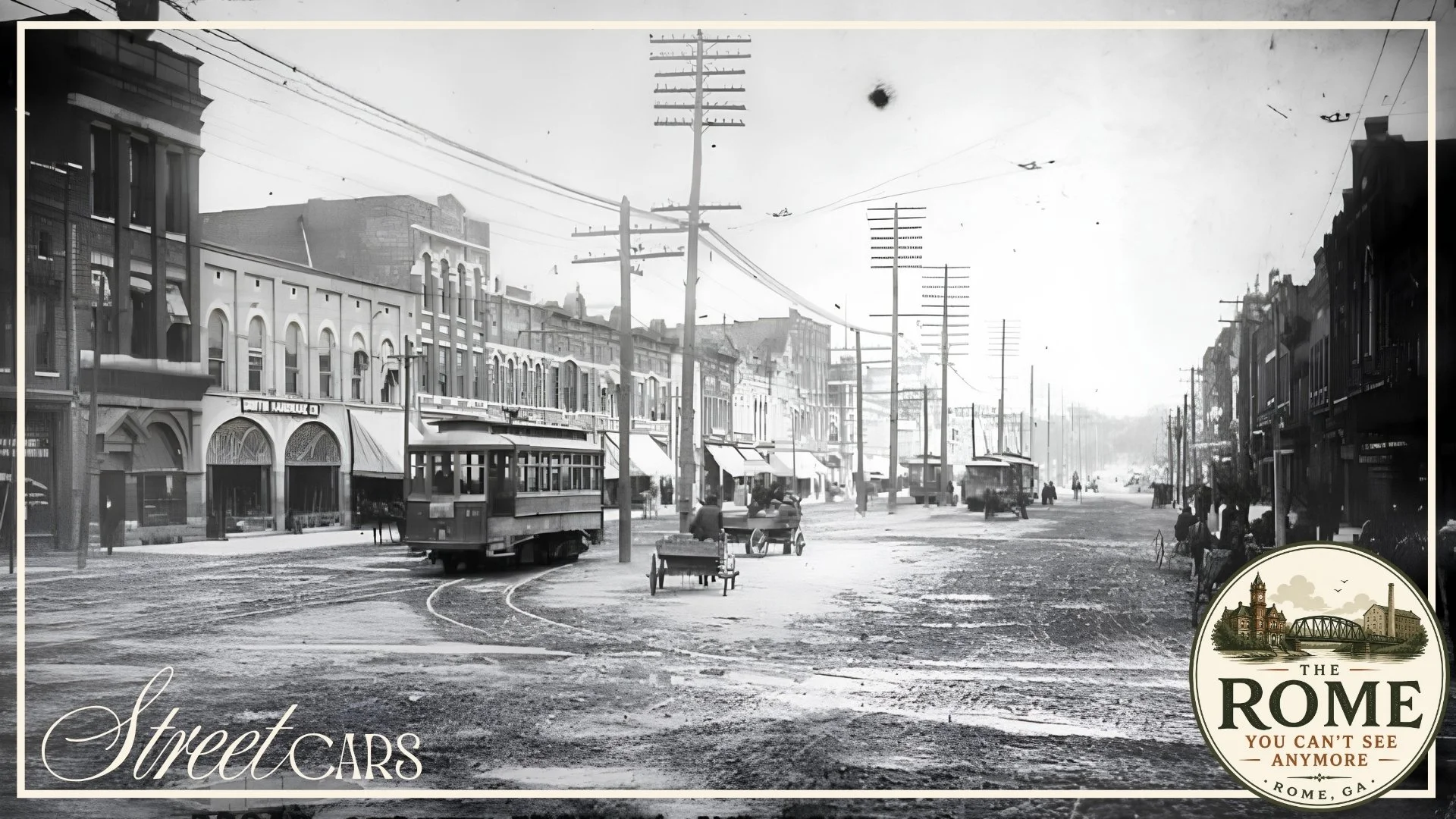
Imagine standing on Broad Street and hearing a bell. It’s not the clocktower or a church. It’s a streetcar!
Rails run beneath you. Overhead wires crisscross the street. A car approaches on steel wheels, collects passengers downtown, crosses one of Rome's bridges and continues toward neighborhoods that, only a generation earlier, had seemed considerably farther away.
For Romans today, that version of the city is almost impossible to picture.
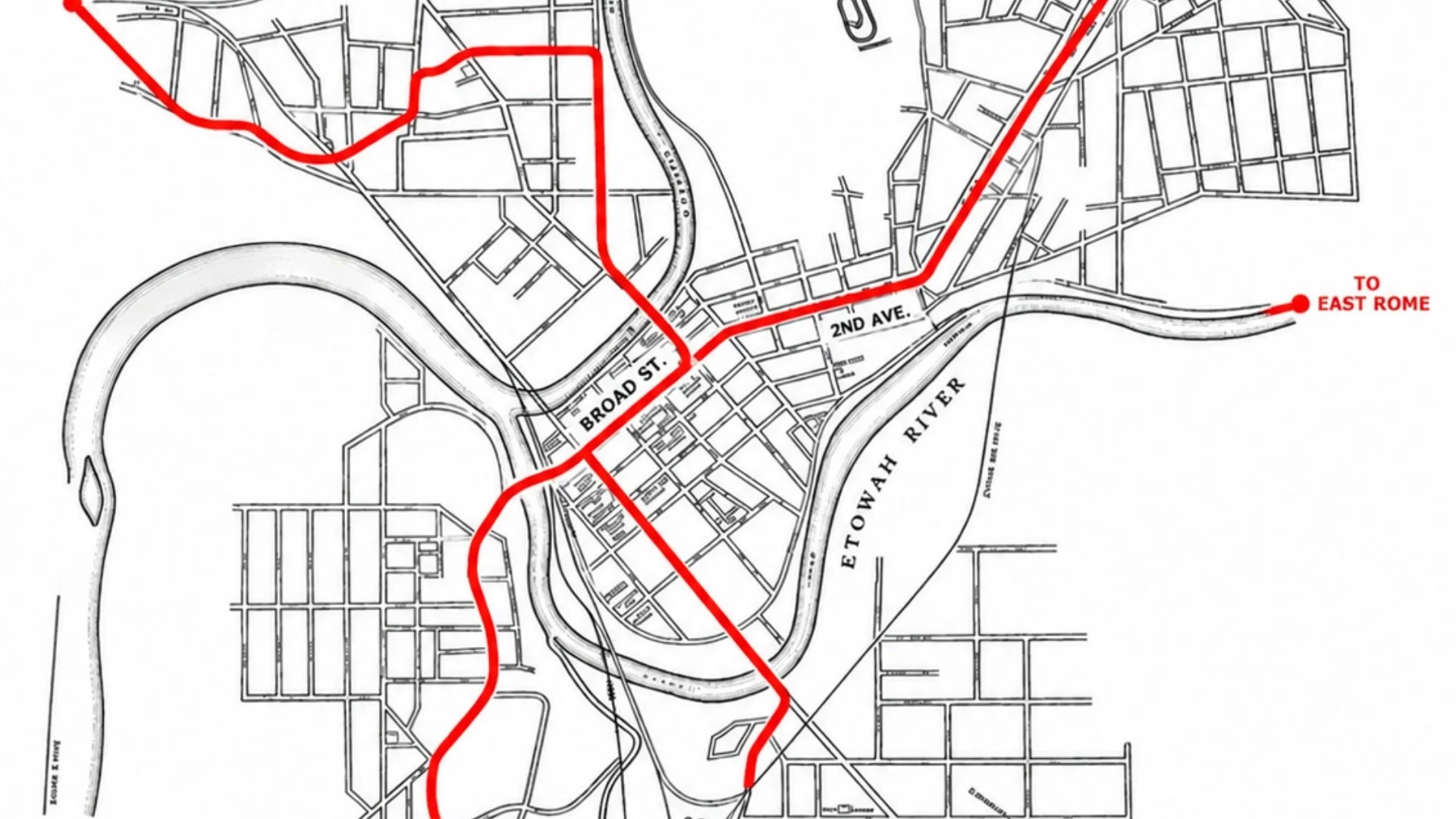
But from 1885 until 1929, streetcars were part of everyday life in Rome. They connected downtown with East Rome, West Rome, North Rome and eventually Lindale. Their tracks crossed the city's bridges. Their infrastructure occupied the streets. Their power system became entangled with the growth of electric utilities.
And, like streetcar systems throughout America, they changed the shape of the city itself, making previously inaccessible areas just a few stops away.
Today almost nothing about downtown tells you they were ever here.
Rome Gets a Streetcar
The timing wasn't accidental. Rome was booming during the 1880s. Cotton had helped establish the city as an important commercial center for northwest Georgia and northeast Alabama, and the prosperity that followed brought new investment and new ambitions.
The Rome Street Railway Company was incorporated on December 12, 1884. Construction began the following spring. On August 1, 1885, the first cars entered service. They were not the electric trolleys we tend to imagine. They were mule-powered.
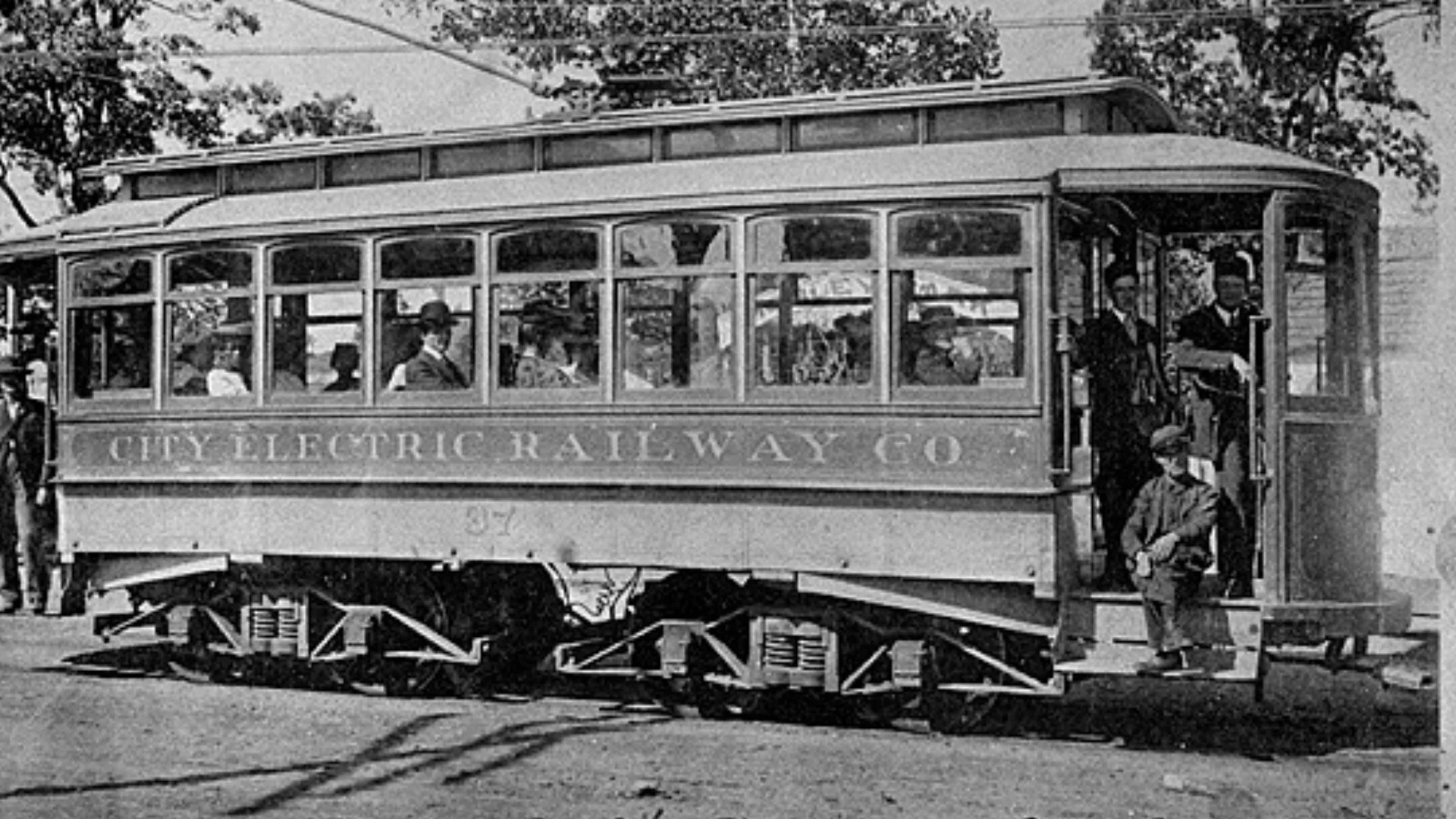
The enclosed cars had windows along their sides and were painted yellow with blue trim. A pair of bell-strung mules pulled each car along the rails.
The fare was a nickel and people loved them!
Part of the appeal was novelty, but part was practical. Rails offered a more dependable way through a city where an ordinary road could become a muddy mess after bad weather.
The streetcar made Rome feel more connected. And almost immediately, the system began growing.
Rails Across the Rivers
By 1888, the Rome Street Railway was operating six cars across approximately seven miles of track. It used both mules and small steam-powered “dummy” engines.
Competition soon arrived.
The North and South Street Railroad Company organized in 1888 and built another 2.5 miles of track, serving different portions of the expanding city.
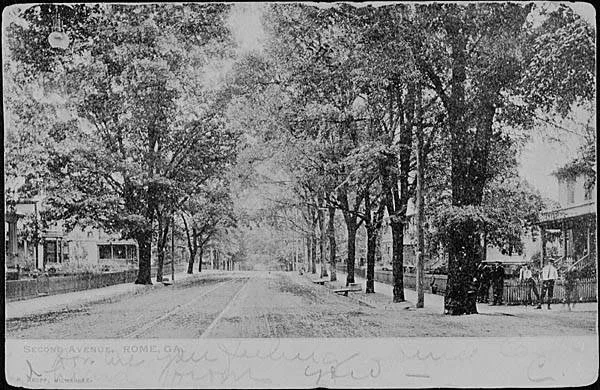
But Rome presented an unusual challenge for any transportation network. Three rivers cut through the center of town. The streetcars therefore didn't merely travel along Rome's streets. They crossed its bridges.
The Rome Street Railroad was operating horse-drawn cars across the Howard Street—now Second Avenue—bridge by 1885. When flooding destroyed that bridge the following year, the railway's right to return its tracks to the replacement became the subject of litigation.
Eventually, the fight over streetcar access to Rome's bridges would reach the United States Supreme Court. And while lawyers argued, the technology kept moving.
Rome Goes Electric
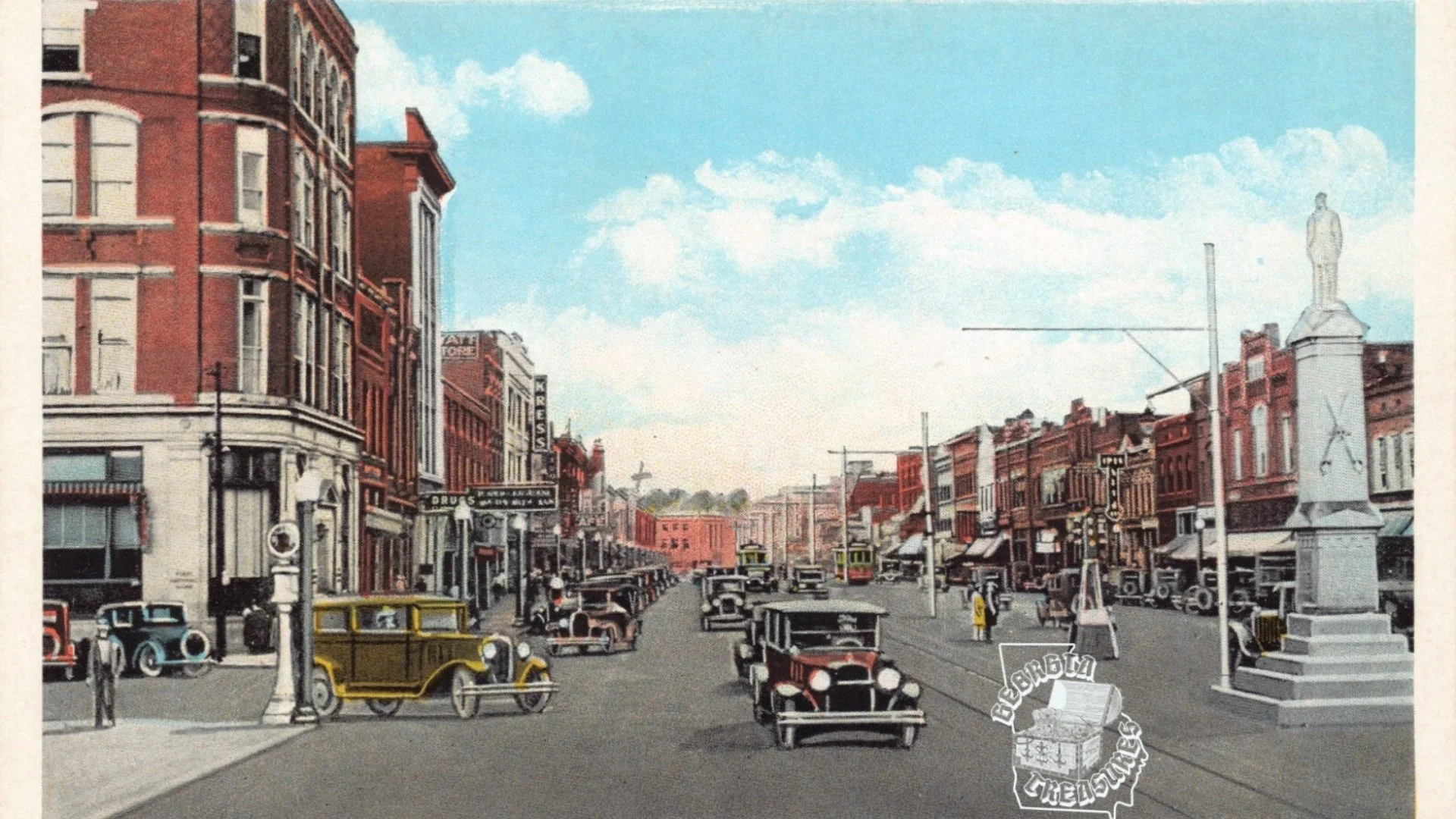
By 1892–93, the street railway had been electrified. The mules disappeared. In their place came electric streetcars drawing power from wires above the tracks. Agreements with Floyd County specifically permitted the railway to place electrical wires and equipment on the bridges so cars could continue beyond downtown.
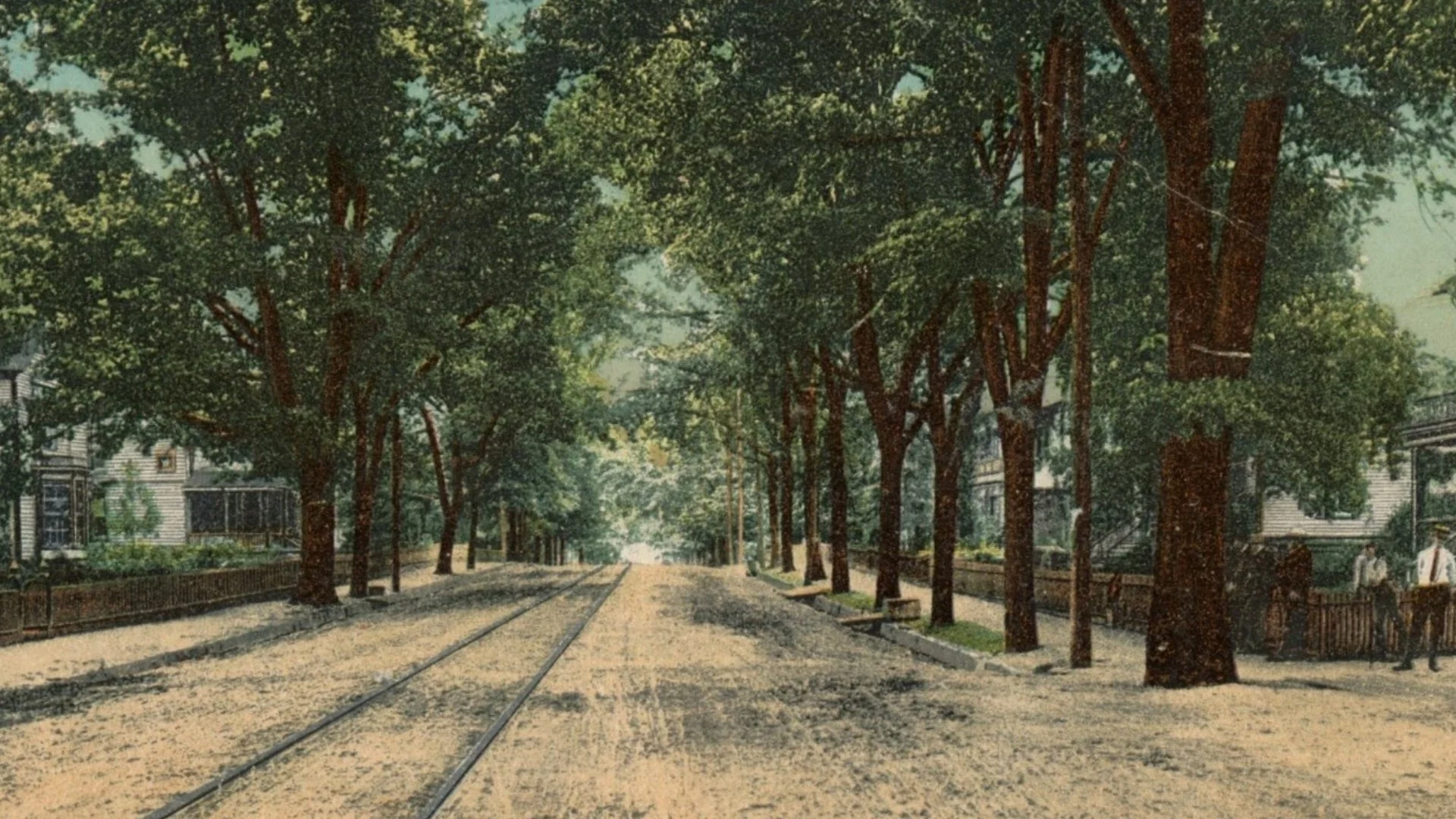
That change would have transformed the appearance of Rome's streets. Look carefully at old photographs and postcards and you'll see it: rails embedded in the roadway, poles lining the streets, wires overhead, streetcars sharing space with pedestrians, wagons and eventually automobiles.
This wasn't merely transportation laid on top of the existing city. It was an entire layer of urban infrastructure.
The Streetcar Shapes the City
Perhaps the most interesting thing about streetcars is that they didn't simply respond to development. They could create it.
Before widespread automobile ownership, distance from downtown mattered enormously. Put a reliable streetcar line somewhere and suddenly land that had seemed inconvenient became practical for housing, industry or recreation.
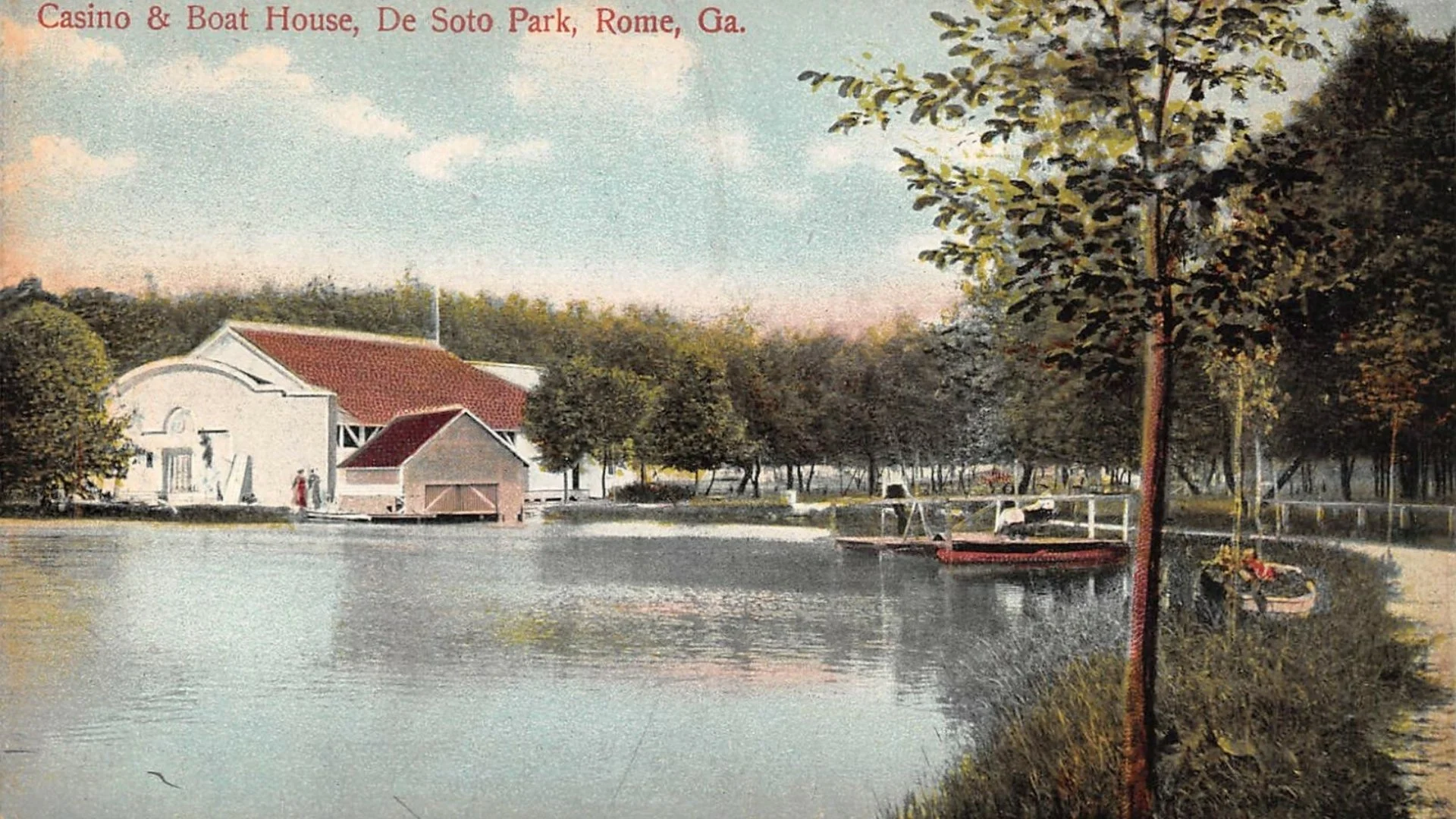
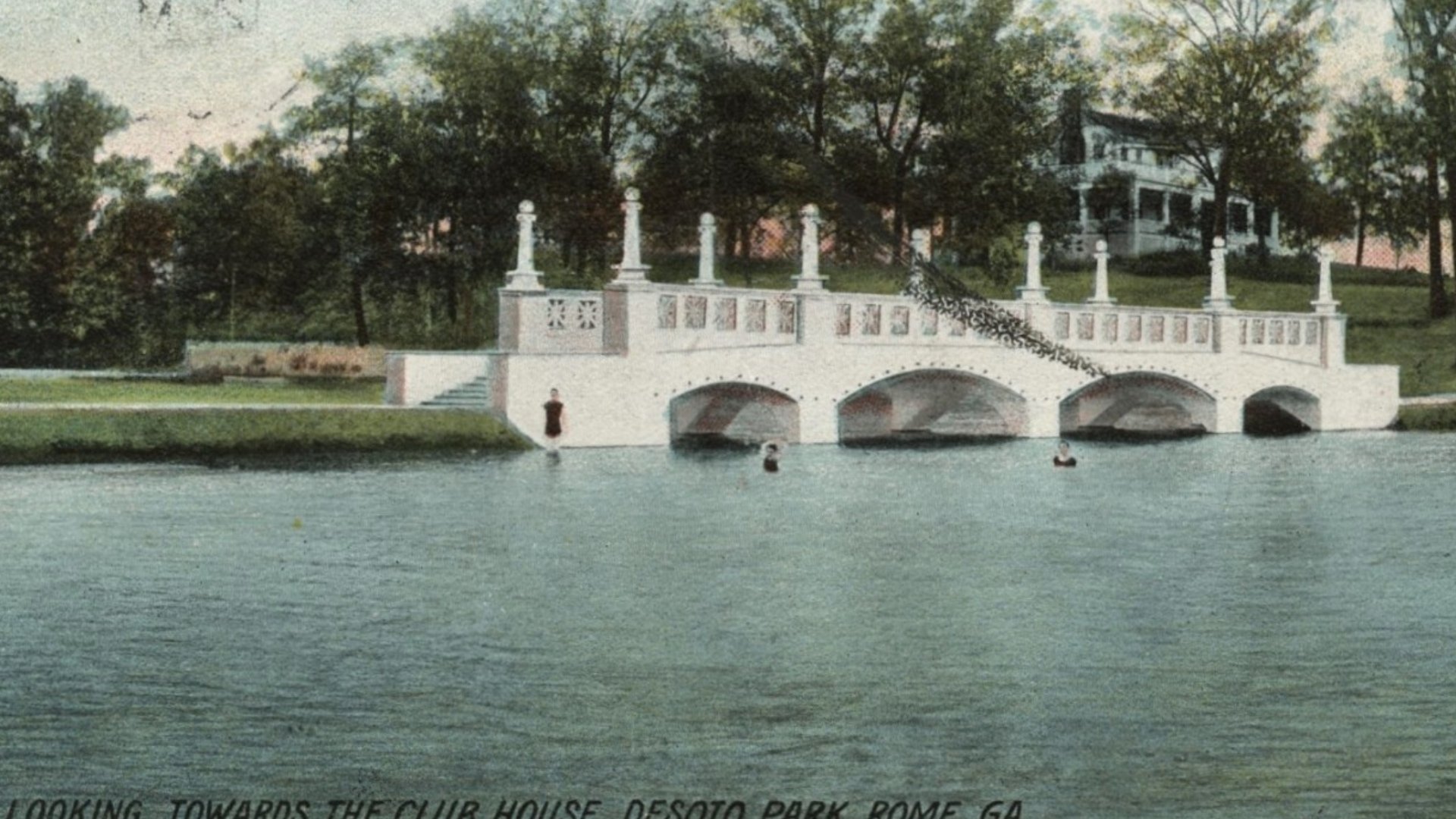
Rome's system expanded outward. In 1904, the City Electric Street Railway constructed a line to the Massachusetts Mills textile complex (later Pepperell) in Lindale. Along that route was Mobley Park, which the company developed into a major recreation destination around a spring fed lake.
That wasn't necessarily civic generosity.
It was smart business.
A streetcar company made money when people rode streetcars. Give them somewhere they wanted to go, and you created passengers. Across America, trolley companies developed amusement parks, picnic grounds and recreational destinations at the ends of their lines for exactly that reason.
Rome had its own version. Mobley Park generated traffic for the railway. Swimming, fishing, gardens and paths. This was a recreation center and even contained a Monkey House for people to tour! Mobley Park became DeSoto Park, which later became the Darlington Campus when the land was purchased in 1916.
The streetcar wasn't just carrying Romans to places. It was helping decide which places mattered.
The Car Barn
By 1906, the street railway, its power plant, Mobley Park and other assets had been sold to outside investors for $100,000, creating the Rome Railway and Light Company.
The system was substantial.
By 1911 it operated 18 cars and employed 60 people.
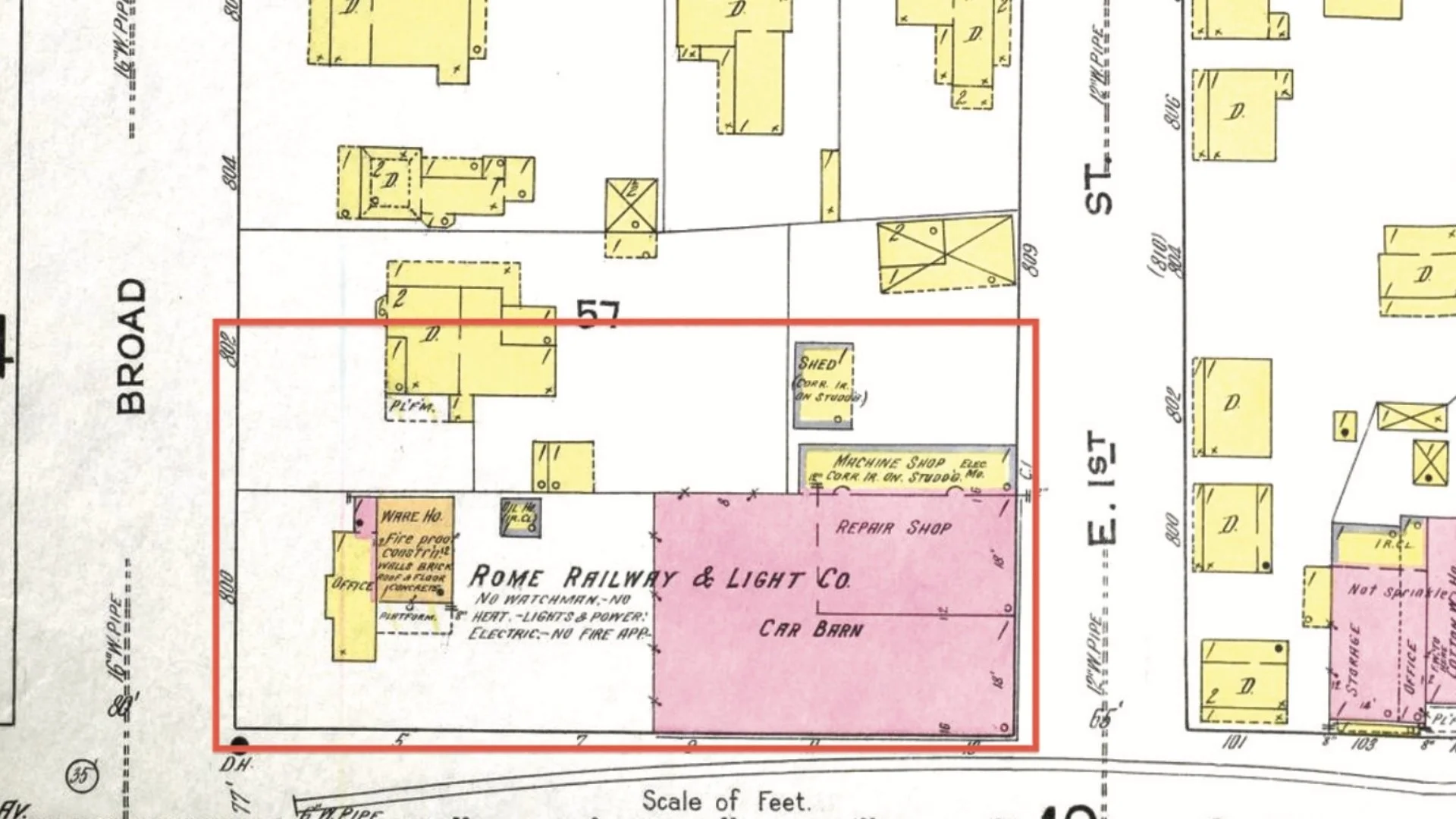
The 1915 Sanborn map shows a sizable Rome Railway and Light complex on South Eighth Avenue between Broad and East First Streets. It included a large brick car barn and repair shop, a frame machine shop, oil house, office and fireproof warehouse.
This is exactly the sort of vanished architecture I love finding on old maps.
It wasn't monumental. Nobody designed it to become a landmark. It existed because the city worked differently.
Remove the transportation system and eventually the buildings associated with it lose their reason for being. The tracks disappear. The wires come down. A whole category of architecture vanishes with the technology that created it.
Then Came the Automobile
The streetcar's greatest competitor didn't need rails. As automobile ownership increased during the 1920s, fixed streetcar routes began looking less convenient. Across Georgia and the country, smaller street railway systems struggled with rising costs and declining ridership. The system had failed to produce even an eight-percent return on investment since 1920 and was operating at a loss by 1923.
One decision in 1925 captures the change particularly well. A new silk mill opened about half a mile beyond the end of the North Rome streetcar line. In an earlier era, extending the rails might have been the obvious solution.
Instead, Rome Railway and Light operated a bus between the end of the tracks and the mill. The replacement for the streetcar had effectively arrived before the streetcar was gone.
September 16, 1929
Georgia Power eventually acquired the system and sought permission from the City of Rome to replace the streetcars entirely with buses.
Rome resisted. The dispute wasn't purely sentimental. The city expected the utility company to bear part of the cost of badly needed street repairs under obligations inherited with the street railway system. Georgia Power repeatedly petitioned to abandon streetcar service.
The city repeatedly refused.
Then, on September 16, 1929, Georgia Power did it anyway. Rome's streetcars stopped running. Buses replaced them. The decision was controversial enough that Georgia Power took an additional step.
Employees were ordered to remove part of the overhead electrical system between the Eighth Avenue car barn and Ninth Avenue.
The message was fairly clear. The streetcars weren't coming back. Forty-four years after Romans had followed those first yellow mule cars through the streets, the streetcar era was over.
The City Beneath the City
What fascinates me about streetcars is how completely a transportation system can disappear. A streetcar network isn't a small thing.
It requires tracks. Power. Poles. Wires. Bridges capable of carrying it. Maintenance facilities. Car barns. Stops. Employees. Agreements with governments. Routes that influence where people live and where businesses locate.
For decades, all of that was part of Rome.
Then it wasn't.
Today you can walk Broad Street without realizing rails once ran through the city. You can cross the rivers without knowing streetcars once crossed them too. You can drive toward Lindale without thinking about the trolley line that once connected the mill community to downtown.
The physical city remains, but one of the systems that helped create it has become almost invisible.
Learn to See
The next time you look at an old photograph of Rome, don't just look at the buildings.
Look down.
Are there rails in the street?
Then look up.
Can you see wires? Poles? Cross-spans stretching above the roadway?
Look at the bridges. Look at unusually wide streets. Look at old commercial buildings that seem farther from downtown than you'd expect for their age.
Transportation leaves fingerprints on a city long after the vehicles themselves disappear.
Once you start looking for them, old photographs of Rome begin telling a different story.
Jeb's Take
I think we tend to imagine the automobile as inevitable. Of course Rome developed around cars. Of course we drive from one side of town to another. Of course parking lots occupy enormous pieces of land.
Except none of that was inevitable to someone standing on Broad Street in 1915. That person lived in a Rome organized around walking, railroads and streetcars. Electric cars moved through downtown, crossed the rivers and extended outward toward neighborhoods, mills and parks.
The city they knew was physically the same place we know. But they moved through it differently. And because they moved through it differently, they built it differently.
That's why I think the lost streetcars belong in Rome Home Journal. This isn't really a story about an old form of transportation.
It's a story about how transportation creates architecture.
Change the way people move through a city, and eventually you change the city itself.