
RHJ: The Bridge Fight That Went to the Supreme Court
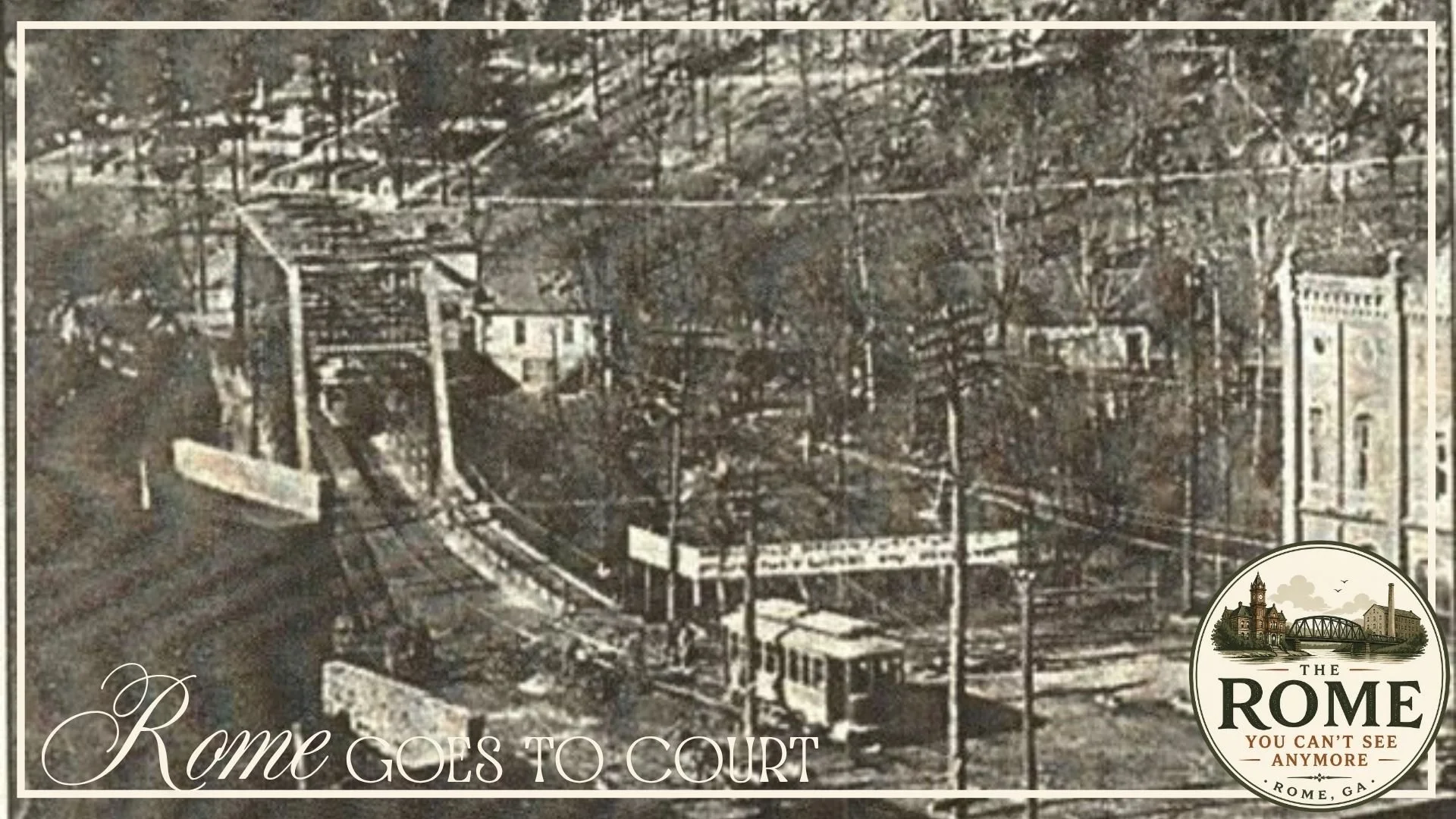
In 1917, a fight over Rome's streetcars, bridges—and who should pay for them—reached the highest court in America.
By Jeb Arp
There are certain sentences I never expected to write while researching old photographs of Rome.
Here's one: Rome's bridges once caused a case before the United States Supreme Court.
Not a case involving Atlanta. Not Savannah. Not some enormous railroad crossing the country.
Rome, Georgia.
The dispute involved three bridges across the Etowah and Oostanaula Rivers, a local streetcar company, Floyd County, and a surprisingly modern question: when public infrastructure has to be replaced, how much should a private company that depends upon it be expected to pay?
The argument lasted for decades. It began with mule-drawn streetcars, survived a catastrophic flood, continued through the electrification of Rome's street railway, and eventually collided with an ambitious plan to replace several of the city's aging bridges.
By 1917, the disagreement had traveled approximately 600 miles from Rome to Washington.
The resulting case was Rome Railway & Light Company v. Floyd County, Georgia.
And buried inside the legal language is a remarkable snapshot of a city reinventing itself.
Three Bridges and a Street Railway
The story begins in the 1880s.
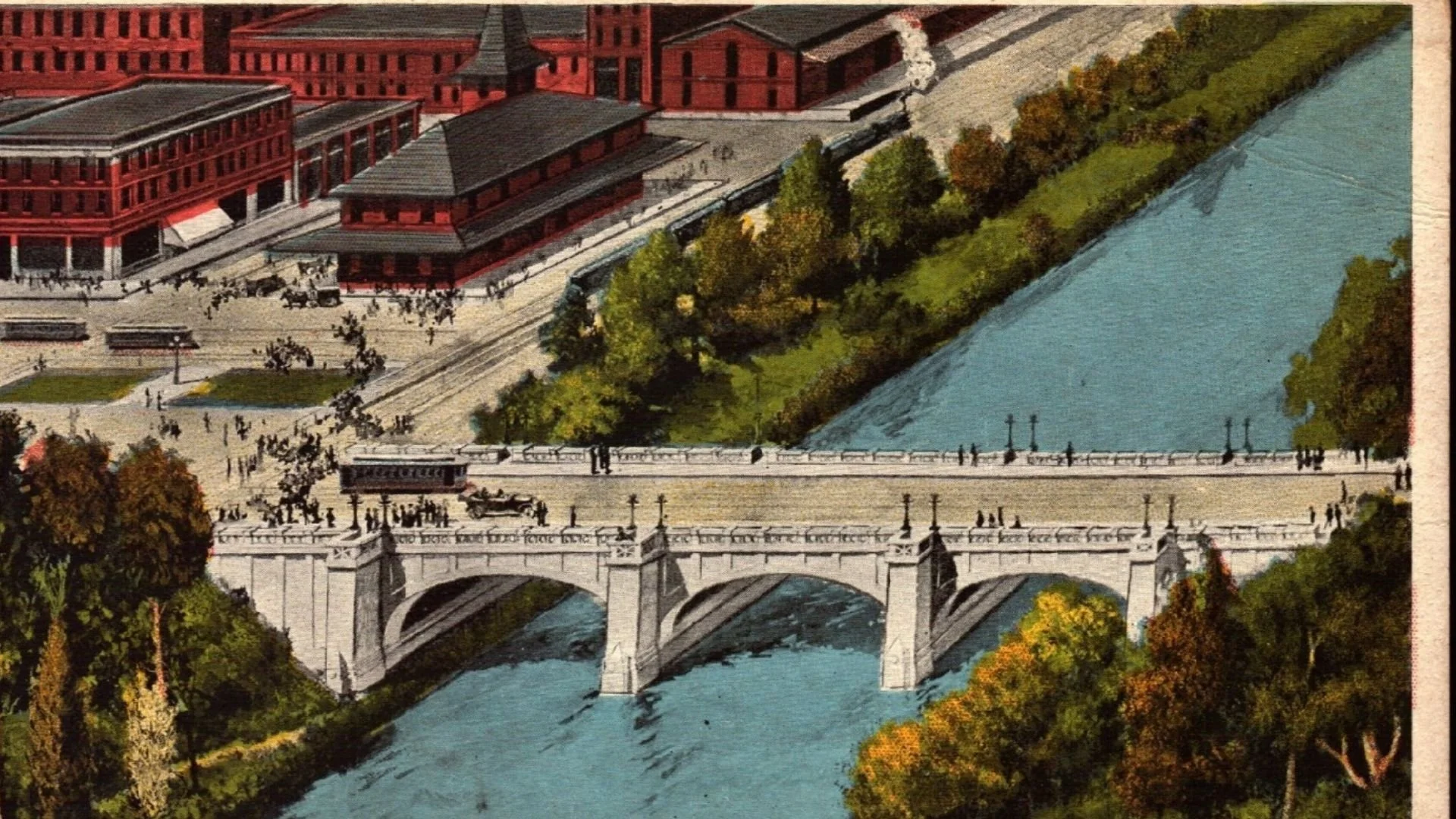
The Supreme Court's decision tells us that by 1881 there were three public bridges crossing the Etowah and Oostanaula Rivers within Rome. Then, in 1884, the Georgia legislature incorporated the Rome Street Railroad Company.
Rome was changing quickly.
The post-Civil War cotton economy had helped fuel substantial growth. New public buildings appeared. Electric lights and telephones were arriving. Nevins Opera House opened during this same period. And in 1885, Rome gained another symbol of an increasingly modern city: public transportation on rails.
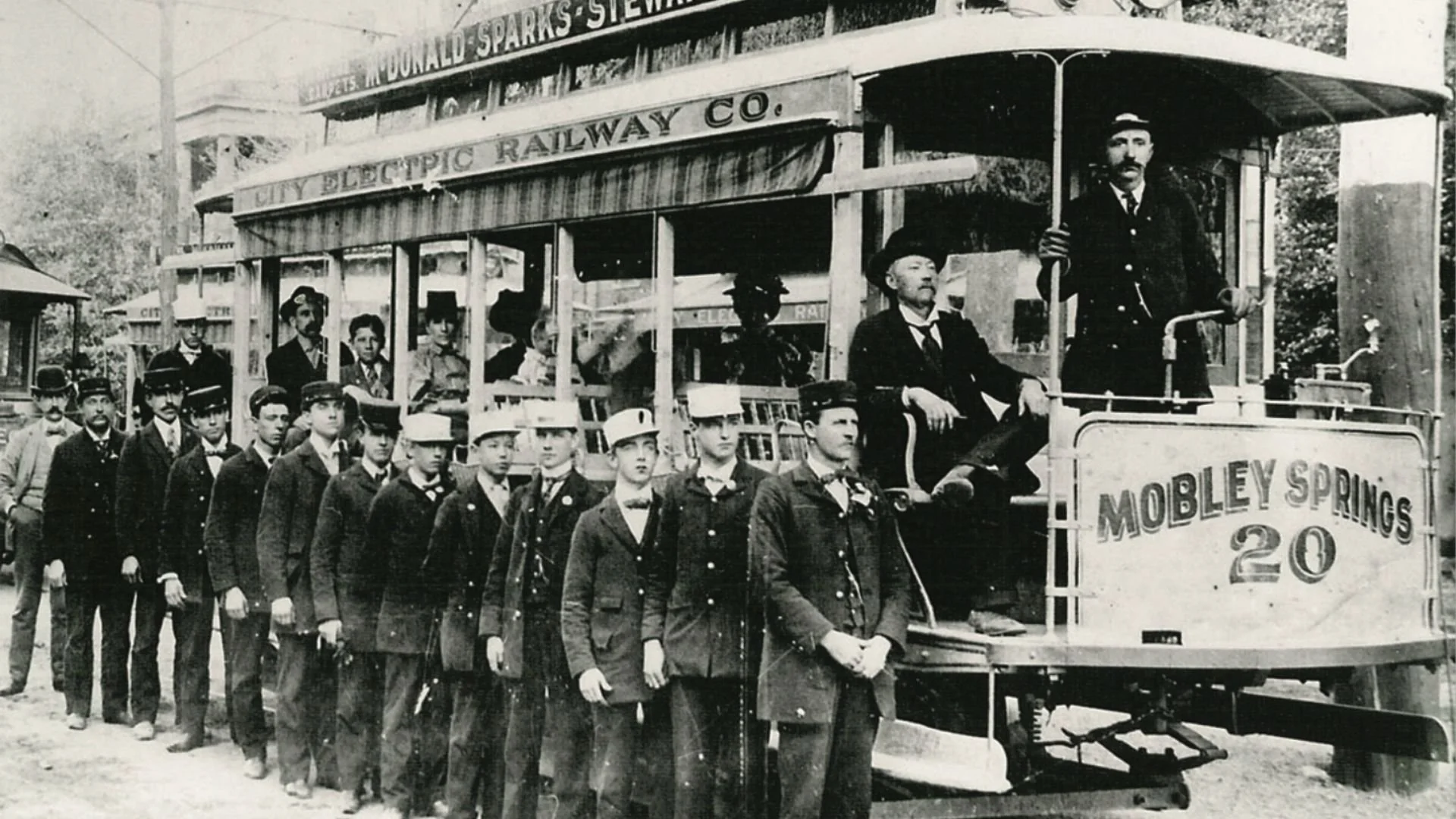
Beginning in August 1885, yellow streetcars trimmed in blue began rattling through Rome. A ride cost five cents. The Georgia DOT's history says the cars created something of a sensation, with adults and children following them through the streets. They were also genuinely useful. Rome's unpaved streets could deteriorate into what one historical account memorably described as a “river of mire.”
Almost immediately, the new transportation system encountered one of Rome's oldest geographical problems.
The rivers.
Streetcars needed bridges.
The Rome Street Railroad was already running horse-drawn cars across the Howard Street—today's Second Avenue—bridge by 1885.
Then nature intervened.
The Flood Changes Everything
In April 1886, flooding destroyed the Howard Street bridge.
Floyd County built a replacement at the same location. But when the street railway attempted to put its tracks back across the new bridge, the county objected. If the railroad wanted to use a bridge the county had just rebuilt, Floyd County argued, it should pay for the privilege. The street railway disagreed.
And astonishingly, the fight went to court almost immediately.
The Georgia Supreme Court ruled in 1886 that rebuilding a destroyed public bridge did not automatically allow the county to demand new compensation from a railway that had previously been permitted to use the crossing. The bridge, the court reasoned, essentially continued the public street across the river.
From Mules to Electricity
Technology was changing faster than the legal agreements governing it. Rome's original street railway charter had been written with remarkable flexibility. The company was authorized to propel its cars using horses, electricity, steam-driven underground cables or, wonderfully, essentially whatever technology might be invented next.
By 1892–93, Rome's streetcars were electric. That meant the bridges now carried more than rails. Electric wires and associated equipment had to cross them as well. In February 1892, Floyd County and the Rome Street Railroad Company formalized their arrangement. The company could maintain a single track on the county bridges, install electrical equipment and operate electric cars across them. In exchange, it agreed to pay the county $100 per bridge annually.
A later agreement in 1896 established an annual payment of $200 for use of the bridges. There was, however, an important legal catch. Georgia law had specifically limited Floyd County's authority to give the street railway permanent rights over the bridges. The county could grant temporary privileges, but those privileges remained subject to revocation.
For years, that distinction probably seemed largely theoretical.
Then Rome decided it needed new bridges.
Rebuilding Rome's Crossings
By the 1910s, Rome's nineteenth-century bridges belonged to a city that was rapidly disappearing. Streetcars were electric. Automobiles were appearing in greater numbers. Loads were becoming heavier. Traffic was changing. And Floyd County needed more substantial bridges.
In 1914, the Georgia legislature authorized the county to remove Rome's old bridges and construct replacements. The legislation also allowed the county to require the street railway to remove its tracks during construction and establish conditions for operating across the new bridges.
One condition was particularly significant. If the street railway wanted to use the new bridges, it could be required to pay one-third of their construction cost.
That was considerably different from paying a few hundred dollars a year.
Who Pays for a Modern City?
This is where an old legal dispute starts sounding surprisingly contemporary. Floyd County was making a massive investment in public infrastructure. The street railway was a private company whose business depended upon that infrastructure.
The county's position was essentially: if your tracks require our bridges, you should help pay for the bridges.
The railway saw things differently.
It argued that its existing franchise gave it a continuing right to operate across the crossings. From its perspective, the government was effectively taking away an established right and then demanding that the company purchase it again.
So Rome Railway & Light went to federal court. The company argued that Floyd County's actions violated constitutional protections involving property, contracts and due process. Eventually, the dispute reached the United States Supreme Court.
Meanwhile, Rome's bridges were actually being rebuilt. A 1917 report of the Georgia Railroad Commission provides an extraordinary progress report. It says the Fifth Avenue Bridge over the Oostanaula and the Second Avenue Bridge over the Etowah had already been completed and opened to traffic.
The Broad Street Bridge was still under construction. Suddenly, those old construction photographs have context. They aren't simply pictures of bridges being built. They document the public-works project at the center of a case headed for the Supreme Court.
Floyd County Wins
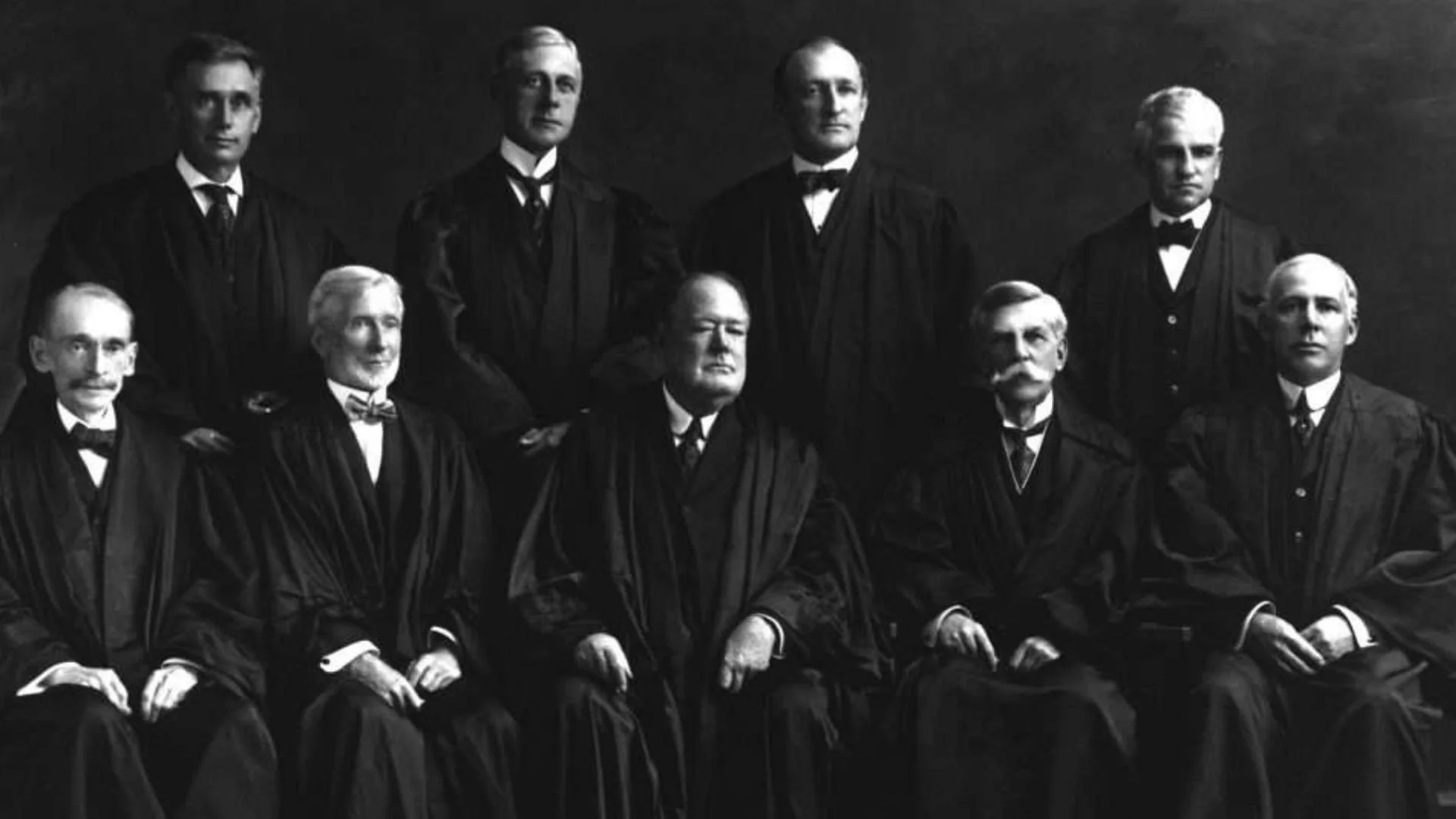
On March 6, 1917, the United States Supreme Court ruled against Rome Railway & Light. The railway could not prevent Floyd County from proceeding under the 1914 law. The key was not simply whether the street railway might once have possessed stronger rights under its original charter. The Court focused on what happened afterward.
The railway had voluntarily entered the 1892 and 1896 agreements with Floyd County. Those agreements treated its use of the bridges as a privilege granted under conditions established by the county—and Georgia law specifically made those privileges temporary and revocable.
In other words, whatever the company might once have been able to claim, it had subsequently accepted a different arrangement. The county could therefore establish new conditions for using its new bridges…Including paying part of the bill.
Architecture, Infrastructure and Change
What fascinates me most about the case isn't really the legal ruling. It's what the case reveals about Rome. Between 1885 and 1917, the city had gone from mule-drawn streetcars crossing nineteenth-century bridges to electric railways crossing enormous new steel and concrete structures while automobiles increasingly competed for space on the streets.
Infrastructure that had seemed perfectly adequate a generation earlier suddenly wasn't. And changing it was expensive.
That's why the legal fight matters to the architectural story. Bridges don't exist independently from cities. They respond to what crosses them, what passes beneath them, what neighborhoods they connect and what technology demands of them.
Rome's bridges were being redesigned because Rome itself was being redesigned.
Jeb's Take
When I first found the Supreme Court case, I thought it was simply a great piece of trivia.
Then I read it.
What survives in those pages isn't just a legal argument. It's a record of Rome trying to become a twentieth-century city.
Mules became electric streetcars. Wooden and iron bridges became steel and concrete. Automobiles arrived. Traffic increased. Infrastructure had to catch up.
And then everyone had to figure out who was going to pay for it. More than a century later, that part sounds awfully familiar.
The bridges at the center of the argument have mostly disappeared. The streetcars disappeared too. Even the transportation system that fought Floyd County all the way to Washington would be gone from Rome little more than a decade after the Supreme Court issued its decision.
But for one moment in 1917, a disagreement about how people crossed Rome's rivers became a question important enough for the highest court in the country.
Sometimes the history of a city isn't hidden in its grandest buildings.
Sometimes it's buried in the infrastructure underneath us.